
AI Sales Assistants for Inbound Leads
Explore how AI sales assistants engage and qualify inbound prospects.
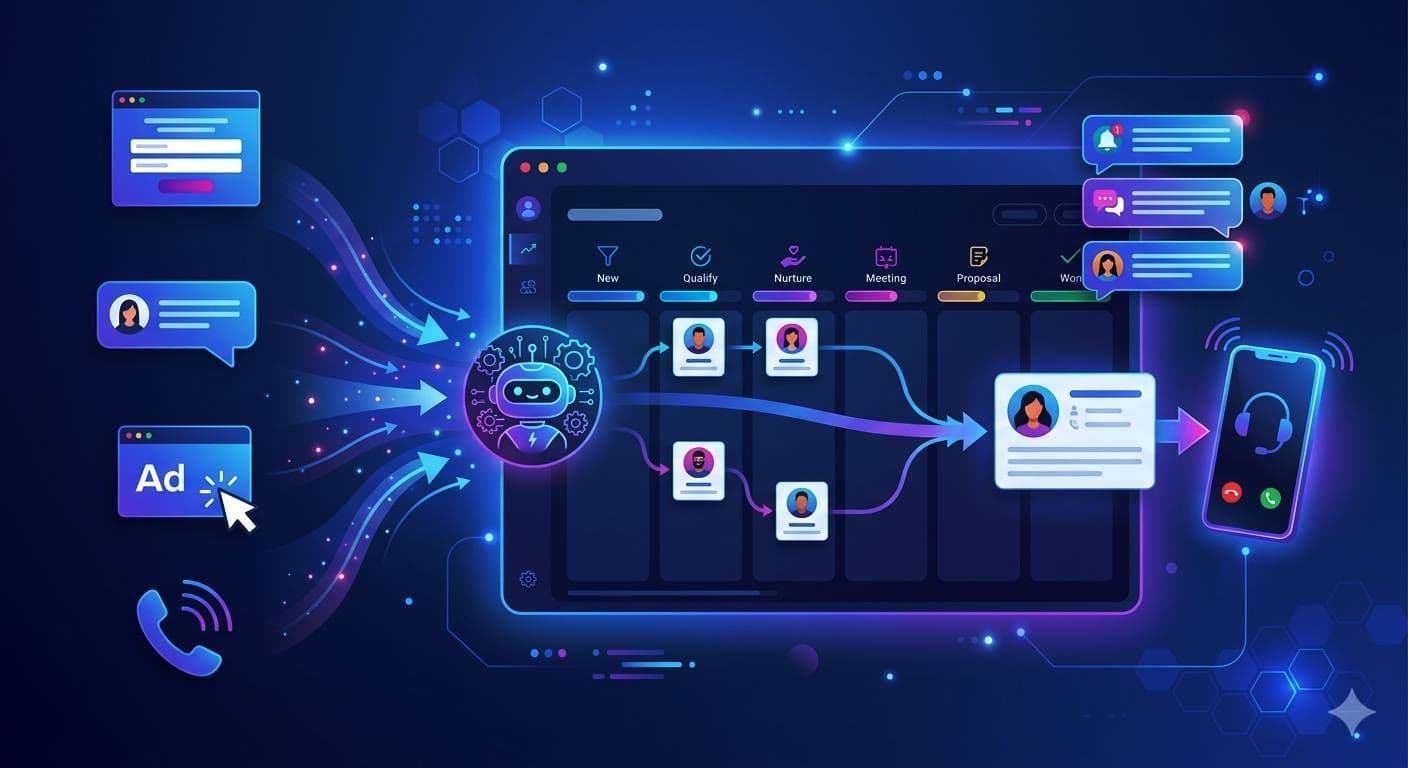
At 8:17 p.m., a property management company gets a website inquiry from a regional multifamily developer.
The message is specific.
They need help with leasing support across three buildings. They want to know pricing, implementation timing, and whether the provider can handle after-hours resident communication.
This is not casual browsing. This is an active buying moment.
But it happened after business hours.
The sales manager sees it the next morning. By then, the prospect has moved on mentally. Not because the need disappeared, and not necessarily because another vendor closed them overnight. The bigger problem is simpler: the moment of intent passed without a live interaction.
That is exactly where AI Sales Assistants for Inbound Leads change the outcome.
They do not just send an auto-reply. They engage instantly, ask the next question, qualify interest, and move the conversation forward while the lead is still mentally present.
That distinction matters more than most teams realize.
Here is the sharp takeaway:
inbound leads rarely go cold because they were never interested. They go cold because nobody engaged them while their intent was still active.
The Real Problem Is Not Delayed Follow-Up. It Is Missing the Engagement Window.
Most companies think the issue is response time in the abstract.
But for inbound leads, the deeper problem is the lack of immediate engagement.
A confirmation email is not engagement.
A CRM notification is not engagement.
A rep planning to call later is not engagement.
The lead raised their hand because they were ready to interact now. If nothing interactive happens in that moment, the buying energy starts to collapse.
This is the operational gap that explains so much of
https://www.fusionsync.ai/posts/lead-response-time-5-minute-rule
The issue is not only speed. It is whether the business can create a real sales conversation at the exact moment intent peaks.
That is why AI assistants are becoming such an important part of inbound sales. They fill the dead air between form submission and human follow-up.
Why AI Sales Assistants for Inbound Leads Matter So Much
The best way to understand this is to look at what happens in the buyer's head.
When someone fills out a form, they are usually in a temporary decision mode.
They have context loaded.
They remember their pain point clearly.
They know why they reached out.
They are open to answering questions.
They are willing to book time.
But that mindset is short-lived.
Twenty minutes later, they are back in their inbox. An hour later, they are in meetings. By the next day, your form submission has become one task among fifty others.
This is why instant engagement matters more than static acknowledgment.
An AI sales assistant can respond in seconds with a text, a call, or a conversational message. It can ask, "Are you looking for help this month or next quarter?" It can ask, "How many locations are you managing?" It can ask, "Would you like to see available times for a quick walkthrough?"
Those questions do something critical.
They preserve momentum.
Without that momentum, the lead does not always disappear. Often, they simply cool into ambiguity. They stop feeling like an active opportunity and start feeling like a lead your team will "get back to."
And that is where pipeline quietly leaks.
Instant Engagement Is a Sales Function, Not a Convenience Feature
Many teams still treat instant response as a nice-to-have automation layer.
That undersells the real role.
Immediate AI engagement is not just administrative efficiency. It is an active part of selling.
Why?
Because early conversation shapes intent.
If an AI assistant calls a new inbound lead within seconds, asks two or three relevant qualifying questions, and offers a booking link based on availability, it is already doing the first layer of sales work.
It is turning anonymous demand into structured opportunity.
This is especially important for businesses that depend on website forms, paid traffic, demo requests, or local service inquiries. In these channels, the lead often expects a fast human-like interaction. If they get one, they stay engaged. If they do not, attention diffuses.
That is why teams investing in
http://fusionsync.ai/posts/ai-inbound-lead-response
are not just trying to move faster. They are trying to hold the conversation open long enough for qualification and booking to happen.
What Happens When There Is No Immediate Conversation
Let us stay with the property management example.
The prospect submits the form after hours. They are still at their desk for another 25 minutes.
If an AI assistant engages instantly, several useful things can happen:
- it can confirm the inquiry
- it can ask about portfolio size
- it can identify urgency
- it can collect preferred timing
- it can offer a meeting slot
- it can trigger the right internal routing
Now compare that with no instant engagement.
The lead gets silence.
Silence creates friction.
Not dramatic friction. Quiet friction.
The prospect tells themselves they will revisit this later. They leave their desk. They forget the exact wording of their request. Their urgency gets absorbed by other priorities. By morning, the inquiry no longer feels immediate.
This is the hidden damage: the opportunity does not die all at once. It loses temperature in stages.
That is why waiting for human availability is so expensive in inbound sales. It leaves too much of the lead's intent unclaimed.
The Business Impact of Missed Engagement Is Bigger Than Most Teams Think
When inbound leads are not engaged instantly, companies usually see the damage in the wrong places.
They blame lead quality.
They blame channel performance.
They blame the sales team for not converting enough.
But often the underlying issue is that the lead never entered a live sales motion when interest was highest.
That creates several downstream problems.
First, qualification rates drop.
If no one asks the next question while the lead is attentive, you lose the easiest moment to gather buying context.
Second, booking rates fall.
A lead who is willing to schedule now is far more valuable than a lead who receives a calendar link six hours later.
Third, follow-up gets harder.
Once the lead has mentally moved on, your team has to recreate urgency that was freely available earlier.
Fourth, marketing efficiency suffers.
Paid traffic performs worse when the post-conversion experience is passive. A strong ad and landing page can generate demand, but they cannot finish the handoff alone. For businesses trying to improve conversion after form fills, articles like
http://fusionsync.ai/posts/after-contact-form-submission
become especially relevant because the real win often happens in the first interaction after submission.
In other words, poor engagement architecture makes good marketing look weak.
Why AI Assistants Outperform Basic Automations
A lot of businesses already have automation.
They send thank-you emails.
They create CRM tasks.
They alert the rep.
Those are useful, but they are not conversational.
And that is the difference.
Basic automation documents the lead.
AI engagement advances the lead.
An AI sales assistant can understand the source of the inquiry, reference the form context, ask tailored questions, handle simple objections, and guide the lead toward an appointment or next step.
That means the system is not only fast. It is relevant.
Relevance is what makes instant engagement feel helpful instead of robotic.
For example, a generic email saying "Thanks, someone will be in touch" does almost nothing to deepen commitment.
A conversational SMS or AI call that says, "I saw you are looking for support across multiple locations. Are you mainly evaluating pricing, rollout timing, or feature fit right now?" creates a completely different experience.
The lead feels heard.
And heard leads keep talking.
The Best Use Case Is Not Replacing Reps. It Is Protecting Intent Until Reps Step In.
This is where many companies get the framing wrong.
AI assistants are not most valuable when they try to replace your sales team.
They are most valuable when they protect inbound intent during the exact minutes when human reps are unavailable.
That could be:
- after hours
- during meetings
- during call blocks
- during weekends
- during traffic spikes from campaigns
In all of those moments, the risk is the same: a warm lead enters the system, but no one engages them interactively.
AI closes that gap.
It can qualify basic fit, collect urgency, answer first-step questions, and book directly into a rep's calendar.
Then the salesperson steps into a conversation that already has context.
This is one reason businesses exploring
http://fusionsync.ai/posts/ai-lead-qualification
often see value beyond speed alone. Qualification becomes smoother because the first exchange happens when the buyer is still responsive, not later when attention has faded.
What Effective Instant Engagement Actually Looks Like
Not every AI workflow solves the problem.
To work well, the assistant has to do more than react quickly.
It should do four things in sequence.
1. Respond Immediately
Seconds matter because the lead is still mentally available.
2. Continue the Conversation
The assistant should ask useful next-step questions, not just confirm receipt.
3. Qualify Without Friction
Questions should feel natural and brief, focused on urgency, fit, and buying intent.
4. Move Toward a Concrete Action
That action might be booking a demo, scheduling a callback, routing high-intent leads, or launching a follow-up sequence.
The goal is simple: turn a form fill into an active opportunity before the lead disengages.
How FusionSync-Style Automation Solves This Exact Issue
The practical value of a system like FusionSync is that it operationalizes instant engagement.
Instead of leaving inbound leads in a queue, the system can respond immediately, call automatically, qualify the prospect, and guide them toward a booked appointment or structured follow-up.
That matters because consistency is the real challenge.
A good sales rep can engage leads well.
A strong manager can build process.
But neither can personally guarantee immediate conversational follow-up for every inbound inquiry at every hour.
Automation can.
That is the natural role of AI in this environment.
Not as a gimmick.
Not as a chatbot bolted onto the website.
As infrastructure for preserving buyer intent.
And that is the real opportunity. Instant engagement is not just a support function around the sales process. It is part of conversion itself.
Key Takeaways
- Inbound leads often go cold because no one engages them while intent is still active.
- A passive confirmation is not the same as a live conversation.
- AI assistants protect the critical minutes after form submission when buyers are most responsive.
- The real advantage is not only speed. It is momentum preservation.
- Strong AI Sales Assistants for Inbound Leads help qualify, route, and book opportunities before interest fades.
FAQ
What are AI sales assistants for inbound leads?
AI sales assistants are automated systems that respond to new inbound inquiries immediately through channels like phone, SMS, or chat. They can ask qualifying questions, capture context, and help book the next step while the lead is still engaged.
How are AI sales assistants different from auto-replies?
An auto-reply confirms receipt. An AI sales assistant continues the sales conversation. It interacts with the lead, gathers useful information, and moves them toward a meeting, callback, or qualification outcome.
Do AI sales assistants replace human sales reps?
Usually, no. Their biggest value is handling the first moments after an inquiry comes in. They keep momentum alive until a human rep takes over with more context and a warmer opportunity.
Next step
Let's Fix Your Lead Response in 30 Minutes
We'll walk through your current lead flow, identify where leads are slowing down or getting missed, and show you exactly what can be automated to increase speed, conversations, and bookings.
Where it works
View all use cases