
How to Automatically Respond to Leads in Under 5 Minutes
Learn how modern sales teams automatically respond to inbound leads within minutes using automation, AI, and smarter CRM workflows.
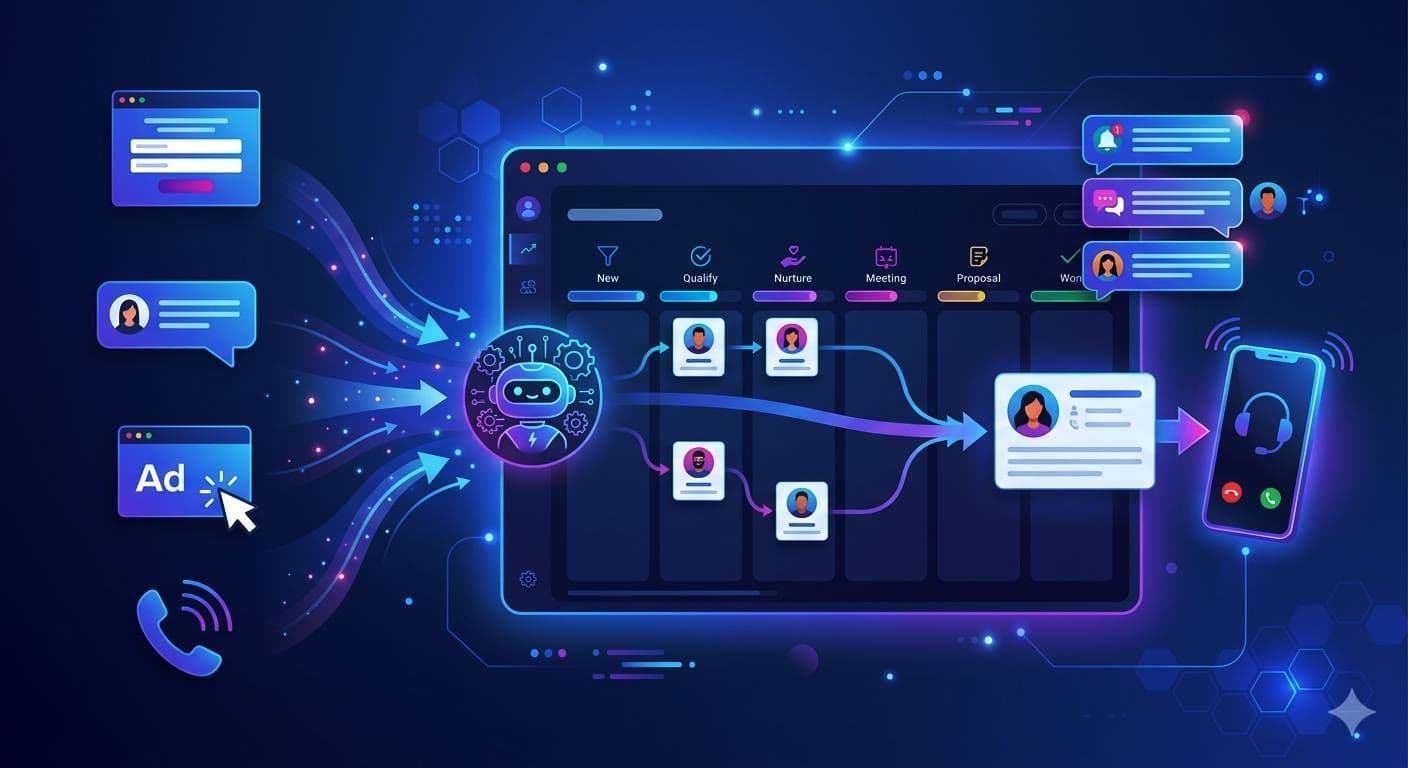
A potential customer fills out your contact form.
They’re interested in your product.
They’ve read your pricing page.
They’ve taken the time to explain their problem in the form.
But what happens next?
For many businesses, the process looks like this:
- The lead enters the CRM
- A notification gets sent somewhere
- Someone eventually notices the lead
- A salesperson reaches out later
Sometimes later means hours.
Sometimes it means the next day.
By the time the sales team responds, the lead has already moved on.
This is one of the biggest reasons inbound leads fail to convert.
The companies that win more inbound deals have one major advantage:
They respond automatically and instantly.
Why Responding to Leads Quickly Matters
When someone becomes a lead, they’re in a short window of high intent.
They are:
- actively researching solutions
- comparing vendors
- evaluating options
If your response happens immediately, you engage them while their interest is still strong.
If it happens hours later, the momentum disappears.
This idea is closely connected to what’s known as the 5-minute lead response rule.
Sales research consistently shows that businesses contacting leads within five minutes dramatically increase their chances of connecting with them.
The problem is that most companies simply cannot respond that fast manually.
This is why automated lead response systems have become increasingly important.
What Automated Lead Follow-Up Actually Means
Automated lead follow-up refers to systems that automatically engage inbound leads the moment they appear.
Instead of waiting for a salesperson to notice the lead, automation triggers immediate action.
This can include:
- sending a personalized email
- sending a text message
- triggering a phone call
- routing the lead to the correct salesperson
- scheduling meetings automatically
The goal is simple:
Ensure that every lead receives an immediate response.
What Happens Without Automated Lead Response
When companies rely entirely on manual lead follow-up, several problems appear.
Leads Wait Too Long
Sales reps are busy.
They might be:
- on calls
- in meetings
- writing proposals
Leads arriving during those times simply wait.
Leads Get Missed
Notifications can be missed.
Leads can sit in a CRM pipeline unnoticed.
This creates lost opportunities.
Follow-Up Becomes Inconsistent
Some leads get immediate attention.
Others are contacted hours later.
Without a system in place, response speed becomes unpredictable.
The Components of an Automated Lead Response System
To respond to leads automatically, businesses need several pieces working together.
Lead Capture
First, leads must enter the system automatically.
This typically includes sources such as:
- website forms
- demo requests
- landing pages
- advertising lead forms
- inbound calls
Each of these should immediately create a new lead record.
Instant Lead Routing
Once the lead enters the system, it must be assigned instantly.
Routing rules can assign leads based on:
- territory
- product interest
- company size
- round-robin distribution
Automated routing ensures the lead reaches the correct salesperson immediately.
Immediate First Response
The most important step is the first response.
Automation can trigger actions such as:
- an email confirming the request
- an SMS acknowledging the inquiry
- a phone call attempt
- a meeting booking link
This immediate engagement keeps the lead active.
Automated Follow-Up Sequences
If the lead does not respond immediately, the system should trigger follow-up steps.
This might include:
- a second email
- additional SMS reminders
- scheduled call attempts
Structured follow-up sequences dramatically increase response rates.
How Automation Enables Instant Lead Follow-Up
Automation platforms allow companies to respond to leads faster than any manual process.
For example, when someone submits a form:
- The lead enters the CRM
- An automated workflow triggers immediately
- The lead receives a message within seconds
- A call attempt can be triggered
- The lead receives a meeting booking option
This entire sequence can happen in less than a minute.
That level of responsiveness is difficult to achieve manually.
The Role of AI in Automated Lead Response
Automation handles timing and workflows.
AI expands what those workflows can do.
Modern AI-powered systems can:
- call leads automatically after form submission
- ask qualification questions
- understand responses
- route prospects to the correct sales team
- schedule meetings automatically
This allows businesses to engage leads immediately, even when no sales rep is available.
Instead of waiting for someone to manually respond, the system initiates the conversation.
Benefits of Automatic Lead Follow-Up
Implementing automated lead response can improve several areas of sales performance.
Faster Lead Engagement
Leads receive responses within seconds rather than hours.
Higher Contact Rates
Immediate responses increase the chances of reaching the prospect.
Improved Conversion Rates
Engaging leads while their interest is still high increases conversions.
Better Sales Efficiency
Sales teams spend more time on conversations and less time chasing missed leads.
When Should Businesses Use Automated Lead Response?
Automated lead response is especially useful for companies that generate significant inbound lead volume.
Examples include businesses running:
- paid advertising campaigns
- SEO-driven lead generation
- landing page funnels
- demo request forms
In these environments, responding quickly is critical.
Automation ensures no lead waits for human availability.
The Future of Lead Response
Customer expectations are shifting toward instant engagement.
People are used to:
- immediate responses from messaging apps
- real-time chat support
- fast communication
Businesses that take hours to respond increasingly feel outdated.
Automated lead response systems allow companies to meet modern expectations while still maintaining human sales conversations.
Final Thoughts
Responding to leads quickly has become one of the most important factors in inbound sales performance.
But manual processes make it difficult to consistently respond within minutes.
Automated lead follow-up systems solve this problem by ensuring every lead receives immediate engagement.
They:
- trigger instant responses
- automate routing
- maintain consistent follow-up
For companies generating inbound leads, automation is often the most effective way to ensure opportunities are never missed.
FAQ
What is automated lead follow-up?
Automated lead follow-up refers to systems that automatically respond to inbound leads through messages, calls, or emails without waiting for manual action.
How quickly should businesses respond to inbound leads?
Best-performing companies aim to respond within five minutes or less to maximize contact and conversion rates.
Can automation replace sales teams?
No. Automation handles the initial response and routing process, allowing sales teams to focus on meaningful conversations and closing deals.
Next step
Let's Fix Your Lead Response in 30 Minutes
We'll walk through your current lead flow, identify where leads are slowing down or getting missed, and show you exactly what can be automated to increase speed, conversations, and bookings.
Where it works
View all use cases