
Why Modern Buyers Expect Instant Response
Learn why buyers expect instant engagement.
At 9:14 p.m., a facilities manager for a fast-growing dental group lands on a software company’s site after a long day.
She has been putting off a vendor search for weeks. Tonight, she finally has time. She reads the pricing page, compares two options, fills out a demo form, and adds a note: “Need to solve this before next quarter.”
Then she goes back to her inbox.
If nobody responds quickly, something subtle happens.
Not dramatic. Not emotional. Just behavioral.
By the next morning, her urgency has been absorbed by a dozen other priorities. The form submission is no longer a live buying moment. It is just one more task in a crowded workday.
That is the real answer to Why Modern Buyers Expect Instant Response.
It is not only that people prefer fast service. It is that digital behavior has trained buyers to expect momentum. When they raise their hand, they expect the next step to happen now, not later. If it does not, the buying energy that existed in that moment fades.
This is one of the clearest reasons inbound leads go cold. And it has less to do with impatience than most sales teams think.
The problem is not delay alone. It is broken buying momentum.
Most companies describe lead response as a speed problem.
It is more accurate to call it an expectation problem.
Today’s buyer journey is shaped by instant interactions everywhere else. You can order software trials immediately. Book a doctor appointment online. Open a bank account in minutes. Get text confirmations the second you submit a form. Even personal communication happens in real time.
So when a business asks a buyer to fill out a form, the buyer assumes that form starts a live process.
In their mind, submission means motion.
That expectation changes the meaning of silence. Silence no longer feels neutral. It feels like friction.
This is the mechanism many sales teams miss. The lead does not cool off only because time passed. The lead cools off because the experience violated the buyer’s expectation of what should happen next.
If you want a broader look at why inbound leads go cold, the core issue often starts right here: the buyer expected an immediate continuation, and got a pause instead.
Why Modern Buyers Expect Instant Response
The short answer is that buyers have been conditioned by modern digital experiences.
But that idea is too broad unless you get specific.
Three behavioral shifts matter most.
1. Buyers now act at the moment of convenience, not during business hours
People research vendors when they have time, not when your team is available.
That might be early morning, between meetings, after dinner, or during a commute. The old assumption that buying happens in neat workday windows no longer holds.
This means intent shows up in short, irregular bursts.
When a buyer finally reaches out, it is often because they have reached a temporary peak of attention. They are focused, comparison-minded, and ready to engage right then.
If the business does not respond in that same window, the moment often closes.
Not because the buyer disappeared forever.
Because the buyer has gone back to being busy.
2. Digital products have trained people to expect immediate progression
Modern interfaces do not leave users hanging.
You click, something happens.
You submit, you get confirmation.
You request, you see the next step.
This pattern has shaped buyer psychology far beyond ecommerce.
People now expect responsiveness as part of competence. A fast reply signals an organized business. A delayed reply signals uncertainty, even if that judgment is not fully rational.
Here is the reframing: speed is no longer just service. It is proof of operational credibility.
That is why a slow reply feels bigger than a slow reply. It raises doubts about everything that follows.
3. Buyers do not separate marketing experience from sales experience
From the buyer’s perspective, your ad, your website, your form, and your follow-up are all one experience.
If the site feels polished and immediate but the response feels delayed and manual, the experience becomes inconsistent.
That inconsistency creates drop-off.
Not because the buyer has carefully analyzed your workflow, but because expectations were set one way and fulfilled another.
This is especially true for high-intent actions like demo requests and pricing inquiries. The more direct the action, the stronger the expectation that the business is ready to engage now.
The real mechanism behind lead decay
A lot of lead response content frames the issue as competition, staffing, or process. Those things matter operationally.
But the behavioral mechanism is simpler.
A buyer reaches out when three things temporarily align:
- attention
- intent
- willingness to engage
That alignment is fragile.
It does not last because human attention does not last. Buyers are not sitting around in a steady state of purchase readiness. They move in and out of it based on context, interruption, and mental load.
When a business responds instantly, it captures the buyer while that alignment still exists.
When it responds later, it is not continuing a live conversation. It is trying to restart one.
That is much harder.
This is the sharp insight most teams overlook:
Leads rarely go cold in a single dramatic moment. They drift back into normal life.
And once that happens, your outreach has to compete with inboxes, meetings, Slack messages, and everything else the buyer had paused to contact you.
What this does to revenue and pipeline
When buyers expect instant engagement and do not get it, the business impact shows up in several ways.
First, contact rates fall.
Not necessarily because your message is bad, but because you are reaching the buyer after their attention has moved elsewhere.
Second, meeting rates drop.
A lead who was willing to talk at the moment of form submission may be less willing to schedule something hours later. The friction of planning returns. Other stakeholders get involved. Internal urgency softens.
Third, pipeline quality gets distorted.
Sales teams often misread this as poor lead quality. In reality, some leads looked weak only because they were engaged too late. The issue was timing relative to buyer behavior, not lack of fit.
This is why teams should look closely at how lead response time impacts conversion rates. What appears to be a qualification problem is often an expectation mismatch earlier in the journey.
Fourth, brand perception suffers quietly.
A slow response does not just lose a conversation. It subtly changes how responsive, modern, and dependable your company feels.
That matters more now because buyers judge readiness through experience, not claims.
Behavioral patterns that make this worse in 2026 and beyond
Buyer expectations are not stabilizing. They are accelerating.
A few patterns are pushing this further.
Self-service behavior is expanding
Buyers increasingly expect to initiate progress without waiting for a human gatekeeper.
They want to book, confirm, compare, and move forward immediately. Even when the sale is complex, they still expect the first response to happen without delay.
Mobile-first attention is shorter and more fragmented
Many forms are submitted from phones. That means the inquiry often happens in a narrow attention window.
A delayed reply misses the exact environment in which the buyer acted. By the time your follow-up arrives, they may be in a different setting, doing different work, with different priorities.
Fast response has become normalized, not differentiated
There was a time when quick follow-up felt impressive.
Now it increasingly feels standard.
That matters because once a behavior becomes standard, failing to meet it creates a negative signal. This is part of why instant lead response is becoming standard across inbound sales teams.
How to respond to the expectation shift
If the root issue is changing buyer behavior, the solution is not just “work faster.”
The solution is to redesign the first minutes after form submission around the buyer’s expectation of continuity.
Acknowledge the action immediately
The first response should confirm that the buyer’s action triggered something real.
Not a generic “thanks for contacting us” message.
A real acknowledgment that reflects the request and tells them what happens next.
This works because it matches the mental model the buyer already has: I did something, and the system moved.
Reduce the gap between form fill and conversation
The goal is not merely to send a confirmation.
It is to keep momentum alive.
That may mean an instant text, an immediate call, or a booking flow that appears right away. The right method depends on the business, but the principle stays the same: do not force the buyer to re-enter the process later.
Treat response design as part of UX
This is where many teams fall short.
They optimize landing pages, copy, and forms, but treat lead handling as a back-office issue.
It is not.
Response design is part of the customer experience. Buyers evaluate the handoff from interest to conversation as one continuous journey.
If you want practical guidance here, best way to respond to website leads is less about channel preference and more about preserving the momentum the buyer has already created.
How automation solves this exact issue
This is where automation becomes more than an efficiency tool.
It becomes a way to match modern buyer expectations at the exact moment they are formed.
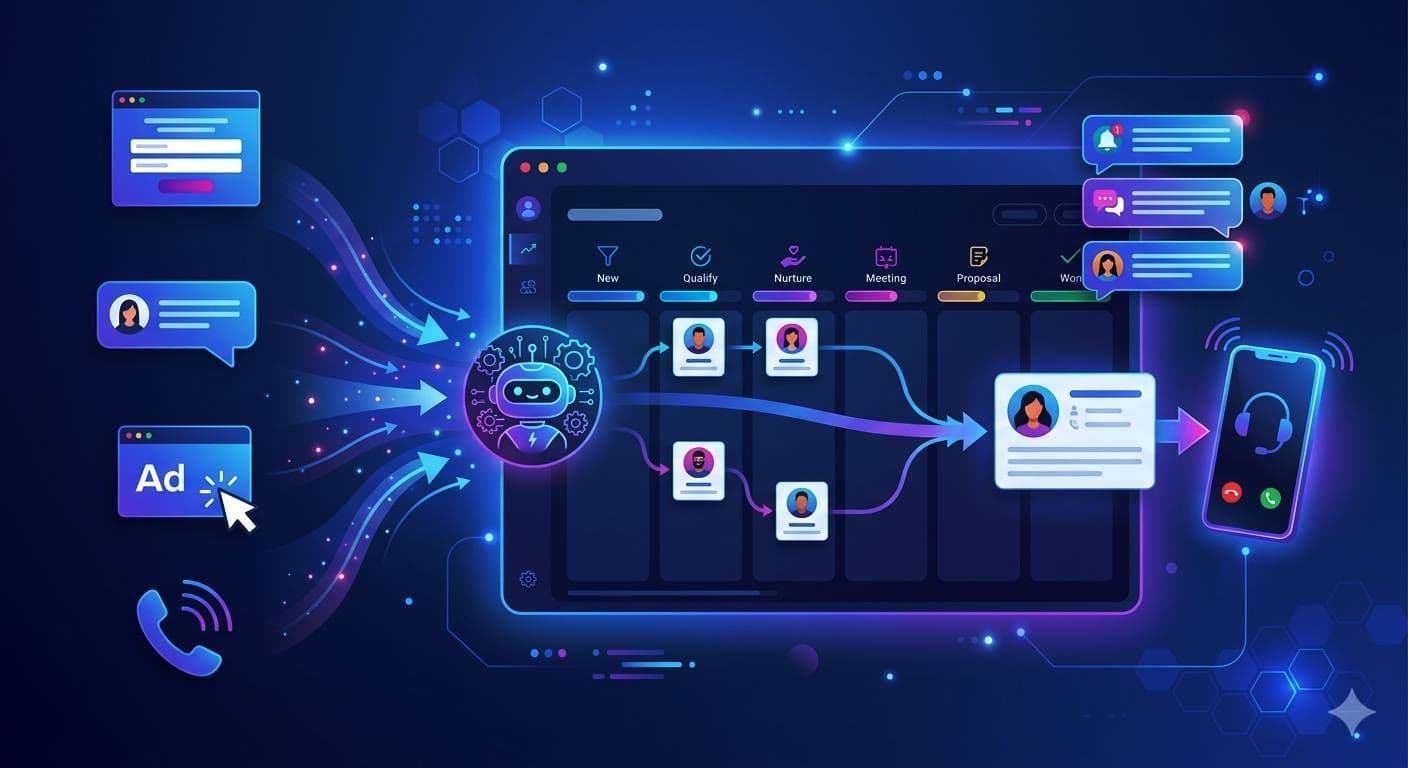
An AI-powered instant response system can engage a lead the second they submit a form.
It can:
- acknowledge the inquiry immediately
- call or text while the buyer is still attentive
- ask qualifying questions in real time
- route the lead without delay
- offer appointment times instantly
- trigger follow-ups that keep continuity intact
The key advantage is not simply that automation is faster.
It is that automation is always present when buyer intent appears.
That matters because behavioral windows are unpredictable. Human teams cannot reliably sit inside every one of them. Automated systems can.
This is also why AI is increasingly effective for inbound sales. It does not replace the sales team’s judgment. It protects the buyer’s initial momentum until the right human conversation can happen.
In that sense, automation solves an expectation problem before it becomes a conversion problem.
Key takeaways
Modern buyers expect immediate engagement because digital experiences have trained them to expect action the moment they act.
That expectation changes what a delayed response means. It no longer feels like a harmless pause. It feels like friction, uncertainty, or disconnect.
The main reason leads cool off is not that they suddenly lose all interest. It is that their brief window of attention closes, and the business fails to continue the interaction while it is still alive.
The companies that adapt will not just respond faster. They will align their follow-up with how buyers actually behave now.
That is the real lesson behind Why Modern Buyers Expect Instant Response.
FAQ
1. Why do buyers expect responses so quickly now?
Because nearly every modern digital experience provides immediate feedback. Buyers have become used to instant confirmations, fast next steps, and real-time interactions, so they carry that expectation into B2B and service buying.
2. Are buyers actually impatient, or is something else happening?
It is less about impatience and more about context. Buyers often reach out during short windows of focus. If a business does not engage during that window, the buyer’s attention shifts back to other priorities.
3. How can businesses meet this expectation without hiring more reps?
The most effective approach is to use automation for the first layer of response. Instant texts, AI calls, automated qualification, and immediate booking options help maintain momentum until a human rep takes over.
In the end, Why Modern Buyers Expect Instant Response comes down to changed behavior, not just changed preferences. Businesses that understand that shift can build follow-up systems that match buyer momentum instead of missing it.
Next step
Want to fix slow lead response?
See how FusionSync responds in seconds, qualifies inbound leads, and moves them toward a booked next step automatically.
Where it works
View all use cases