
How Delayed Lead Response Affects Customer Experience
Discover how slow responses affect customer experience.
A prospect lands on a law firm’s website at 9:12 p.m.
They have a stressful employment issue. They fill out the contact form, describe the situation in detail, and hit submit.
For a moment, they feel relief.
They took action. They expect some sign that a real business is on the other side.
Instead, nothing happens.
No confirmation text. No callback. No email that sounds human. No next step.
By the next morning, the silence has already created an impression. Not just that the firm is busy, but that the client experience may be slow, unclear, and hard to navigate.
That is the real issue behind How Delayed Lead Response Affects Customer Experience. A slow reply does more than postpone a sales conversation. It changes how the buyer feels about your business before anyone on your team ever speaks to them.
This is the part many companies miss.
Delayed response is not just an operations problem. It is a customer experience problem happening at the very first touchpoint.
And first-touch experience shapes trust faster than most sales teams realize.
The problem starts before the sales conversation does
When someone reaches out inbound, they are not only asking for information.
They are testing the experience.
A contact form, demo request, or quote inquiry is often the buyer’s first live interaction with your company. In that moment, they are silently asking questions like:
- Will this company be easy to work with?
- Will they communicate clearly?
- Will they move quickly when I need help?
- Will I have to chase them for every next step?
If the response is delayed, the buyer starts answering those questions on your behalf.
And they usually do not answer generously.
Silence creates meaning.
That is the mechanism. Buyers do not experience a delay as neutral empty time. They experience it as a signal.
A signal that support may be inconsistent.
A signal that urgency may not be understood.
A signal that their business may not matter very much.
This is why slow response feels bigger than the clock itself. The issue is not just waiting. The issue is what the waiting implies.
How Delayed Lead Response Affects Customer Experience at the perception level
The most damaging effect of slow response is not irritation.
It is interpretation.
Customers interpret speed as competence.
That may not be perfectly fair, but it is how people evaluate service businesses, software companies, agencies, home services, and almost every other category with an inbound sales motion.
Fast response suggests:
- organization
- attentiveness
- reliability
- clarity
- respect for the customer’s time
Delayed response suggests the opposite.
This matters because customer experience begins long before onboarding, fulfillment, or account management. It begins the second someone decides to raise their hand.
A slow reply makes the experience feel fragmented.
The buyer took immediate action, but your company did not mirror that energy back. That mismatch creates friction. And friction lowers confidence.
Here is the sharper insight:
Customers do not judge your responsiveness separately from your service. They use responsiveness to predict your service.
That is why a lead can cool off even when they still need the solution. The need may remain, but confidence in your process starts to slip.
Why silence feels worse than an explicit wait
There is an important psychological difference between a delayed response and a managed expectation.
If a business says, “We received your request and will contact you within 15 minutes,” the buyer has context.
If a business says nothing, the buyer has ambiguity.
Ambiguity creates anxiety.
And anxious buyers tend to disengage.
This is especially true in high-intent moments where the person has already invested effort. They filled out fields. Shared details. Explained a problem. Maybe even disclosed budget, timeline, or pain points.
When that effort is met with silence, the interaction feels unfinished.
Not delayed. Unfinished.
That is a different emotional experience.
It can feel like talking and hearing no reply.
Many companies think the problem starts after a few hours. In reality, the experience starts degrading much earlier because the customer has no feedback loop. Even a brief gap feels longer when there is no acknowledgement.
This is one reason articles on the best way to respond to website leads increasingly emphasize immediate confirmation, not just eventual follow-up.
Slow response makes the buying experience feel high-effort
Modern buyers are extremely sensitive to effort.
They do not just want a good solution. They want an easy path.
When a company responds late, the buyer starts to anticipate effort in every future interaction.
They think:
- Will scheduling be difficult too?
- Will I need to follow up twice to get answers?
- Will implementation be slow?
- Will support tickets sit unanswered?
Notice what is happening.
The delayed lead response becomes a preview of the entire customer journey.
This is why slow follow-up damages more than conversion rate. It increases perceived effort.
And in customer experience, perceived effort is often more important than product claims.
A polished website cannot overcome a clunky first interaction.
A strong value proposition cannot fully erase the feeling that communication may be unreliable.
In other words:
The first response is not admin work. It is product experience before the product.
That is the reframing many revenue teams need.
The business impact is bigger than a missed reply
When slow response weakens customer experience, the downstream effects show up everywhere.
First, contact rates drop because buyers lose momentum.
Second, appointment booking rates decline because hesitation enters the process.
Third, sales conversations become harder because reps are no longer speaking with a prospect who feels reassured. They are speaking with one who already has mild doubt.
That changes tone.
The rep now has to rebuild confidence that should have been preserved automatically.
This is one reason businesses that improve speed often see gains beyond raw response metrics. Better responsiveness improves the emotional condition of the lead at the moment of contact.
The lead is calmer, clearer, and more ready to engage.
If you want a broader explanation of the mechanics behind why inbound leads go cold, the pillar article breaks down the timing side in detail: why inbound leads go cold.
But from a customer experience angle, the key takeaway is simple: by the time a delayed response arrives, the lead may not be gone because the problem disappeared. They may be gone because the experience already felt inconvenient.
What this looks like in real buying behavior
You can see this pattern in almost every inbound funnel.
A person submits a demo request during a busy workday.
If they get an immediate text, a fast confirmation email, or a prompt call, the interaction feels active. They stay mentally engaged.
If they hear nothing, the request starts to fade into the background of their day. But more importantly, their impression of the company starts to flatten.
The brand becomes less vivid.
Less responsive.
Less easy.
By the time someone reaches out later, the buyer often responds with lower enthusiasm, shorter replies, or no reply at all.
That behavior is often misread as low intent.
In many cases, it is not low intent.
It is degraded experience.
That distinction matters.
Because if you misdiagnose the problem as lead quality, you keep spending more on acquisition while the real issue sits in the handoff.
This is also why teams that study how lead response time impacts conversion rates often discover that speed improves outcomes partly by preserving buyer confidence, not just by increasing contact odds.
Why customer experience damage happens so fast
The first few minutes after form submission carry outsized emotional weight.
That is when the buyer is most attentive to your reply.
That is when uncertainty is highest.
That is when reassurance matters most.
A delayed response during this window creates a poor first impression because the buyer is actively watching.
Later, they are not watching anymore.
That is why recovering the experience is so difficult. Once the moment of attention passes, your reply no longer feels timely. It feels reactive.
And reactive communication rarely creates premium perception.
This is especially important for businesses that sell trust-sensitive services such as legal, healthcare, financial services, consulting, real estate, or high-ticket B2B solutions. In these categories, buyers are not just comparing offers. They are evaluating professionalism through every micro-interaction.
Even for SaaS teams, this matters. A delayed first response quietly tells the buyer what future account communication may feel like.
That is a dangerous message to send accidentally.
Practical ways to protect the experience from the first second
If the problem is perception, the fix is not only “respond faster.”
The fix is to design an experience that feels immediate, clear, and guided.
A few practical changes make a major difference.
1. Acknowledge instantly
The first response does not need to solve everything.
It needs to reassure.
Send an immediate confirmation by SMS or email that says the request was received and explains the next step. This reduces ambiguity right away.
2. Make the response feel human
Generic autoresponders often fail because they feel transactional.
A better first touch sounds specific, warm, and action-oriented. It should confirm what happens next and when.
3. Reduce dead air between steps
If a rep cannot respond immediately, the system should still create motion.
Offer a scheduling link, a callback notice, or a short qualification step. Momentum improves experience because the buyer feels progress.
4. Use the right channel for urgency
For many inbound leads, SMS and phone create stronger reassurance than email alone. The right response path depends on the inquiry type, which is why teams benefit from understanding email vs phone vs SMS for lead response.
5. Set expectations clearly
A short message that says, “A specialist will call you in the next 10 minutes” is better than silence, even if the actual conversation is not instant.
Clarity protects experience.
How automation and AI solve this exact customer experience problem
Automation matters here not just because it is faster, but because it removes uncertainty at the most sensitive moment.
That is the key.
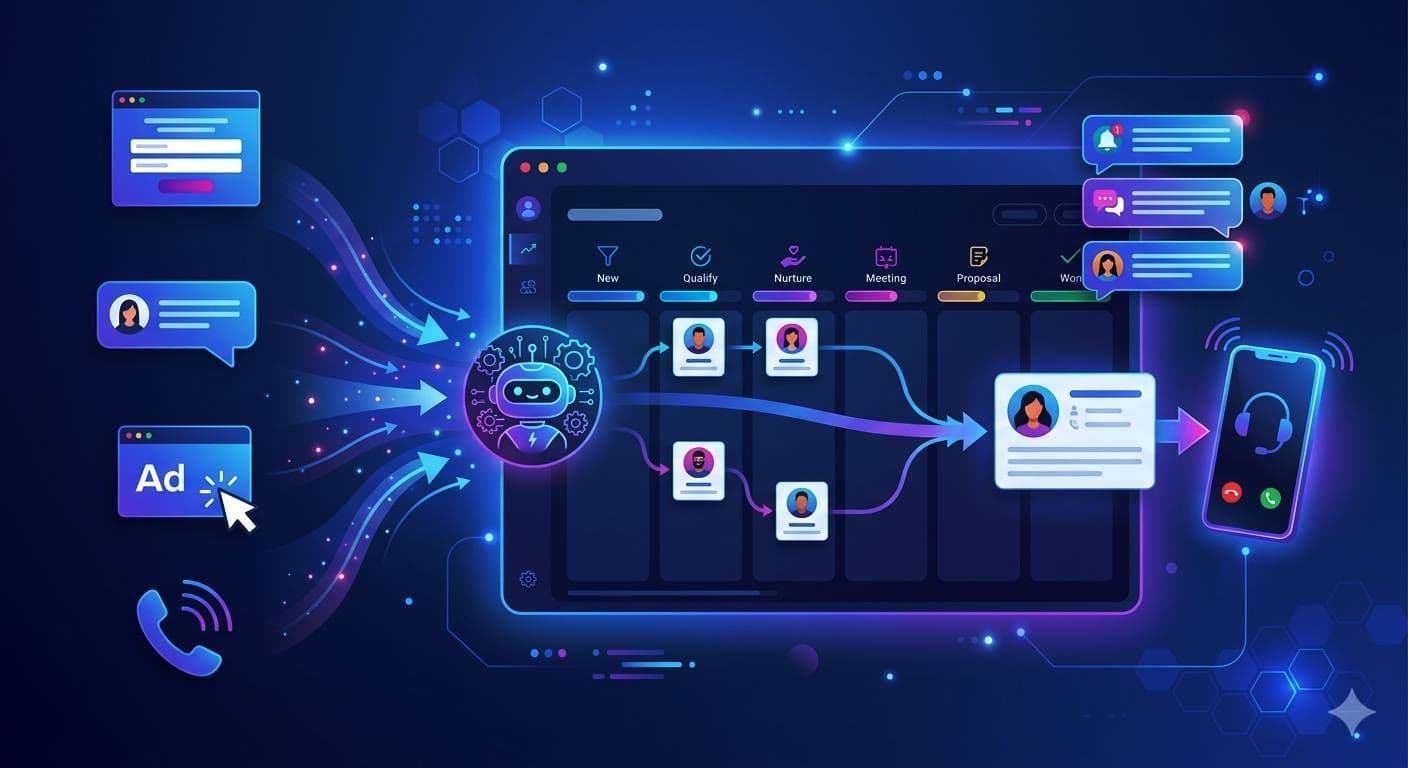
An AI-powered lead response system can acknowledge a new inquiry in seconds, send a confirmation text, place an instant call, ask a few qualifying questions, and help the lead book time immediately.
From the buyer’s perspective, the experience feels responsive and organized.
That feeling is valuable.
It tells them your company is attentive before a human rep even joins the process.
This is where AI becomes more than an efficiency tool. It becomes a customer experience layer.
It protects the first impression.
It preserves momentum.
It reduces ambiguity.
It makes the company feel easy to buy from.
For businesses trying to improve responsiveness without relying on someone watching the CRM all day, this is the natural next step. Posts on how AI can respond to leads instantly cover the operational side, but the customer experience benefit is just as important.
The lead does not care whether the speed came from a rep manually checking notifications or from an automated system.
They care that the experience felt immediate.
Key takeaways
- A delayed response changes how buyers interpret your business.
- Silence is not neutral. It signals disorganization, low urgency, or poor communication.
- Slow follow-up increases perceived effort, which damages customer experience early.
- The first response acts as a preview of the full service experience.
- Immediate acknowledgement, clear next steps, and guided follow-up protect trust.
- AI and automation solve this by removing uncertainty in the highest-intent moment.
Conclusion
The clearest way to understand How Delayed Lead Response Affects Customer Experience is this: the damage happens before the sales conversation even begins.
A buyer reaches out looking for clarity, momentum, and reassurance.
When they get silence instead, they do not just wait. They form an opinion.
And that opinion often becomes, “This company may be hard to work with.”
That is why response speed is not only a sales metric. It is a customer experience signal.
Businesses that respond instantly create a very different feeling. They make the buyer feel seen, guided, and confident in the process.
In a market where products can look similar, that first impression carries real weight.
Because the earliest stage of customer experience is not onboarding.
It is the moment after someone asks for your help.
FAQ
1. Why does a slow response hurt customer experience so much?
Because buyers use responsiveness as a proxy for service quality. If the first interaction feels slow or unclear, they assume future communication may feel the same way.
2. Is an automatic acknowledgement enough?
It is a strong start, but it works best when it includes clear next steps and leads quickly into a real conversation, callback, or booking option. The goal is to reduce ambiguity, not just send a receipt.
3. How can businesses improve customer experience without hiring more reps?
They can use automation and AI to respond instantly, confirm inquiries, qualify leads, and guide prospects to the next step. That protects the experience even when the sales team is busy or offline.
Next step
Want to fix slow lead response?
See how FusionSync responds in seconds, qualifies inbound leads, and moves them toward a booked next step automatically.
Where it works
View all use cases