
Lead Response Time for Product Demo Requests
Explore response benchmarks for demo leads.
A VP of Revenue visits your site at 4:47 p.m. on a Thursday.
They have already reviewed your pricing page. They have already compared you with two other vendors. They are not casually browsing. They click “Book a Demo,” fill out the form, and expect the next step to happen quickly.
Instead, they get a generic confirmation email.
No meeting link.
No calendar options.
No immediate outreach.
No scheduled conversation.
By the next morning, their day is full again. By Monday, the urgency is gone. By the time a rep finally reaches out to “find time for a demo,” the lead has mentally moved on.
That is the real issue behind Lead Response Time for Product Demo Requests.
For demo leads, the most important clock is not just the time between form submission and first contact. It is the time between form submission and a booked meeting. If that gap stretches too long, intent decays before the sales conversation ever has a chance to begin.
This is why demo funnels often underperform even when teams think they are responding fast enough. The lead did raise a hand. The business did send something back. But the actual next commitment, the scheduled demo, happened too late.
Here is the hard truth: in demo-driven sales, speed is not just about response. Speed is about momentum. And momentum dies in the gap between request and scheduling.
The real problem is the gap between demo request and calendar commitment
A product demo request is not the same as a generic contact form.
It signals structured buying intent.
The prospect is not asking for a brochure. They are asking to enter a sales process. That means the first meaningful outcome is not an email reply. It is a confirmed time on the calendar.
This is where many teams misread performance.
They look at first-response metrics and see that leads were touched in 3 minutes, 10 minutes, or even 30 minutes. That sounds acceptable on paper. But if the lead still has to wait hours or days to actually book a demo, the most important conversion step is still delayed.
For demo requests, the operational question should be simple:
How long does it take from form submission to scheduled meeting?
That is the real measure of progress.
A lead who receives a fast acknowledgment but no immediate path to schedule is still left in limbo. And limbo is where demo intent fades.
Why Lead Response Time for Product Demo Requests is really about scheduling speed
When someone requests a demo, they are usually in an active evaluation window.
They may have internal pressure to shortlist vendors. They may be comparing tools before a budget meeting. They may simply have 20 minutes of available attention right now.
Scheduling delay breaks that moment.
The mechanism is simple.
First, the prospect completes the form while motivation is high.
Second, they expect the next step to be easy and immediate.
Third, if booking requires back-and-forth emails, manual qualification, rep assignment, or waiting for someone to “reach out soon,” the buying rhythm gets interrupted.
Once that rhythm breaks, the demo becomes one more task to revisit later.
Later is where a lot of pipeline disappears.
This is different from broad discussions about slow follow-up. The specific problem here is that the lead has already expressed willingness to meet, but the business fails to convert that willingness into a scheduled event while intent is still active.
A memorable way to frame it:
Demo leads do not stall at the top of funnel. They stall in the handoff between intent and commitment.
That handoff is where revenue gets delayed or lost.
Why scheduling delays happen even in well-run sales teams
Most teams do not intentionally slow down demo booking.
The delay usually comes from process design.
A common workflow looks efficient from the company side:
- the lead submits a demo form
- the CRM creates a record
- a rep gets notified
- the rep reviews firmographic details
- the rep decides whether the account looks qualified
- the rep sends a scheduling email
- the prospect replies with availability
- the meeting finally gets booked
Every step may seem reasonable.
But from the buyer's perspective, this creates friction after they already asked to meet.
And friction is especially expensive at the demo stage because the prospect has already offered their attention.
The deeper issue is that scheduling is often treated as an administrative step instead of a conversion event.
That is a mistake.
In demo-led funnels, scheduling is the conversion event that turns interest into pipeline.
If you delay that moment, you are not just delaying operations. You are delaying deal creation.
This is also why companies that study how lead response time affects appointment booking often find the biggest leak is not first-touch acknowledgment. It is the lag before an actual meeting gets locked in.
What happens when the booking window slips
When the gap between request and scheduling gets too long, three things happen.
1. The lead stops prioritizing the demo
People fill out demo forms during a temporary spike of intent.
That spike does not last forever.
If there is no immediate booking path, the request becomes something they meant to finish later. Then a meeting runs long. Slack fills up. Other work takes over. The demo request falls down the list.
The lead did not reject you. They just lost momentum.
2. Internal urgency fades before discovery starts
This is especially common in B2B.
A buyer may submit a request right before an internal discussion, budget review, or tool evaluation cycle. If the meeting is not scheduled quickly, your product is no longer tied to that active conversation.
By the time you reconnect, the stakeholder context has changed.
That means the delay did not just cost speed. It cost relevance.
3. Forecasted pipeline never materializes
Sales leaders often see enough demo volume in reports and assume pipeline should follow.
But demo request volume is not pipeline.
Booked demos create pipeline opportunities. Unscheduled demo requests create false confidence.
This is one reason teams underestimate the hidden cost of slow lead follow-ups. The loss does not always show up as an obvious missed lead. Sometimes it shows up as pipeline that looked likely but never converted into a meeting.
The behavioral pattern behind demo request drop-off
There is a useful way to think about this.
A demo request is a micro-commitment.
A scheduled meeting is a larger commitment.
The job of your funnel is to convert the first into the second while the emotional energy is still there.
If too much time passes, the buyer has to rebuild motivation.
That is harder than most teams realize.
People rarely wake up two days later feeling more eager to attend a sales demo than they did when they first submitted the form. Usually the opposite happens. Their questions cool off. Their perceived urgency drops. Their openness to another vendor conversation shrinks.
This is part of why inbound leads go cold in the first place. It is not always because they were bad leads. Often, the system failed to capture commitment while intent was still active.
That is the key reframing.
The goal is not just to reply fast. The goal is to secure the next yes before attention shifts.
What good timing looks like for demo request flows
For product demos, the ideal experience is simple.
The lead submits a request.
Within seconds, they are guided toward a concrete booking action.
Within minutes, the meeting is confirmed or actively being confirmed.
That does not mean every lead must be instantly routed to a live rep in all cases.
It means the system should remove dead time between request and scheduling.
Strong demo-response flows usually include:
- an immediate acknowledgment that feels human and specific
- a direct scheduling option right away
- qualification that happens before or during booking, not days after
- fallback outreach if the lead does not complete scheduling on the first visit
- reminders that keep the booking action alive while intent is fresh
Notice the pattern.
Each step is built around one outcome: getting the meeting onto the calendar quickly.
Practical ways to shorten the request-to-schedule window
If this is the bottleneck, the fix is not abstract. It is operational.
Put scheduling in the first response path
Do not make demo leads wait for a rep to manually offer times.
If someone asked for a demo, give them the ability to select a time immediately. That can happen on the thank-you page, in the confirmation text, or in the first follow-up email.
The point is to turn interest into action before the browser tab closes.
Reduce qualification before booking
Many teams add too much screening before the calendar step.
Some qualification is useful. But if the process becomes “request now, wait while we review, then maybe schedule later,” you are forcing high-intent leads into an approval queue.
A better model is lightweight qualification that supports scheduling, not blocks it.
Measure request-to-schedule, not just first-response time
If your dashboard says leads were answered quickly but demo rates are soft, you may be tracking the wrong metric.
Add a dedicated KPI:
Form submission to booked meeting time.
This reveals where demo momentum actually breaks.
Teams that already monitor how companies measure lead response time often improve faster once they isolate the scheduling lag instead of treating all first touches as equal.
Follow up around the unfinished booking action
If a lead does not schedule immediately, the next messages should not restart the conversation from zero.
They should continue the original action.
For example:
- “You requested a demo. Here are available times.”
- “Still want to see the platform? Choose a slot here.”
- “We saved a few openings for this week.”
This keeps the flow centered on scheduling, not generic nurturing.
How automation and AI solve this exact bottleneck
This is where automation becomes more than convenience.
It becomes infrastructure for preserving buying momentum.
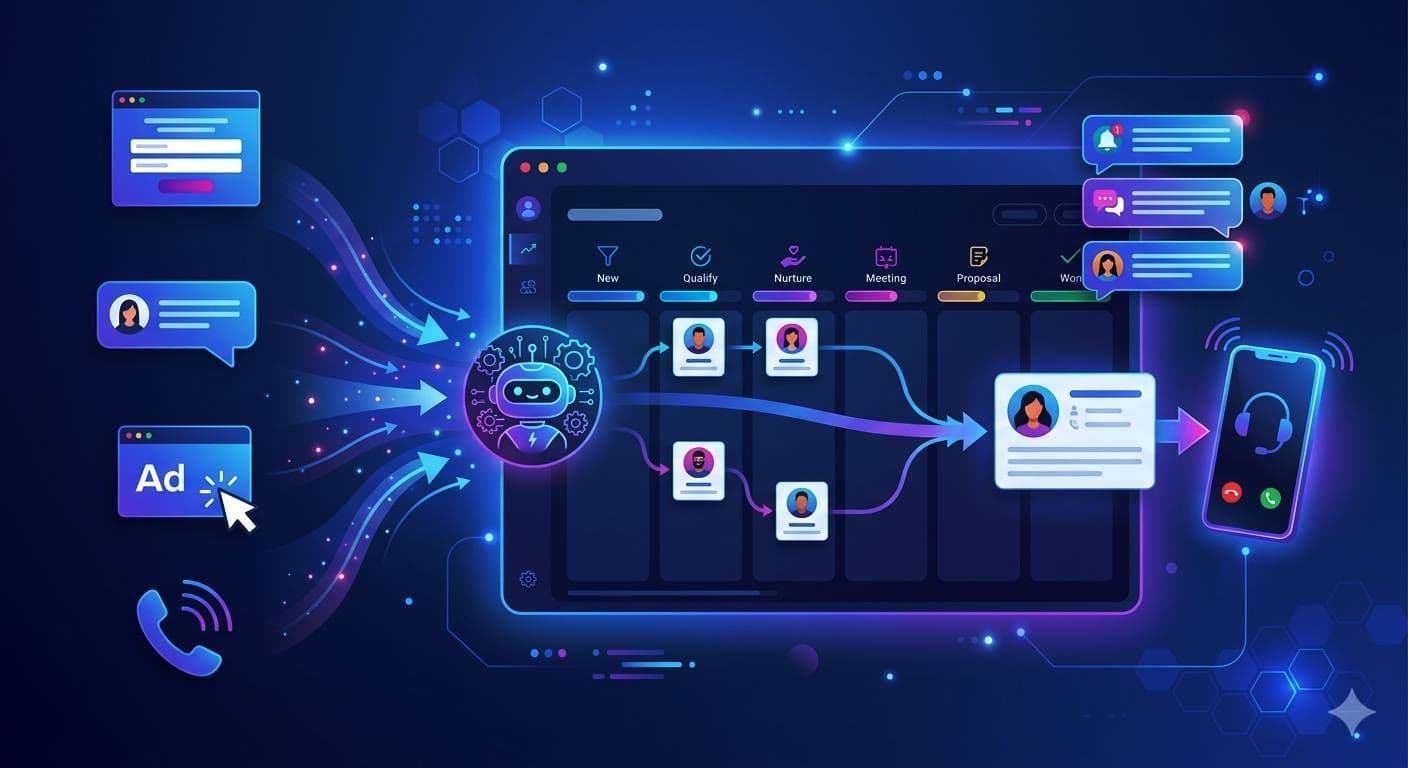
The right system can respond the moment a demo request is submitted and immediately move the lead toward a scheduled meeting.
That may include:
- instant SMS or email with scheduling options
- automated qualification questions that happen in real time
- AI voice outreach that calls while interest is still high
- routing logic that connects the lead to the right rep without delay
- reminders and follow-ups tied to incomplete booking
The important point is not that AI sends a faster message.
The important point is that AI compresses the gap between request and scheduling.
That is the exact bottleneck harming conversion.
For companies with demo-driven inbound funnels, this is often the cleanest use case for automation. Not because it replaces sales conversations, but because it protects the moment right before those conversations begin.
In other words, automation does not win the demo.
It makes sure the demo actually gets booked.
Key takeaways
- A demo request is only partially converted when the form is submitted.
- The critical moment is the time between request and scheduled meeting.
- Fast acknowledgment without fast booking still leaves revenue at risk.
- Scheduling delay kills momentum by forcing buyers to revisit a decision they were already ready to make.
- The best metric for demo funnels is not just first response. It is request-to-schedule time.
- Automation and AI are most valuable when they remove dead time and make booking immediate.
For teams trying to improve Lead Response Time for Product Demo Requests, this is the clearest takeaway: the lead often goes cold before the first real sales conversation because the meeting was never locked in while intent was fresh.
FAQ
1. What is a good response time for product demo requests?
For demo requests, a good response time means more than a quick acknowledgment. Ideally, the lead should have a path to book a meeting immediately after submitting the form, and the meeting should be confirmed within minutes whenever possible.
2. Why do demo leads go cold even when we reply quickly?
Because a reply is not the same as a scheduled demo. If there is a long delay between the request and the actual booking step, the buyer's urgency fades before the commitment is made.
3. How can AI improve Lead Response Time for Product Demo Requests?
AI can respond instantly, ask qualifying questions, present booking options right away, and follow up automatically if the lead does not complete scheduling. That helps compress the request-to-schedule window, which is the main issue in demo conversion drop-off.
Next step
Want to fix slow lead response?
See how FusionSync responds in seconds, qualifies inbound leads, and moves them toward a booked next step automatically.
Where it works
View all use cases