
Why Demo Request Leads Require Instant Response
Learn why demo requests require immediate contact.
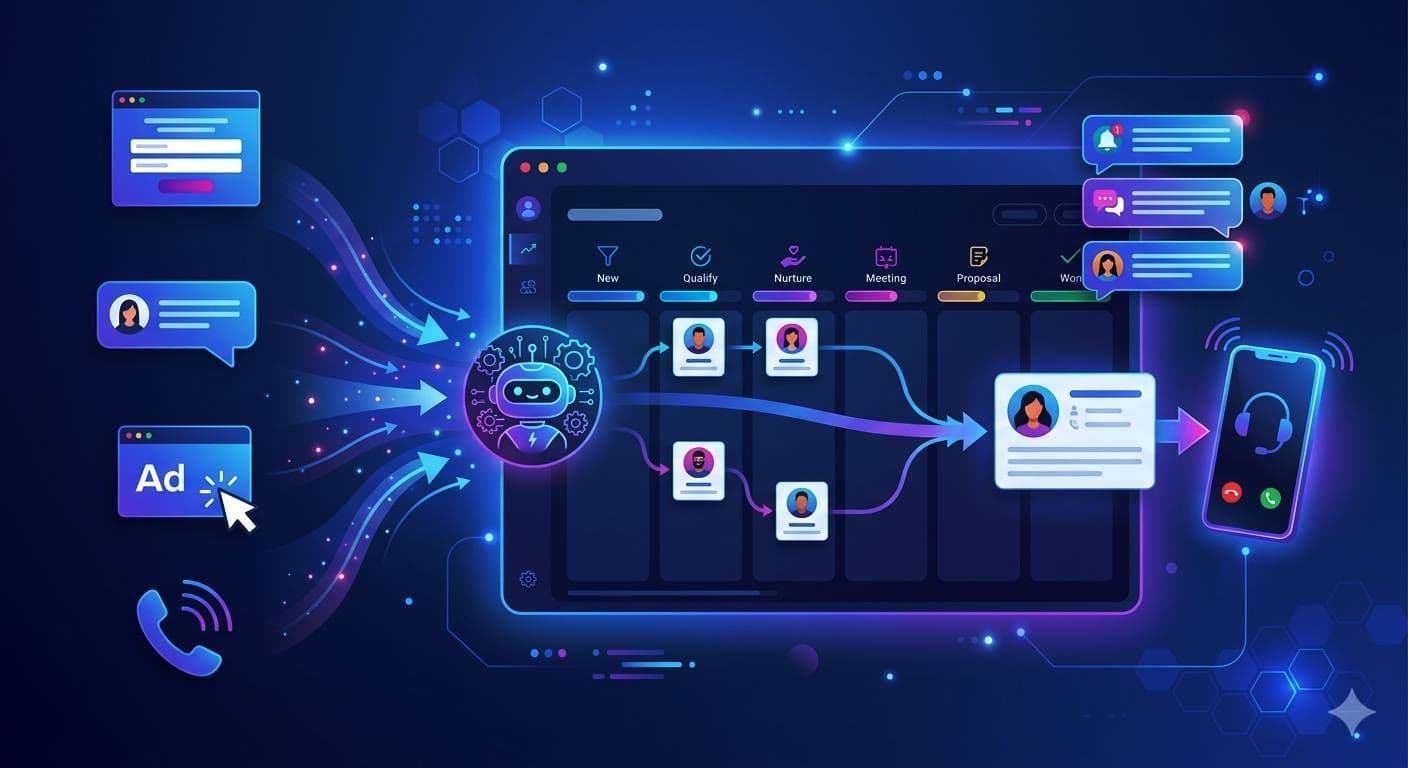
At 2:17 PM, a VP of Operations lands on a SaaS company’s website after sitting through a frustrating internal meeting.
Their team has outgrown spreadsheets. Reporting is messy. Managers are complaining. Leadership wants answers before next quarter.
So they do what serious buyers do when the pain becomes immediate: they request a demo.
This is exactly Why Demo Request Leads Require Instant Response.
A demo request is not casual browsing. It is not top-of-funnel curiosity. It is not someone vaguely collecting ideas for later.
It is a raised hand from a buyer who wants to see the product in action now, while the problem still feels urgent and while internal momentum still exists.
If your team waits too long, the biggest loss is not just “slow follow-up.” The real issue is that demo request intent has a very short half-life. The urgency that triggered the form fill starts decaying almost immediately.
That is what makes demo leads different from ordinary inbound inquiries.
Demo requests are a peak-intent moment, not a normal lead
A person who asks for a demo has already moved beyond basic awareness.
They usually know what category they are buying in. They have likely compared a few vendors. They may have already visited your pricing page, reviewed features, or discussed options internally.
In many cases, the demo request happens at the exact moment when internal pressure, budget interest, and buyer attention finally line up.
That alignment is fragile.
The common mistake sales teams make is treating demo requests like any other form submission. But a demo request is closer to a buying event than a marketing lead.
That is the core reason Why Demo Request Leads Require Instant Response matters so much. You are not trying to create intent. You are trying to capture intent at its highest point.
Here is the reframing:
A demo request is not a lead-generation event. It is an intent-conversion event.
If you respond hours later, you are often arriving after the emotional and organizational momentum that created the request has already weakened.
Why urgency due to strong buying intent fades so fast
The key mechanism is simple: demo requests are usually triggered by an immediate buying context.
Something just happened.
Maybe the prospect saw a reporting gap before a board meeting. Maybe a sales manager complained that reps are missing inbound leads. Maybe the founder just approved a search for a new system. Maybe the team hit a breaking point with a manual workflow.
That moment creates action.
The buyer opens tabs, compares vendors, fills out two or three demo forms, and becomes highly responsive for a short window. During that window, they are mentally available. They are ready to answer questions. They are ready to book time. They are ready to move.
Then normal work resumes.
Their calendar fills back up. Internal priorities shift. The pain is still real, but the urgency softens. The buyer moves from “we need to solve this now” to “we should revisit this next week.”
This is the real danger.
Demo leads do not go cold because they were weak. They go cold because they were strong, but only for a narrow period.
Strong intent creates urgency. Urgency creates action. But if no one meets that moment, the action window closes.
That is why articles on response time and conversion rates are so relevant to demo pipelines in particular. The closer a lead is to a buying decision, the more expensive each minute of delay becomes.
Why Demo Request Leads Require Instant Response in B2B sales
In B2B, demo requests often come with hidden internal momentum.
One person may fill out the form, but several people may be involved behind the scenes. There may be a team waiting to hear, “Did they get back to us?” There may be an active budget conversation. There may be pressure to narrow a shortlist quickly.
When you respond instantly, you support that internal momentum.
The buyer can say:
“They got back to me right away.”
“We already have a call booked.”
“They answered my first questions.”
That speed helps the buyer keep the evaluation moving inside their organization.
When you respond slowly, the opposite happens.
The buyer loses the ability to drive the process forward while attention is high. The internal conversation stalls. Stakeholders move on. What looked like an active opportunity turns into a “circle back later” account.
This is why lead response time affects appointment booking so directly. With demo requests, booking speed is not just a convenience metric. It is a measure of whether you caught the buyer while their internal urgency was still alive.
The business cost of missing the intent window
When companies mishandle demo requests, they often misread the outcome.
They assume:
- the lead was not qualified
- the timing was bad
- the prospect was just researching
- the market is getting harder
Sometimes those things are true.
But often, the real issue is that the request came during a brief high-intent window and the business failed to engage during that period.
That has serious downstream effects.
First, demo show rates suffer.
If booking happens late, the prospect is more likely to accept a meeting without real urgency behind it. Meetings scheduled from fading intent are easier to cancel.
Second, pipeline quality gets distorted.
When strong-intent leads are reached too late, teams may conclude that demo-request traffic is poor quality. In reality, the traffic was good. The timing was bad.
Third, marketing ROI quietly drops.
If paid search, SEO, or outbound retargeting is driving demo requests, delayed response means you paid to generate buying intent but failed to capture it at the right moment. That is one reason speed to lead has such a direct effect on marketing ROI.
Fourth, forecasting becomes less reliable.
Teams see form volume and assume pipeline should follow. But if response speed does not match the urgency profile of the lead source, volume becomes a misleading indicator.
The psychology behind demo request timing
A demo request is often made when emotion and logic briefly align.
The logical side says, “We need a solution.”
The emotional side says, “I am tired of this problem and I want to fix it now.”
That overlap is powerful. It is also temporary.
If your response arrives during that overlap, the buyer feels relief. They feel progress. They feel like the search is moving.
If your response arrives after that overlap, it feels like another task to manage.
Same buyer. Same company. Same need.
Different timing.
That is why demo-request handling should not be designed around rep convenience. It should be designed around buyer momentum.
Here is the sharper takeaway:
Speed is not just operational. With demo requests, speed protects intent from decay.
That is a different way to think about lead response. You are not merely being fast. You are preserving the exact state of mind that caused the prospect to raise their hand.
If you want a broader explanation of why inbound leads go cold, the answer starts with this same pattern: intent is strongest at the moment of conversion, not hours later.
Practical ways to respond while buying intent is still high
If the problem is short-lived urgency, the solution is to engage while that urgency is still active.
That requires process design around immediacy.
1. Treat demo requests as a separate response category
Do not put demo requests into the same queue as generic contact forms.
They deserve their own workflow, their own routing logic, and their own response expectations.
A buyer asking for a product walkthrough is signaling a far more active intent state than someone asking a broad question.
2. Optimize for first contact in minutes, not same-day follow-up
“Same day” sounds responsive internally, but it misses the real nature of demo intent.
For demo requests, the goal should be near-immediate acknowledgment and rapid human or automated engagement.
Even a short confirmation plus an instant scheduling option is better than silence.
3. Reduce friction between form fill and calendar booking
If the buyer is ready now, make it easy to act now.
Do not force a long wait for manual outreach before they can schedule.
Let the form submission flow directly into an available booking path, ideally with immediate confirmation and reminders.
4. Ask qualifying questions after engagement begins, not before it starts
Many teams create long demo forms to filter leads.
But when intent is hot, friction costs more than it saves.
Capture the request quickly. Start the conversation quickly. Qualify inside the interaction.
This is especially important for teams focused on automating demo booking without sacrificing lead quality.
How automation and AI solve this exact demo-request problem
This is where automation becomes less of a convenience and more of an infrastructure requirement.
If the core issue is the delay between submission and response, then the best system is one that eliminates that delay entirely.
AI-powered lead response can do that in a way manual teams usually cannot.
The moment a landing page form is submitted, the system can:
- respond in seconds
- send a personalized SMS
- place an immediate call
- ask qualifying questions
- route the lead based on answers
- book an appointment automatically
- trigger follow-ups if the first attempt is missed
That matters because it preserves the lead’s original buying context.
Instead of asking the prospect to re-engage later, the system engages while intent is still fresh.
This is where FusionSync’s approach fits naturally. Instant response, AI calling, qualification, booking, and automated follow-up are not separate nice-to-haves. Together, they solve the exact gap that causes landing page leads to cool off in the first place.
The goal is not to replace sales.
It is to make sure sales never starts late.
Key takeaways
- Demo requests represent unusually strong buying intent
- That intent is tied to a short-lived moment of urgency
- If you miss that moment, the lead often appears to “cool off” even when real need still exists
- Delayed demo follow-up hurts booking rates, show rates, pipeline quality, and marketing ROI
- The best response system is built to capture buyer momentum immediately
- Automation and AI are effective because they respond during the intent window, not after it
FAQ
1. Why are demo request leads more time-sensitive than other inbound leads?
Because demo requests usually happen when the buyer is actively evaluating solutions and ready to take a next step. The urgency is higher, and that urgency fades quickly if no one responds.
2. What is the ideal response time for a demo request?
The closer to instant, the better. Minutes matter because demo requests are tied to a live buying moment, not general interest.
3. Can automation really improve demo conversion rates?
Yes. Automation helps you engage the lead while intent is still high by sending an immediate response, qualifying quickly, and creating a path to book a meeting without delay.
Conclusion
The clearest answer to Why Demo Request Leads Require Instant Response is not just that fast follow-up is a best practice.
It is that demo requests come from buyers in a rare moment of concentrated intent.
They are motivated now. They are evaluating now. They are available now.
If your business responds inside that window, you turn active urgency into booked conversations.
If you respond after that window, you are not following up on the same lead state that existed at form submission.
That is the real lesson.
Demo requests do not need nurturing first. They need immediacy.
And the companies that understand that will convert more of the demand they already have.
Next step
Want to fix slow lead response?
See how FusionSync responds in seconds, qualifies inbound leads, and moves them toward a booked next step automatically.
Where it works
View all use cases