
Why Fast Lead Response Builds Trust
Discover how quick responses improve buyer trust.
A homeowner submits a quote request for a kitchen remodel at 8:14 p.m.
They are not just browsing.
They have likely spent the last hour comparing contractors, scrolling photo galleries, checking reviews, and finally deciding to reach out.
At that moment, they are doing something fragile: placing a small amount of trust in a company they do not know yet.
Then nothing happens.
No text.
No call.
No confirmation that anyone saw the request.
By the next morning, the silence has already said something.
It has suggested disorganization, low attentiveness, or a poor customer experience to come.
That is the core reason Why Fast Lead Response Builds Trust matters so much in inbound sales. Speed is not only about getting there first. It shapes how a buyer interprets your reliability before a real conversation even begins.
In early interactions, buyers do not have much to evaluate. They have not seen your process. They have not experienced your service. They have not compared your team to others in a meaningful way.
So they use the one signal available immediately: how quickly you respond.
Trust starts forming before the first real conversation
When a lead fills out a form, they are making a low-commitment move with high emotional significance.
They are saying, in effect, “I am willing to hear from you.”
That window is short, but more importantly, it is interpretive.
A fast reply tells the lead:
- you are paying attention
- your business is responsive
- their inquiry matters
- working with you will probably feel smooth
A slow reply tells them the opposite.
This is where many teams misunderstand response time. They treat it as a scheduling issue. In reality, it is a trust signal.
Here is the reframing:
Speed is not operational. It is relational.
That is the deeper mechanism behind early-stage conversion. A fast response reduces uncertainty. And uncertainty is the enemy of trust.
If a prospect has to wonder whether anyone received their request, whether they will be ignored, or whether future communication will also be inconsistent, trust starts eroding before your sales team ever says hello.
This is also a major part of why inbound leads go cold. They do not simply lose interest in the abstract. They begin to feel less confident that your business will be easy to work with.
Why Fast Lead Response Builds Trust in the first five minutes
The first few minutes after form submission matter because buyer intent and buyer uncertainty exist at the same time.
That combination is powerful.
The lead is interested enough to act, but they still do not know if your company is credible, organized, or attentive. They are looking for reassurance.
A quick response provides that reassurance instantly.
It does three things at once.
First, it confirms receipt.
The buyer no longer has to guess whether the form worked.
Second, it validates their timing.
Your response says, “You reached out at the right moment, and we are here.”
Third, it creates emotional continuity.
The lead does not have to restart the decision-making process hours later when their attention has moved on.
This is especially true in service businesses and high-consideration sales, where buyers often feel some friction before submitting a form. They may worry about spam, aggressive follow-up, or wasting time.
A fast, clear, human-feeling response lowers that tension.
Not because it closes the deal instantly.
Because it proves that the next step will be easy.
That is what trust often means in the earliest stage: confidence that engaging with your business will not become work.
Silence creates doubt faster than most teams realize
Most companies think delayed follow-up is a neutral state.
It is not.
Silence is interpreted.
If a buyer hears nothing after reaching out, they start filling in the blanks themselves.
Maybe this company is too busy.
Maybe they are poorly run.
Maybe they will be hard to reach after the sale too.
Maybe customer service will be slow.
None of these conclusions may be fair.
But buyers make them anyway because they have limited information.
And in the absence of communication, people use responsiveness as a proxy for competence.
That is the key mechanism.
Fast response builds trust because buyers assume your early behavior predicts the rest of the relationship.
If you are attentive before money changes hands, you seem safer.
If you are hard to reach when the lead is fresh, you seem risky.
This is one reason the conversation around the psychology of fast lead response is so important. Response time does not only affect contact rates. It affects perception.
And perception drives whether a prospect replies, books, or waits.
The business impact of trust loss shows up before the pipeline report does
When trust weakens early, the damage usually looks operational on the surface.
Fewer replies.
Lower contact rates.
More no-shows.
Dropped conversations.
Fewer booked appointments.
But underneath those metrics is a confidence problem.
Leads are not only deciding whether they need your solution. They are deciding whether they trust your company enough to continue.
This is why some businesses generate plenty of inbound demand but still struggle to turn forms into meetings. The issue is not always lead quality. It is often the trust gap created between the moment of inquiry and the moment of response.
And that gap gets expensive fast.
Marketing creates interest.
Response speed protects trust.
Without that protection, demand leaks out of the funnel.
A paid lead that cost $80 to acquire can become useless if the buyer spends the next two hours hearing nothing and mentally downgrading your reliability.
A demo request can lose momentum not because the prospect changed their need, but because the company failed the first micro-test of responsiveness.
That is an important insight for sales leaders:
The first conversion is not the meeting. The first conversion is trust.
If you miss that, the rest of the funnel gets harder.
For teams trying to improve appointment volume, it helps to understand how lead response time affects appointment booking. A delayed reply does not just postpone outreach. It weakens the buyer’s willingness to commit.
Buyers read speed as a preview of the customer experience
In the absence of a real relationship, people rely on patterns.
They assume small behaviors reveal larger truths.
A prospect who gets a fast response often thinks:
“These people are on it.”
A prospect who waits too long often thinks:
“If this is how they handle a new inquiry, what happens when I actually need help?”
That thought matters more than many teams realize.
Especially in categories where buyers expect ongoing communication, such as agencies, software, home services, healthcare, legal services, or B2B consulting.
In those markets, the initial reply becomes a preview of delivery.
That means fast response does something subtle but valuable. It reduces future risk in the buyer’s mind.
Trust, at this stage, is not built through a long track record. It is built through cues.
And speed is one of the strongest cues available.
This is also why buyers increasingly expect immediacy. Digital experiences have trained them to assume responsive companies are modern and dependable. Slow replies feel outdated. Fast replies feel capable.
How to use speed deliberately as a trust-building tool
If you want faster response to build trust, the answer is not just “reply quickly.”
The response itself has to reassure.
Here are the most effective ways to do that.
1. Acknowledge immediately
Even if a sales rep cannot talk right away, the lead should know their request was received.
A short SMS or email can do a lot of work if it is clear and specific.
For example:
“Thanks for reaching out about your kitchen remodel. We received your request and will contact you shortly.”
This removes uncertainty.
It tells the buyer the process is working.
2. Match the context of the inquiry
Trust grows when the response feels connected to what the lead actually asked for.
If someone requested pricing, mention pricing.
If they asked for a demo, reference the demo.
If they came from a quote form, reflect that.
Generic auto-responses can feel robotic.
Contextual speed feels attentive.
3. Keep the first touch simple
The goal of the first response is not to force a full sales interaction.
It is to make the next step feel easy.
That may mean:
- confirming receipt
- offering a time to talk
- asking one or two qualifying questions
- sharing a booking link
The more friction you add, the less trust your speed actually creates.
4. Be consistent across every lead source
Trust breaks when response quality depends on channel.
A website form gets a quick text, but Facebook leads sit untouched.
Demo requests get priority, but quote requests wait until morning.
From the buyer’s perspective, none of that matters.
They only experience whether you responded promptly or not.
Where manual teams struggle
Most businesses do not fail because they disagree with fast follow-up.
They fail because trust-building speed is hard to deliver manually, every time, across every inquiry source.
Leads come in after hours.
Reps are on calls.
Notifications get buried.
Someone intends to reply “in a minute” and then gets pulled into something else.
The result is inconsistency.
And inconsistency is deadly when trust is still fragile.
A business may respond quickly to some leads and slowly to others, which means trust is being built randomly instead of systematically.
That is not a sales talent problem.
It is an infrastructure problem.
How automation and AI protect trust at the moment it matters most
This is where automation becomes more than an efficiency tool.
It becomes a trust-preservation system.
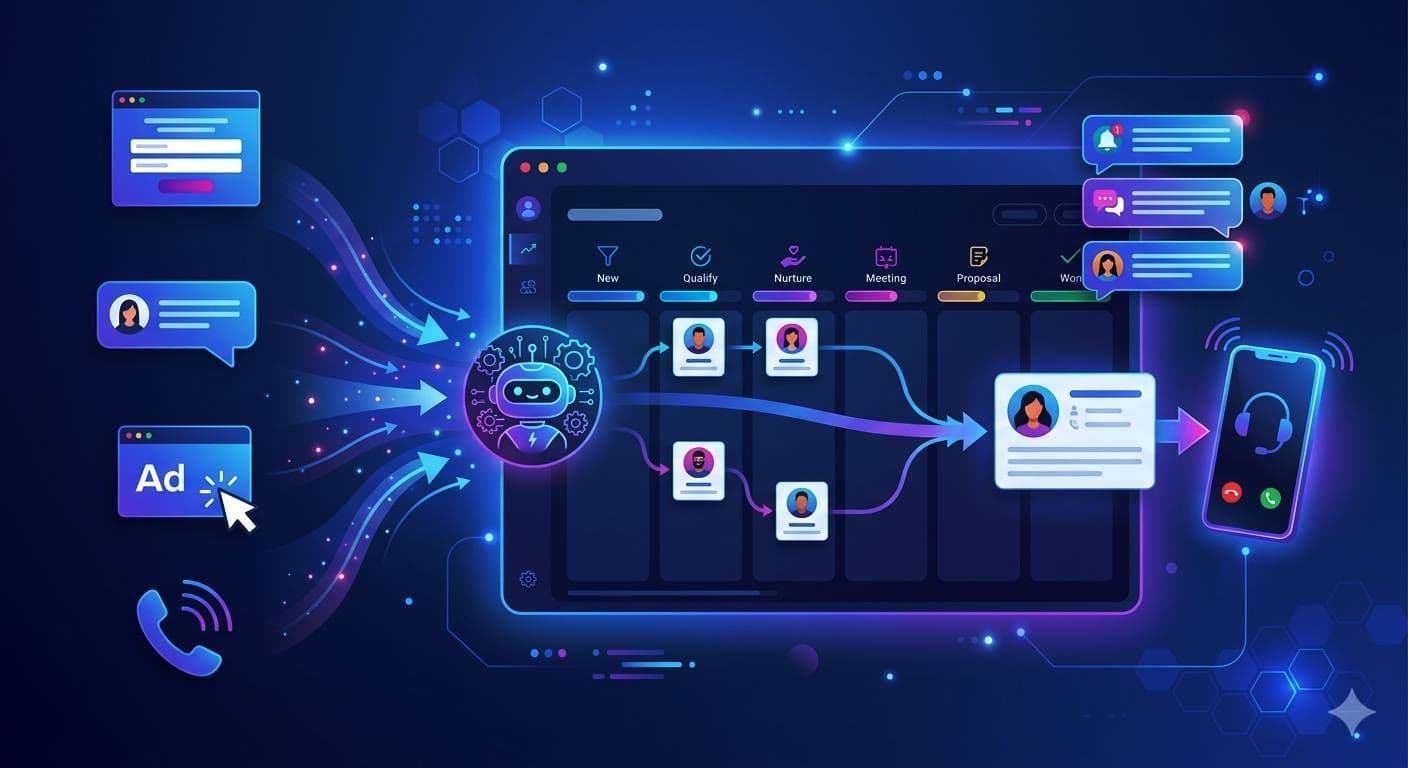
When AI-powered lead response is set up well, every new inquiry gets an immediate, relevant, and useful first touch.
That might include:
- an instant text acknowledging the request
- an automatic call within seconds
- a few qualifying questions
- live routing to the right rep
- immediate appointment booking
- follow-up if the lead does not answer
The point is not to sound futuristic.
The point is to remove the silence that causes doubt.
A fast AI response keeps the buyer engaged while their intent is high and their trust is still forming.
It also creates consistency that human teams alone usually cannot maintain.
Every lead gets the same standard of attentiveness, whether it comes in at 2 p.m. or 11 p.m.
For companies exploring this shift, articles on AI for inbound lead response can help clarify how instant outreach supports both speed and customer experience.
This is where FusionSync’s model makes sense in practice. If trust is won or lost in the first interaction, then systems that respond instantly, qualify prospects, and book meetings are not just saving time. They are securing belief.
Key takeaways
- Fast response is one of the earliest trust signals a buyer receives.
- Buyers interpret silence, and usually not in your favor.
- A quick reply reduces uncertainty and makes the next step feel safe.
- Early trust loss shows up as lower reply rates, fewer meetings, and weaker conversion.
- Manual follow-up creates inconsistency, which weakens trust.
- Automation and AI help businesses respond immediately and reliably at scale.
The deeper lesson is simple:
Leads do not just buy solutions. They buy confidence in the experience ahead.
And confidence starts forming the moment they reach out.
Conclusion
The real answer to Why Fast Lead Response Builds Trust is not just that buyers like speed.
It is that speed answers an unspoken question immediately:
“Will this company be responsive if I choose them?”
In the first few minutes after an inquiry, your business has very little to prove itself with. Response time becomes the evidence.
A fast response signals attentiveness, competence, and reliability.
A delayed one creates doubt that is hard to reverse.
That is why the best teams do not treat speed as a back-office metric. They treat it as part of the buyer experience.
And increasingly, they use automation and AI to make sure trust is built instantly, not hours later.
FAQ
1. Why does a fast lead response increase trust?
Because buyers use speed as a signal of reliability. Before they know your product or service well, they judge whether your business seems attentive, organized, and easy to work with.
2. Is fast response still important if the lead is high intent?
Yes. High intent does not remove uncertainty. In fact, when intent is high, the buyer is often actively evaluating risk. A fast response reassures them at the exact moment they are deciding who feels safest to engage with.
3. Can automation build trust, or does it feel impersonal?
Automation can build trust if it is timely, relevant, and clear. Buyers usually prefer an immediate helpful response over waiting hours for a human reply. The key is making the first touch feel connected to their request, not generic.
Next step
Want to fix slow lead response?
See how FusionSync responds in seconds, qualifies inbound leads, and moves them toward a booked next step automatically.
Where it works
View all use cases