
Why Fast Lead Response Increases Conversions
Learn how response speed impacts sales outcomes.
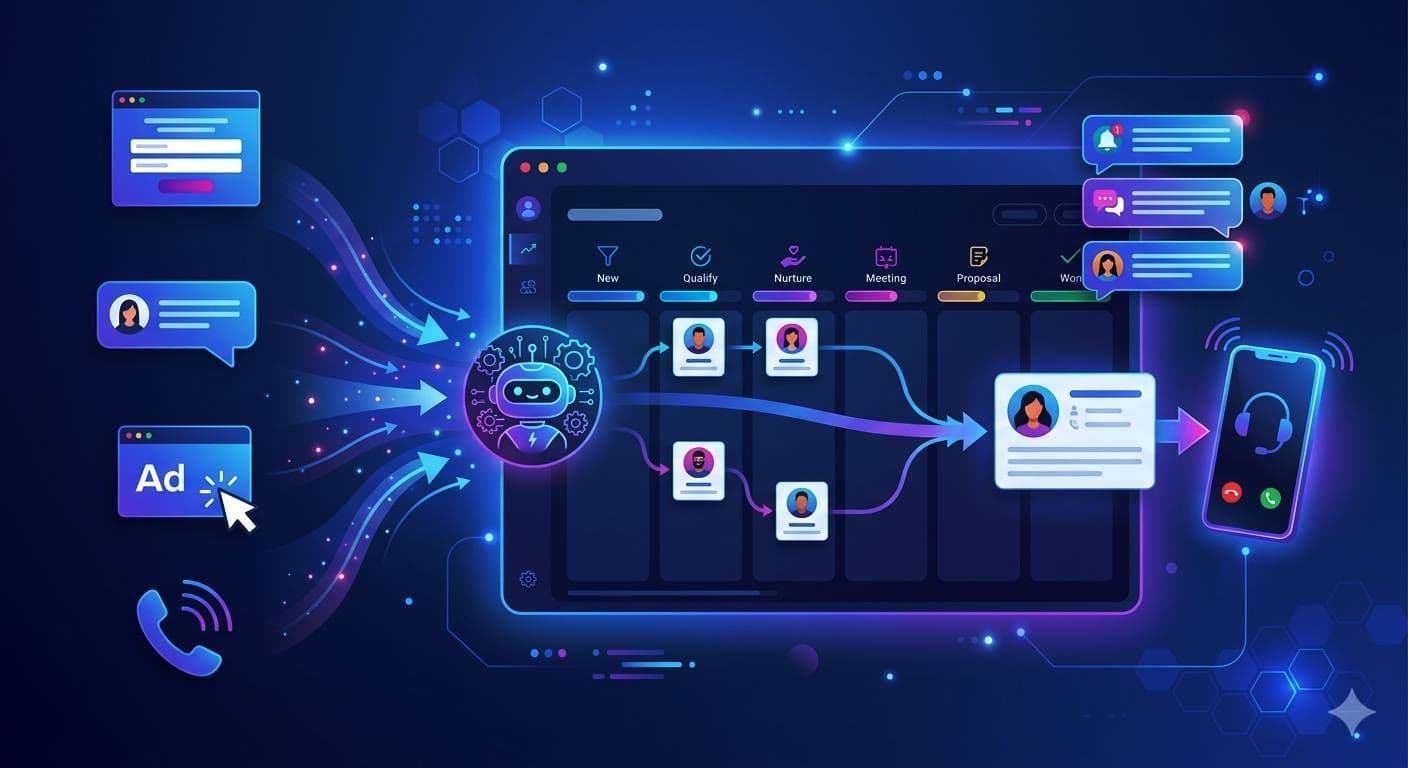
A roofing company in Phoenix spends heavily on Google Ads after a summer hailstorm.
The clicks are expensive. The landing page converts well. Homeowners submit quote requests while standing in their driveways, literally looking at damage on their roofs.
On paper, demand is there.
But the owner keeps hearing the same thing from the sales team: the leads are "bad."
They are not bad.
They are late.
A homeowner who fills out a form in that moment is not just browsing. They are in an active decision window. They want reassurance, next steps, and a fast path to getting the problem handled. If your business responds in 2 minutes, you enter that decision window while urgency is still high. If you respond in 2 hours, you enter after the moment has already collapsed.
That is the simplest explanation for Why Fast Lead Response Increases Conversions.
Speed does not help conversion in some vague operational way. It changes the probability that you reach a buyer while their intent is still alive. That is the causal link.
A useful way to think about it is this:
Conversion does not happen because a lead exists. It happens because your response arrives before intent decays.
That is why businesses with the same traffic, same offer, and same sales talent can produce very different results. One team is responding inside the buying moment. The other is responding after it.
Why Fast Lead Response Increases Conversions
Fast response increases conversions because it compresses the gap between buyer intent and seller action.
That gap matters more than most teams realize.
When someone submits a form, requests a demo, or asks for pricing, they are at a peak state of attention. They are focused on the problem. They are mentally available to talk. They are motivated enough to take action.
That state is temporary.
The longer the delay, the more that motivation fades. Not because the lead was never serious, but because intent is time-sensitive. People move on quickly. They return to work. They get distracted. They postpone the decision. Their urgency softens.
So the conversion advantage of fast response is not just that you "reply sooner."
It is that you meet the lead before the internal momentum that triggered the inquiry disappears.
This is also why the conversation rate drops so sharply after even short delays. A lead contacted in 60 seconds is not the same lead contacted in 60 minutes. It may be the same person in the CRM, but it is not the same level of readiness.
If you want the deeper benchmark context, FusionSync covers that in its post on what counts as a good sales response window.
The mechanism is simple: attention, intent, and action are tightly connected
Most companies treat lead response like an admin step.
A form comes in. Someone gets notified. A rep follows up when they can.
But the buyer does not experience this as an admin process. They experience it as a continuation of their decision.
That is the mechanism behind conversion lift.
A fast response works because it keeps three things connected:
- the moment the buyer feels the problem
- the moment they ask for help
- the moment your business engages
When those three moments stay close together, conversion rises.
When they separate, conversion falls.
Think about the roofing example again.
The homeowner sees damage, worries about insurance timing, fills out a quote form, and waits. If your company calls right away, the conversation feels like a natural continuation of the action they just took. They answer. They engage. They schedule.
If the call comes later that afternoon, the emotional intensity is gone. They may be in a meeting, driving, or handling something else. Now your outreach feels like an interruption rather than a response.
That shift is everything.
Speed is not just faster follow-up. It is timing your outreach to match the buyer's highest willingness to act.
The real conversion loss happens before your sales pitch even starts
Many teams assume they lose leads because reps did not say the right thing.
Often, the loss happened earlier.
Before discovery.
Before qualification.
Before the demo.
Before pricing.
The real drop occurs when response lag breaks contact momentum.
This is why fast response has such an outsized effect on conversion rates. It is not only improving sales execution. It is preserving the conditions required for sales execution to happen at all.
If you reach a prospect quickly, you get more live conversations.
More live conversations create more qualification opportunities.
More qualification opportunities create more booked meetings.
More booked meetings create more pipeline.
So when leaders ask why conversion improved after reducing response time, the answer is usually not mysterious. The top of the funnel became more reachable.
That is also why response speed should be viewed as a lever on conversion, not just an efficiency metric. FusionSync explores this more directly in its article on how lead response time impacts conversion rates.
What intent decay looks like in real buying behavior
Intent decay rarely looks dramatic inside a CRM.
It looks ordinary.
A lead who was ready at 10:03 AM becomes "no answer" at 11:15 AM.
A form submission from lunch hour becomes an ignored call at 2:40 PM.
A demo request from Friday afternoon becomes a low-priority task by Monday morning.
Nothing appears broken.
But the underlying psychology has changed.
The lead's focus has shifted from active problem-solving to passive postponement.
This is why the phrase "the lead went cold" can be misleading. It makes it sound like a mysterious quality problem.
Usually, it is timing failure.
The lead did not suddenly become uninterested for no reason. The business waited long enough for immediate intent to lose force.
That reframing matters because it changes what leaders fix.
If you think lead quality is the main issue, you buy more traffic.
If you understand that timing is the issue, you redesign response speed.
The business impact is larger than most teams calculate
Slow response does not just lower contact rates a little.
It compounds across the funnel.
Suppose a company generates 300 inbound leads per month. If faster response increases initial connection rates even modestly, that improvement flows into every downstream metric:
- more conversations started
- more qualified leads identified
- more appointments booked
- more proposals sent
- more closed deals
That is why response speed often produces revenue gains without increasing spend.
You are not creating demand.
You are capturing more of the demand you already paid for.
This is especially important for high-intent channels like paid search, demo requests, and quote forms. Those leads are expensive because the buying signal is strong. But that same strength makes them highly time-sensitive.
If your team waits, you are not merely delaying outreach. You are reducing the commercial value of the lead minute by minute.
For businesses trying to understand why inbound leads go cold, this is the central idea: conversion falls when response happens outside the buyer's active decision window.
Fast response creates a positional advantage, not just a speed advantage
Here is the contrarian insight:
Speed is not operational. It is positional.
Most teams think of response time as an internal process metric.
But in practice, speed determines where your company shows up in the buyer's decision sequence.
A fast responder reaches the buyer while criteria are still forming.
A slower responder reaches them after preferences have already started to solidify.
That means quick outreach does more than increase contact odds. It gives you earlier influence over the conversation.
You help define urgency.
You frame the next step.
You shape what the buyer compares.
This is one reason instant callbacks and rapid SMS confirmation work so well. They keep your business present during the narrow period when the buyer is still choosing what to do next.
If your team is trying to operationalize this, it helps to study the 5-minute rule for inbound leads and the workflows behind it.
How to improve conversion by closing the response gap
If speed is causally linked to conversion, the solution is not complicated in theory.
You have to reduce the time between hand raise and first meaningful contact.
The challenge is execution.
Here are the most effective fixes when the goal is specifically to preserve intent and convert more inbound leads.
1. Treat first contact as part of the buying moment
Do not treat lead follow-up as a later sales task.
Treat it as the immediate next step of the inquiry itself.
This mindset shift changes how teams design workflows. The standard should not be "same day" or "when a rep is free." It should be immediate engagement while buyer attention is still concentrated.
2. Measure speed to first meaningful response, not just first touch
An auto-email alone is not enough.
The metric that matters is how quickly the lead receives a real next step: a call, text conversation, qualification interaction, or booking path.
If the lead gets a confirmation message instantly but waits 45 minutes for real engagement, the conversion advantage is still leaking away.
3. Build response paths around high-intent forms
Not every lead source needs identical treatment.
Demo requests, quote requests, pricing inquiries, and inbound ad leads should trigger your fastest response path because they contain the highest immediate buying intent.
That is where response speed produces the strongest conversion lift.
How automation and AI solve this exact conversion problem
This is where automation becomes more than convenience.
It becomes a way to protect intent before it fades.
Manual teams struggle because human availability is uneven. Leads arrive during meetings, after hours, during lunch, while reps are on calls, or when ownership is unclear.
Intent does not wait for availability.
Automation closes that gap.
A well-designed system can:
- respond within seconds after form submission
- send an SMS while the lead is still on the page
- trigger an instant call attempt
- ask qualifying questions immediately
- route the lead without delay
- offer booking options in the same interaction
That matters because it preserves the continuity between inquiry and conversation.
AI strengthens this further. Instead of merely acknowledging the lead, AI can actively continue the buying process. It can answer basic questions, collect context, qualify fit, and help book the next step while attention is still high.
That is the key point.
Automation does not improve conversion only because it is efficient.
It improves conversion because it prevents the time gap that causes intent decay in the first place.
If you want to explore the system design side, FusionSync has a useful post on how AI can respond to leads instantly.
Key takeaways
- Fast lead response increases conversions because it connects outreach to peak buyer intent.
- The core mechanism is intent decay: as time passes, attention and willingness to act fall.
- The biggest loss often happens before a rep ever begins the sales conversation.
- Response speed improves downstream metrics by increasing live conversations at the top of the funnel.
- Automation and AI solve this by removing the delay between inquiry and engagement.
Conclusion
The answer to Why Fast Lead Response Increases Conversions is not just that buyers like quick service.
It is that conversion depends on timing.
When a prospect raises their hand, there is a short window where attention, urgency, and willingness to act are all unusually high. Fast response works because it enters that window. Slow response misses it.
That is the direct causal link.
If your team wants more pipeline from the leads you already generate, start there. Reduce the gap between inquiry and engagement. Build systems that respond while intent is still active.
Because in inbound sales, speed is not a nice-to-have.
It is the mechanism that turns interest into action.
FAQ
1. Why does fast lead response improve conversions so much?
Because it reaches prospects while their intent is strongest. Right after someone submits a form or requests a demo, their attention is high and they are ready to act. A fast response connects with that moment before it fades.
2. Is a fast automated response enough on its own?
Not always. A confirmation email helps, but conversions improve most when automation leads quickly to meaningful engagement, such as a call, SMS exchange, qualification step, or appointment booking.
3. What is the main reason delayed response lowers conversion?
The main reason is intent decay. As time passes, the buyer's focus shifts, urgency drops, and the chance of starting a real conversation falls. That is why speed has a direct effect on conversion.
Next step
Want to fix slow lead response?
See how FusionSync responds in seconds, qualifies inbound leads, and moves them toward a booked next step automatically.
Where it works
View all use cases