
How to Follow Up With Inbound Leads
Learn the best strategies for following up with inbound sales leads.
A roofing company in Phoenix launches a weekend storm-damage campaign.
By Sunday afternoon, the leads start coming in.
Homeowners submit forms from their phones while standing in their driveways, looking at missing shingles and water stains.
They are not casually browsing. They want help now.
But inside the business, follow-up happens the old way.
A form hits the CRM. A notification gets buried. The office manager plans to sort leads Monday morning. By then, the people who filled out those forms are no longer in the same decision window.
Not because they stopped needing a roofer.
Because the buying moment passed.
That is the real challenge behind How to Follow Up With Inbound Leads. Most businesses think follow-up is mainly about what to say. In reality, the first issue is when you say anything at all.
Here is the sharper truth: follow-up is not a communication problem first. It is a timing problem first.
If your response arrives after the moment of urgency, even a well-written email or a polished call script shows up too late to matter.
Start With Speed, Not Scripts
When an inbound lead submits a form, there is a narrow window where action feels easy.
- The lead still remembers why they reached out.
- They are still near the problem.
- They are still mentally available to continue the conversation.
That window shrinks fast.
So when people ask how to follow up with inbound leads, the most useful answer is simple: build a process that starts immediately.
This is where many teams get it backwards:
- They workshop email copy.
- They debate subject lines.
- They refine outreach templates.
Meanwhile, the real leak is happening earlier.
The first touch is delayed by 15 minutes, 45 minutes, or three hours, and the lead has already drifted out of the decision moment that created the inquiry.
A decent response sent in 60 seconds will usually outperform a perfect response sent in 6 hours.
That is not because messaging never matters.
It is because timing decides whether messaging even gets a chance.
The Real Problem: Inbound Intent Has a Very Short Half-Life
Inbound leads feel durable because they are recorded in a system.
- Once they land in the CRM, they look stable.
- The record is there.
- The contact information is there.
- The opportunity seems preserved.
But intent does not behave like a database entry. It behaves more like momentum.
A person fills out a contact form because something pushed them into action at that exact moment.
- Maybe they just saw a repair estimate from another vendor.
- Maybe their boss asked for options before the end of the day.
- Maybe they finally had five quiet minutes to request a demo between meetings.
That motivation is temporary.
If no one engages quickly, the emotional energy behind the inquiry fades.
The lead does not necessarily become uninterested in the category. They simply become less available to act right now.
Many teams label these leads as weak or unqualified when the actual issue is slower follow-up than the lead's decision tempo.
A useful reframing is this:
Leads do not go cold in the CRM. They go cold in time.
Why Fast Follow-Up Works Better Than “Better” Follow-Up
Fast follow-up works because it meets the lead while context is still fresh.
When you respond immediately:
- The lead still remembers the page they were on.
- The problem they want solved still feels urgent.
- They are more likely to answer a call or reply to a text.
- The next step feels like a continuation, not an interruption.
When you respond later, even later the same day, the interaction changes.
- Your message asks the lead to reload context.
- They need to remember who you are, why they submitted, what they were comparing, and whether they still want to deal with it today.
That is a much harder ask.
This is why businesses often misread poor follow-up results.
They assume the outreach copy was weak, when the real issue is timing.
Speed reduces friction.
Delay creates friction.
Why Businesses Still Respond Too Slowly
Most delays do not come from laziness.
They come from workflow design.
A common sequence looks like this:
- A lead submits a form.
- The CRM captures it.
- An alert is sent.
- Someone sees it later.
- The lead gets assigned.
- A rep reaches out when they finish another task.
Nothing in that process sounds unreasonable.
But together, those small delays stack into a response time that misses the buying moment.
This is especially common in businesses with uneven lead flow:
- Leads arrive sporadically rather than smoothly.
- Paid ads, seasonal campaigns, webinars, or weather events create bursts.
- Five or ten leads appear in a short window, and the team falls behind immediately.
That is why lead response time benchmarks for B2B companies matter.
The issue is rarely whether a team follows up eventually.
The issue is whether the process can absorb real-world bursts without losing speed.
The Business Cost of Delayed Follow-Up
Slow follow-up does not just reduce contact rates.
It distorts the entire revenue picture.
- Marketing efficiency drops.
You paid to create intent, but your process failed to capture it while it was active. - Pipeline quality appears worse than it really is.
Leads look weak because conversations happen late, after urgency has faded. - Sales forecasting becomes less reliable.
Teams may assume channel quality is declining when what is actually declining is response speed.
This leads to bad decisions:
- Cutting campaigns that were generating good leads.
- Pressuring reps to improve close rates.
- Rewriting copy and redesigning forms.
The true fix is often operational: respond before the moment expires.
That is why slow lead response kills conversions across industries.
Delay does not just hurt one metric, it weakens every metric downstream.
The Best Follow-Up Happens Before the Lead Has Moved On Mentally
Strong inbound teams understand this pattern:
- The goal is not merely to make contact.
- The goal is to continue the momentum the lead already created.
- The best time to follow up is before the lead switches tasks, enters another meeting, drives home, goes to sleep, or forgets why they reached out.
This is especially true for:
- Demo requests during work hours.
- Service inquiries triggered by urgent problems.
- Paid ad leads captured on mobile devices.
- After-hours form fills from people researching late at night.
The later your first touch occurs, the more disconnected the follow-up feels.
Fast follow-up is effective because it is still contextually on time.
Practical Ways to Follow Up Faster
If timing is the real issue, remove every avoidable minute between inquiry and first contact.
1. Trigger an immediate first touch
- Every inbound lead should receive an instant acknowledgment via text, email, or call.
- The goal is to keep the conversation alive while intent is fresh, not to close immediately.
2. Design for bursts, not averages
- Optimize for peak lead volume, not normal flow.
- Ensure the system works when multiple leads arrive at once.
3. Route leads automatically
- Manual assignment is a common delay.
- Use automated routing based on territory, availability, or round-robin rules.
4. Use calls early when urgency is high
- For high-intent leads, fast calling often outperforms waiting for email engagement.
- The fastest contact method matters most.
5. Build a same-minute standard
- Do not manage toward “same day.”
- Aim for same-minute acknowledgment and near-immediate outreach.
How Automation Solves the Timing Problem
Automation is not a gimmick.
It is infrastructure for speed.
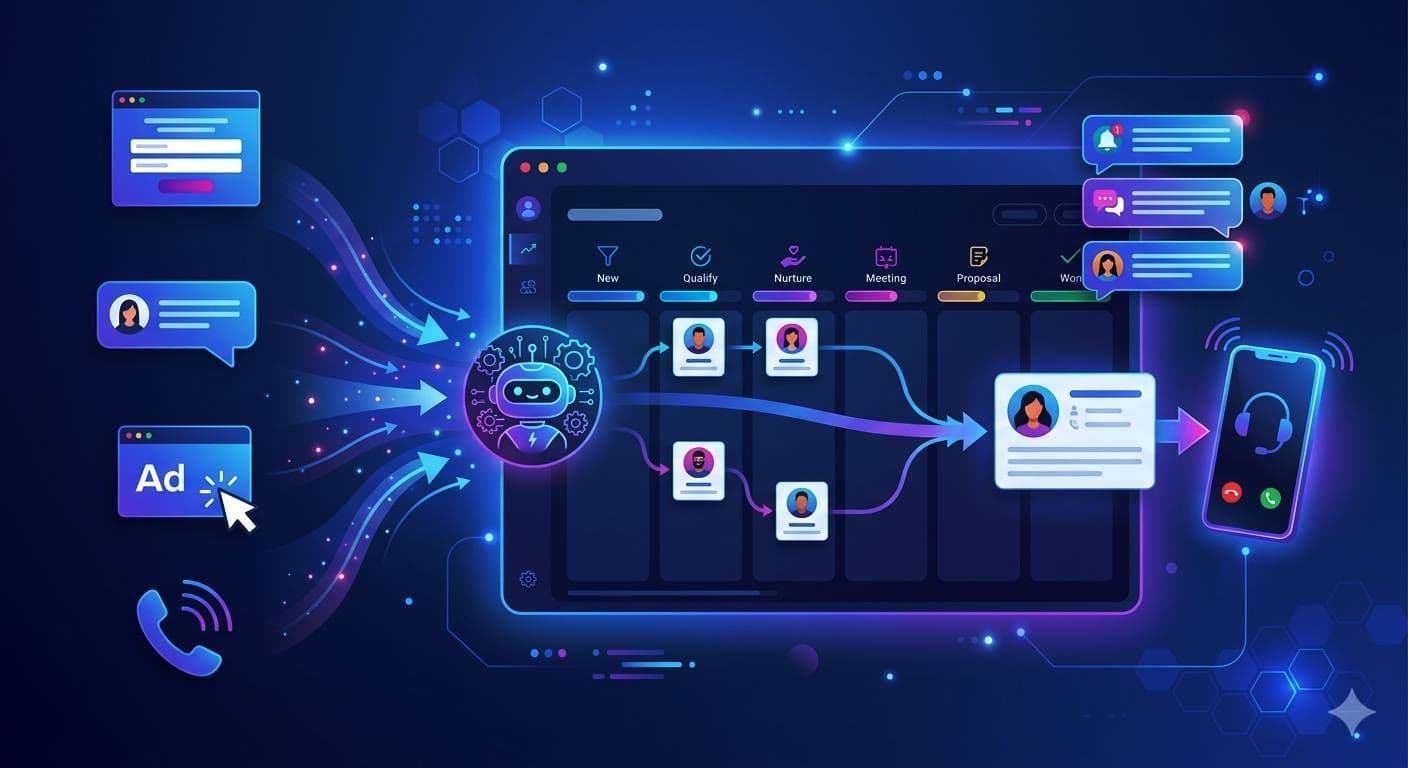
Automation can:
- Respond immediately after form submission.
- Send instant confirmation texts.
- Trigger a call in seconds.
- Ask qualifying questions.
- Route leads without waiting for managers.
- Book meetings while intent is active.
Humans cannot maintain that speed consistently.
Automation closes the time gap.
AI enhances this by:
- Engaging instantly.
- Collecting information.
- Qualifying leads.
- Moving opportunities forward before a rep intervenes.
The benefit is preserving the buying moment, not novelty.
Key Takeaways
- Inbound follow-up is primarily a timing problem.
- Intent fades faster than most teams assume.
- Delayed response forces leads to rebuild context.
- Better messaging cannot consistently rescue bad timing.
- The strongest process responds immediately, even during spikes.
- Automation and AI protect speed when humans are busy.
The best follow-up system ensures no lead waits long enough to leave the original moment of intent.
Conclusion
The real lesson behind How to Follow Up With Inbound Leads:
- Do not treat follow-up as a copywriting challenge first.
- Treat it as a race against fading intent.
When a lead reaches out, the clock starts immediately.
Every minute changes how reachable, responsive, and motivated that buyer will be.
By the time many businesses send their first message, the lead is no longer active, they are trying to revive a moment that passed.
Companies that win more inbound business:
- Are not necessarily better at sales language.
- Are built to respond while the lead still cares.
FAQ
Q1: What is the best first step when following up with inbound leads?
Immediate acknowledgment, a fast text, email, or call keeps the lead engaged while their reason for reaching out is fresh.
Q2: How fast should you follow up with an inbound lead?
As fast as possible, ideally within minutes or seconds. Value drops quickly as the lead moves away from the moment that triggered the inquiry.
Q3: Does messaging matter less than speed in inbound follow-up?
Messaging matters, but speed comes first. Late responses reduce the chance of even starting a conversation.
Next step
Need a better follow-up system?
FusionSync keeps inbound leads moving with instant first response, qualification, and automated follow-up when the lead does not answer right away.
Where it works
View all use cases