
The Future of Lead Response Automation
Explore how automation is changing lead response.
A homeowner lands on a plumbing company’s website at 9:14 p.m.
Their water heater is leaking into the garage.
They fill out a form, upload a photo, and tap “request service now.”
At that moment, they are not casually browsing.
They are ready to talk.
They want reassurance, next steps, and a time on the calendar.
Instead, they get silence.
Not because the business is poorly run.
Not because the lead is low quality.
Not even because nobody cares.
The real gap is technological.
The company’s lead process is still built around notifications, inboxes, and human availability, while the buyer expects interaction in real time.
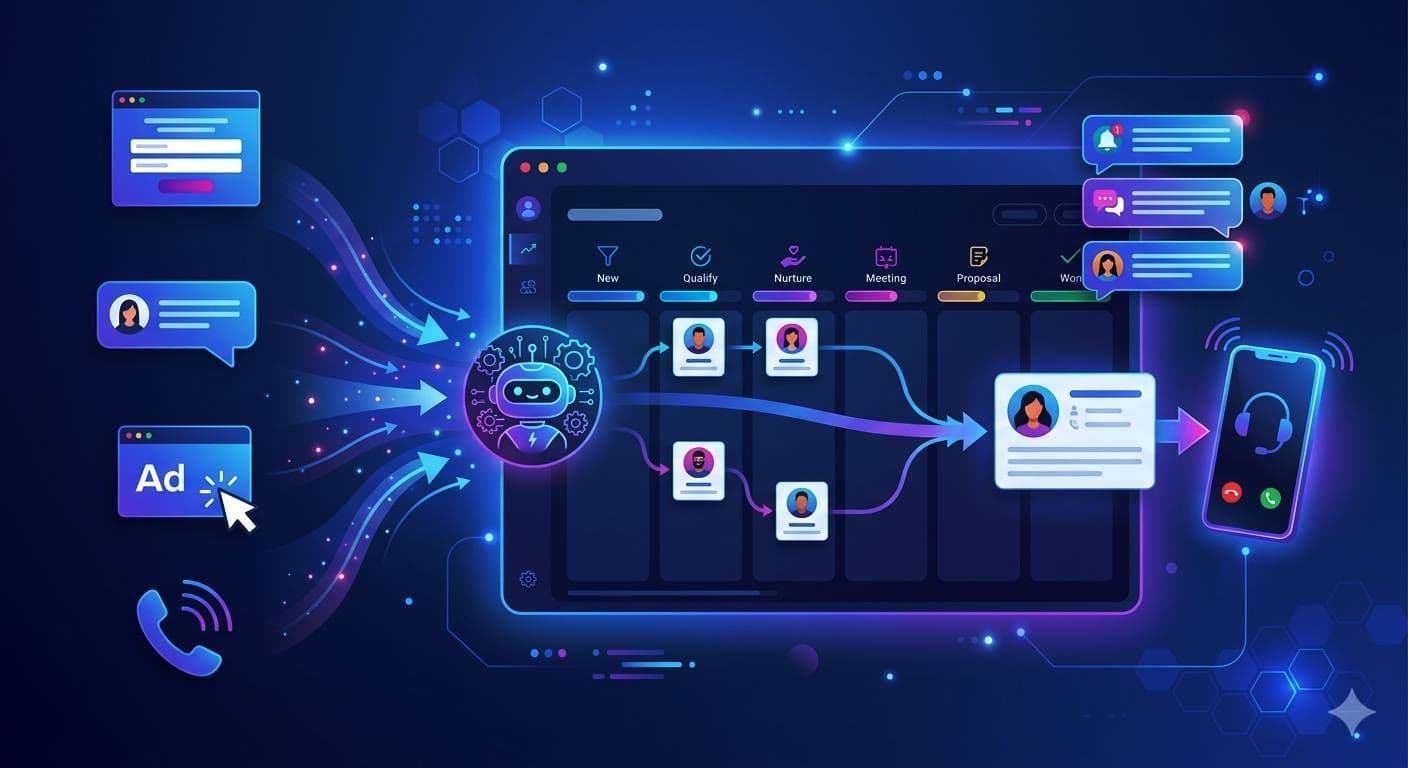
That tension is exactly why The Future of Lead Response Automation matters now. The next generation of lead response is not just about being faster in a general sense. It is about real-time response technology that can detect intent, engage instantly, qualify in seconds, and move the conversation forward while the lead is still mentally present.
A useful way to think about it is this: speed is no longer just a workflow metric. It is a product experience.
The real problem is the gap between lead intent and system reaction
Most businesses still treat inbound lead response like a task queue.
A form gets submitted.
A CRM creates a record.
A rep gets notified.
Someone follows up when they can.
That process may look organized internally, but from the buyer’s perspective it feels broken. The lead raised their hand in a live moment, but the system responded like it was processing paperwork.
This is the central problem real-time response technology is solving.
When a lead arrives, there is a very small window where context, urgency, and attention are all aligned. If your response system cannot operate inside that window, the lead experience starts to degrade immediately.
That is also the deeper answer to why inbound leads go cold. They do not just cool off because time passes. They cool off because the business fails to match the tempo of buyer intent.
Why The Future of Lead Response Automation is being shaped by real-time systems
The biggest shift in lead response is not simply automation for efficiency.
It is automation designed for immediacy.
Older automation helped teams move faster behind the scenes. It routed records, sent alerts, and scheduled reminders. Useful, yes. But still reactive.
Newer systems are different.
They operate at the moment of intent.
That includes technologies like:
- instant SMS acknowledgment triggered the second a form is submitted
- automated callback systems that dial the lead immediately
- AI voice agents that can ask qualifying questions in real time
- dynamic booking flows that present live appointment options
- channel-aware orchestration that chooses phone, SMS, or email based on context
This is where the market is headed. Businesses are moving from “we will get back to you” systems to “we are already engaging” systems.
That distinction matters more than most teams realize.
A lead who receives a text in 10 seconds and a call in 30 seconds experiences continuity.
A lead who receives an email 47 minutes later experiences interruption.
Interruption kills momentum.
Continuity preserves it.
Why real-time response technology changes buyer behavior
Buyers now carry the entire decision journey in their pocket.
They can search, compare, submit, review, and book without ever switching devices. That means their willingness to act is concentrated into short bursts of attention.
Real-time response technology works because it aligns with how that behavior actually happens.
A delayed response asks the buyer to reopen a decision later.
A real-time response helps them complete the decision while they are still in it.
That is a huge difference.
Consider the mechanism:
- The lead submits a request during a moment of active intent.
- Real-time technology responds before attention shifts.
- The system confirms receipt, reduces uncertainty, and creates momentum.
- The lead engages because the interaction feels immediate and relevant.
- Qualification and booking happen before friction has time to build.
Without real-time capability, every one of those steps becomes less likely.
This is why businesses should stop thinking of response technology as a back-office tool. It is part of the buying environment itself.
The consequences of falling behind in real-time response
When a business lacks real-time response technology, the damage is rarely visible in one obvious place.
It spreads quietly across the funnel.
First, contact rates fall.
Not because leads were bad, but because the contact attempt happened outside the best engagement window.
Second, qualification quality drops.
When leads are reached later, they are distracted, less urgent, or less willing to answer detailed questions.
Third, booking rates weaken.
Even interested buyers postpone scheduling when the conversation loses immediacy.
Fourth, marketing performance gets distorted.
Teams blame traffic sources, ad quality, or form conversion rates when the real problem is that the response layer is too slow for modern intent.
This is the hidden cost of outdated response technology. It does not just slow down sales. It corrupts the interpretation of demand.
Here is the contrarian truth: many businesses do not have a lead generation problem. They have a lead capture timing problem.
That reframing matters because it changes the fix.
Instead of asking, “How do we get more leads?” the better question becomes, “How do we engage the lead at the exact moment they are most available to buy?”
The trends defining real-time response technology
The future is not one tool. It is a stack of coordinated capabilities.
Here are the trends shaping modern lead response systems.
1. Immediate multi-channel engagement
Businesses are moving beyond single-channel follow-up.
A real-time system might send a confirmation text, trigger an instant callback, and follow with email if the call is missed.
This reflects a broader shift toward multi-channel lead response strategies that reduce the chance of losing the buyer between touchpoints.
2. AI qualification at first touch
The old model separated response from qualification.
First someone replied, then later someone qualified.
That delay is disappearing.
AI systems can now ask structured questions immediately, identify urgency, capture key details, and push high-intent leads toward a booked appointment without waiting for a human rep.
That is especially important for service businesses, SaaS demo requests, and high-volume inbound teams where lead intent decays quickly.
3. Live routing based on context, not just territory
Traditional routing rules are static.
They assign by region, owner, or round robin.
Real-time systems are becoming more adaptive. They factor in rep availability, channel preference, time of day, urgency signals, and booking likelihood.
This is a major evolution from standard assignment logic and connects closely with CRM automation and lead response time as CRM workflows become more intelligent.
4. Instant callback infrastructure
One of the most practical trends is the rise of automated callback systems. These tools connect with a lead seconds after submission, when recall and motivation are highest.
This is not just fast follow-up. It is response engineered around memory and momentum.
For many companies, especially those handling emergency, high-consideration, or paid leads, this will become standard operating infrastructure.
5. AI voice as the first responder
Voice is coming back, but with automation at the front.
AI voice agents can answer immediately, hold a natural conversation, collect information, and transfer or book when appropriate. For businesses that cannot staff every hour of every day, this closes the gap between lead intent and human availability.
If you want a preview of where this is going, the trend is clear in tools built around AI call systems that improve lead response time.
Why this matters more as buyer expectations keep rising
Every improvement in consumer technology raises the standard for business response.
People are used to instant confirmations, real-time tracking, one-click booking, and conversational interfaces. They do not separate those experiences from B2B or local service buying anymore. They carry the same expectations everywhere.
So when a lead form disappears into silence, it does not just feel slow.
It feels unreliable.
That is the real strategic risk.
Real-time response technology is not only about speed. It signals competence. It tells the buyer, “This company is available, organized, and ready.”
And in many categories, that perception forms before a human salesperson ever joins the conversation.
How businesses should adapt
The good news is that improving this does not require rebuilding the entire revenue operation.
It requires redesigning the first 60 seconds.
Start with these practical moves:
Audit the first response experience
Submit your own web forms after hours, on mobile, and during busy periods.
Track what actually happens in the first minute.
Not what the workflow says should happen.
What the lead really experiences.
Add instant acknowledgment with a next step
Do not send passive confirmation messages.
Send active ones.
A weak response says, “Thanks, we received your request.”
A stronger response says, “We are reviewing your request now. You will receive a call shortly, or you can book here immediately.”
Automate the first conversation, not just the alert
Many teams automate notifications but leave the actual engagement manual.
That is the bottleneck.
The first conversation should be system-supported, whether through SMS, callback, AI voice, or booking logic.
Design for evenings and weekends
A large share of high-intent inquiries happen outside standard business hours. If your real-time layer disappears after 5 p.m., your response architecture is incomplete.
Connect qualification to booking
Do not create a gap between collecting lead details and scheduling the next step. The future belongs to systems that can qualify and convert in the same flow.
How automation solves this exact problem
This is where AI-powered lead response becomes more than a convenience.
It becomes the infrastructure that keeps intent alive.
A modern automated system can:
- respond within seconds of form submission
- launch an SMS or phone interaction instantly
- ask qualifying questions in a structured sequence
- determine urgency or fit
- offer calendar slots in real time
- continue follow-up automatically if the lead does not respond
That matters because the technology is solving the exact failure point: the lag between buyer action and business engagement.
The best systems do not replace sales teams. They protect sales teams from losing live intent while reps are in meetings, on calls, or offline.
That is the practical promise behind platforms like FusionSync. Not flashy automation for its own sake, but immediate response infrastructure that makes every inbound lead feel seen, handled, and advanced.
Key takeaways
- Real-time response technology is redefining lead management.
- The core issue is not just delay. It is a mismatch between buyer intent and system reaction.
- Immediate engagement preserves context, attention, and booking momentum.
- The strongest trends include instant callbacks, AI voice, adaptive routing, and multi-channel orchestration.
- Businesses should redesign the first 60 seconds of the lead experience, not just the follow-up process.
- The companies that win will treat response speed as part of the customer experience, not an internal KPI alone.
FAQ
1. What does real-time lead response technology actually include?
It usually includes tools like instant SMS acknowledgment, automated callback systems, AI voice agents, dynamic lead routing, and immediate booking workflows. The key feature is that these systems engage the lead at the moment of inquiry, not later.
2. Is real-time response only useful for high-volume sales teams?
No. It is often even more valuable for smaller teams because they cannot manually monitor every lead at all times. Real-time automation helps them respond like a larger, always-on organization without adding headcount.
3. How does AI improve the first response experience?
AI can respond immediately, ask qualifying questions, personalize the interaction, and guide the lead toward a booked meeting or next step. Instead of just acknowledging the inquiry, it advances the conversation while interest is still high.
Conclusion
The Future of Lead Response Automation is being shaped by one clear shift: businesses are replacing delayed follow-up systems with real-time response technology.
That shift matters because leads do not disappear randomly. They drop out when the system fails to engage during the brief window when attention, urgency, and intent are all present.
The companies that adapt will not just respond faster.
They will respond in the same moment the buyer is ready.
And that is what modern lead conversion will increasingly depend on.
Next step
Let's Fix Your Lead Response in 30 Minutes
We'll walk through your current lead flow, identify where leads are slowing down or getting missed, and show you exactly what can be automated to increase speed, conversations, and bookings.
Where it works
View all use cases