
Why Google Ads Leads Require Instant Response
Learn why Google Ads leads lose interest quickly.
A roofing company in a storm-hit market turns on Google Ads at 7:15 a.m.
By 7:22, a homeowner searches “roof leak repair near me,” clicks the ad, lands on the quote form, and submits their phone number.
This is not casual browsing.
This person likely has water coming through the ceiling, a contractor coming later that day, or an insurance deadline hanging over them. They did not open Google to start a long educational journey. They opened Google because they wanted a solution now.
That is the real reason Why Google Ads Leads Require Instant Response.
Not because “faster is better” in some vague sales sense.
Not because every lead source behaves the same.
But because Google Ads captures buyers at the exact moment they are expressing active intent.
And active intent has a very short half-life.
A useful way to think about it is this:
Google Ads leads are not nurtured into readiness. They arrive ready and decay fast.
If your team treats them like ordinary inbound leads, you respond with the wrong tempo.
The real problem with Google Ads leads
Google Ads leads are often mismanaged because businesses assume the form submission itself holds the value.
It doesn’t.
The value is in the search moment that happened right before the form fill.
Someone searched for a specific problem, clicked a paid result, evaluated a page, and raised their hand. That sequence signals compressed decision-making. The prospect is already in motion.
This is different from a lead who downloaded a guide, joined a newsletter, or came through a top-of-funnel campaign. A Google Ads lead usually has a more immediate question in mind:
- Can you help me?
- Are you available?
- How much does this cost?
- How soon can I talk to someone?
If your first response comes much later, you are no longer answering the live question that triggered the search.
You are following up after the moment has passed.
That is why these leads cool down so quickly. The issue is not abstract delay. The issue is that high-intent search behavior creates a narrow response window.
Why Google Ads Leads Require Instant Response
Google Ads works because it intercepts demand that already exists.
People are not scrolling passively. They are typing direct intent into a search bar.
That matters because search behavior is immediate by nature.
A person who searches:
- “emergency dentist downtown”
- “best payroll software demo”
- “same day HVAC repair”
is trying to reduce uncertainty in real time.
The mechanism is simple.
Search creates urgency.
Clicking an ad intensifies focus.
Submitting a form signals willingness to act.
But that willingness is fragile.
Once the search session ends, the prospect’s attention fragments. They go back to work. They take another call. They open more tabs. They continue research later with less emotional intensity.
This is why speed matters more for Google Ads than for many other channels.
You are not just responding to a lead.
You are trying to meet the prospect before their search-driven urgency fades.
The true expiration date of a Google Ads lead is tied to the buyer’s attention span, not your CRM timestamp.
High-intent search behavior creates a tiny follow-up window
When someone arrives from Google Ads, they are usually comparing options within a single concentrated decision window.
They might be:
- evaluating vendors during one lunch break
- requesting quotes before a meeting
- solving an urgent problem that day
- looking for a provider before moving to the next task
In each case, the search session acts like a live buying window.
If you respond during that window, your outreach feels relevant.
If you respond outside that window, your message lands with less force.
That is why teams working on lead response time benchmarks for B2B companies often find paid search leads are less forgiving than other inbound sources.
The opportunity is stronger.
The patience is lower.
What happens when the response misses the search moment
The biggest loss is not always that the prospect disappears.
Often, something subtler happens.
The lead becomes harder to convert because the original urgency is gone.
A lead who would have answered in 90 seconds may ignore a call 45 minutes later.
A buyer ready to book may now say “maybe next week.”
A detailed conversation becomes vague.
This creates a hidden performance issue.
Marketing still generates leads.
Sales still follows up.
CRM still shows activity.
But the strongest intent is already gone.
That is why many teams analyze how lead response time impacts conversion rates. The problem starts before the sales conversation even begins.
The business impact is bigger than missed calls
Google Ads leads are expensive.
So delay compounds cost quickly.
You are not only missing conversations.
You are reducing return on every click.
This shows up as:
- lower contact rates
- fewer booked appointments
- misleading conclusions about ad quality
- wasted spend on ready-to-convert traffic
Teams often blame:
- ad copy
- landing pages
- targeting
But the real issue is often the gap between lead capture and response.
If you want to understand why paid leads require faster response, the answer is simple: paid search captures active intent, and delay breaks alignment with that intent.
Supporting pattern: the stronger the query, the shorter the patience
Across industries, a clear pattern appears:
The more specific the search, the less patient the lead.
Broad search:
“marketing software”
High-intent search:
“book demo marketing automation platform for SaaS”
Broad search:
“family law attorney”
High-intent search:
“child custody lawyer consultation near me”
Specific queries signal pre-qualified intent.
That means the response must match that momentum.
This is also central to understanding why inbound leads go cold. For Google Ads, the buying moment is compressed from the start.
How to respond in a way that matches Google Ads intent
If the issue is high-intent behavior, the fix is response design.
1. Trigger contact immediately
Respond within seconds, not hours.
2. Reference the action
Tie the response to what they just did.
3. Reduce friction
Offer quick paths: call, text, or booking.
4. Design for buyer timing
Not office hours.
How automation and AI solve this exact problem
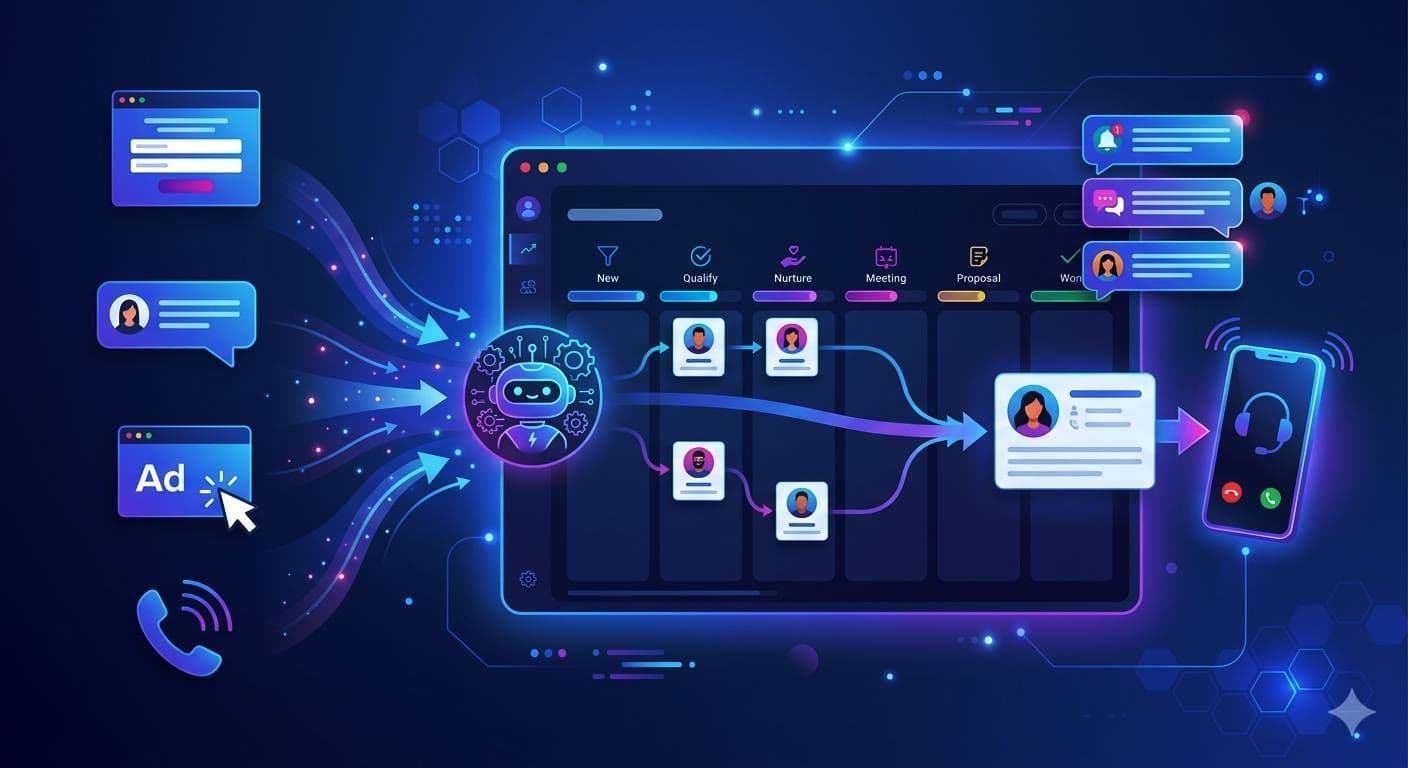
Automation protects the search moment.
A strong system can:
- call instantly
- send contextual SMS
- qualify the lead
- route intelligently
- book meetings immediately
The goal is not just speed.
It is preserving intent long enough to convert it.
That is why tools like instant lead response software matter. They align response speed with buyer behavior.
AI ensures:
- no lead waits
- no intent window is missed
- no dependency on human availability
Key takeaways
- Google Ads leads come from active search intent
- That intent has a short lifespan
- Delay weakens contact and conversion
- Specific searches create lower patience
- Automation preserves the moment
The core idea is simple:
When buyers search with urgency, your response must match that urgency.
FAQ
1. Are Google Ads leads more time-sensitive?
Yes. They come from active search, so intent is immediate and short-lived.
2. What is the best first response?
An instant call or SMS tied to the request performs best.
3. Can AI improve conversion?
Yes. It responds instantly, qualifies leads, and captures momentum before it fades.
Next step
Want to fix slow lead response?
See how FusionSync responds in seconds, qualifies inbound leads, and moves them toward a booked next step automatically.
Where it works
View all use cases