
How Companies Implement Instant Lead Response
Learn how companies implement instant response systems.
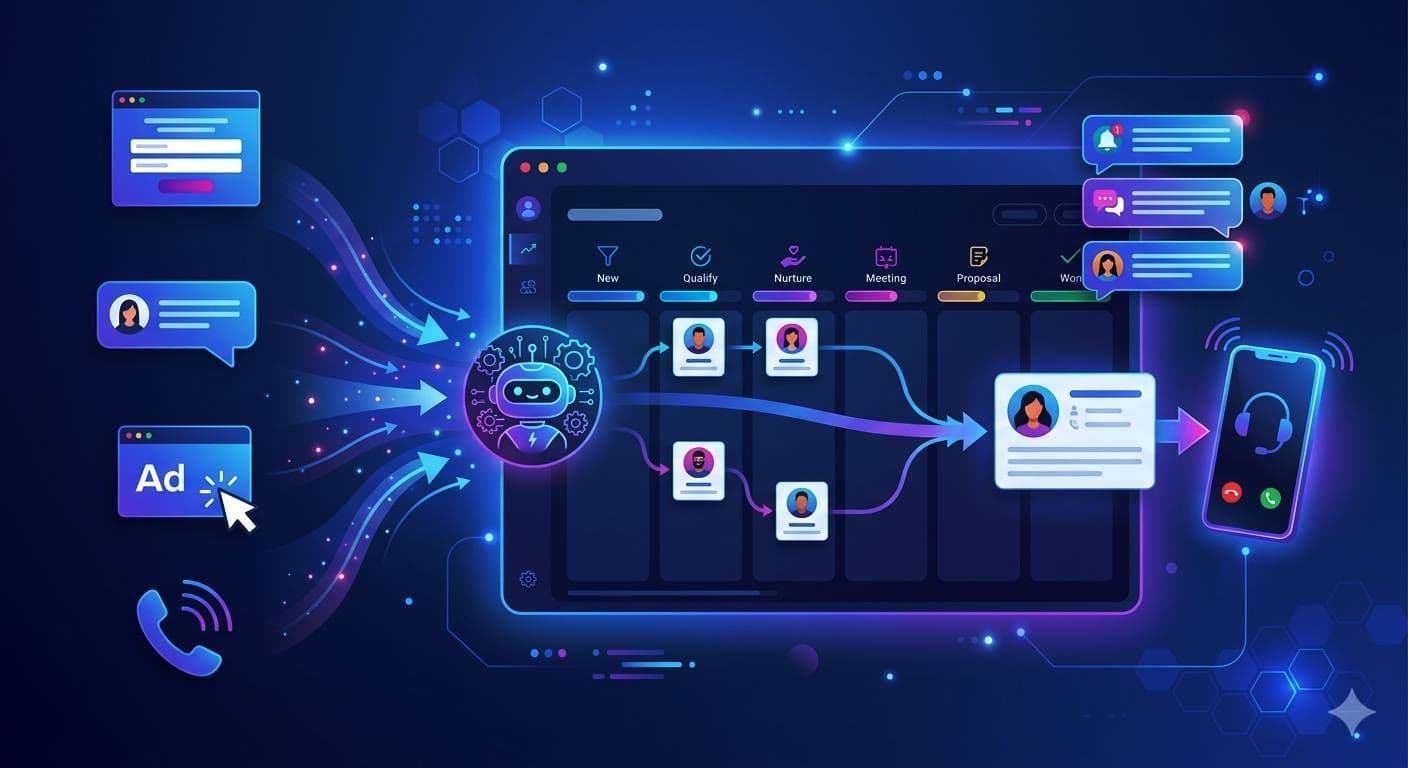
At 9:17 p.m., a private dental group in Texas gets a high-intent website lead.
The prospect is not casually browsing.
They just finished reading the implants page, checked financing options, and filled out a consultation form from their phone.
In most practices, that lead would sit in an inbox until the front desk opens the next morning.
But in this case, the prospect gets a text in seconds, an AI call within a minute, answers a few qualification questions, and books a consultation before they put their phone down.
That is the practical reality behind How Companies Implement Instant Lead Response.
Not with hustle.
Not with reminders.
Not by asking reps to “check notifications faster.”
They do it by building a response system that removes waiting between lead capture and first contact.
That distinction matters.
A lot of companies think lead speed is a people problem. In practice, it is usually a systems problem. If your process requires a human to notice, decide, assign, and respond, you do not have instant lead response. You have delayed lead response with good intentions.
Here is the sharper insight: speed is not a rep trait. It is a workflow design choice.
This article breaks down how companies actually implement fast response systems, what has to be in place operationally, and where automation and AI fit to make instant response possible at scale.
The real implementation problem behind slow lead response
When companies say they want faster response times, they often focus on the visible symptom: reps are not reaching out quickly enough.
But that is not the root implementation issue.
The real problem is that most inbound lead processes were never designed for immediacy. They were designed for handoff.
A lead fills out a form.
The CRM captures it.
A notification fires.
Someone sees it.
Someone decides who owns it.
Someone starts outreach.
That may sound efficient on a flowchart, but each step introduces delay. Even if each delay is only a few minutes, the total lag pushes the business outside the window where buyer intent is strongest.
That is exactly why inbound leads go cold.
Companies that achieve instant response do not simply move faster within the same process. They redesign the process so the first response happens automatically, before internal coordination begins.
How Companies Implement Instant Lead Response in practice
If you study companies that consistently respond in seconds or a few minutes, the pattern is surprisingly consistent.
They build around five implementation layers.
1. They connect lead sources directly to a response engine
Instant response starts with ingestion.
If leads from forms, landing pages, paid ads, chat widgets, or third-party platforms do not flow immediately into one system, response speed breaks at the first step.
Strong implementations centralize every inbound source into a single workflow layer. That might sit on top of the CRM or connect directly into it, but the key is simple: every lead enters the same response logic instantly.
This is why source fragmentation causes so much hidden delay. A company may respond quickly to website forms but slowly to Facebook lead ads, demo requests, or after-hours inquiries because each source follows a different path.
The fix is architectural, not motivational.
2. They trigger acknowledgement and outreach at the same time
Most teams treat acknowledgement and outreach as separate activities.
Fast-response teams do not.
The moment a lead is submitted, the system sends an immediate confirmation by SMS or email and simultaneously launches the first contact attempt.
That first attempt might be:
- an instant SMS conversation
- an automatic callback
- an AI voice call
- a live rep alert paired with assisted outreach
The important implementation principle is concurrency.
The best systems do not wait to “process” the lead before communicating. They respond first, then enrich, route, and log.
That small shift changes everything.
Why implementation usually fails inside normal sales workflows
The companies that struggle with instant lead response usually do not lack awareness. They lack workflow compression.
Their systems are built around internal readiness instead of buyer timing.
For example, a home services company may route new leads to a regional manager, who reviews ZIP code, service type, and technician availability before assigning the inquiry to a rep. On paper, that sounds responsible. In reality, it delays first contact until after internal sorting is complete.
High-performing companies invert that logic.
They separate first response from full downstream handling.
The first response only needs to do a few things:
- confirm receipt
- engage the lead while intent is active
- collect key qualification details
- move the lead toward a booked conversation
Detailed routing can happen immediately after or in parallel.
This is where teams often benefit from tighter CRM lead routing practices. The routing system should support instant contact, not block it.
Another failure point is channel dependency. Many businesses still rely too heavily on email as the first touch, even when mobile-first leads are more likely to answer a text or call. A more effective implementation often uses a coordinated sequence across channels. FusionSync's own category of systems fits naturally here because the goal is not just fast notification, but live engagement. This is also why many teams adopt multi-channel lead response strategies instead of a single outreach path.
The business impact of getting implementation wrong
When a company fails to implement instant response properly, the cost does not show up as a technical error. It shows up as weaker sales efficiency.
Marketing keeps generating leads.
The CRM keeps recording them.
Sales still follows up.
But performance underdelivers because the system allows buyer intent to decay before contact begins.
That creates several expensive outcomes.
Lower contact rates
A lead who would have answered a call 45 seconds after submitting a form may ignore outreach 40 minutes later.
Not because they are a bad lead.
Because the moment has passed.
Lower qualification rates
When the first interaction happens quickly, companies can ask intent-rich questions while the prospect still remembers what they wanted. That leads to cleaner qualification data and better sales conversations.
Delayed response creates weaker context, vaguer conversations, and more friction in booking.
Poorer marketing ROI
This is one of the most overlooked effects.
A company can spend aggressively on Google Ads, SEO, or landing page conversion optimization and still get disappointing revenue because the response layer is too slow.
Implementation is the multiplier after acquisition.
If acquisition gets the click and the form fill, response infrastructure determines whether that intent turns into pipeline.
Hidden inconsistency across the day
Many businesses think they respond quickly because they perform well during business hours.
But implementation quality is really tested at the edges:
- nights
- weekends
- lunch hours
- high-volume spikes
- rep meetings
- shift transitions
If your speed disappears when humans are unavailable, your system is not instant. It is conditional.
What fast-response companies understand about buyer behavior
The best implementers design around a simple truth: inbound intent is volatile.
It does not fade linearly. It drops in bursts.
A buyer who submits a form is often making a micro-decision in a narrow context. They have a specific question, concern, deadline, or comparison in mind at that exact moment.
Wait too long, and the context collapses.
This is why companies chasing better response times often get more value from structural changes than from coaching. Training reps matters, but training cannot eliminate the delay built into a manual process.
That pattern shows up clearly in businesses working to achieve sub-5-minute lead response. The teams that succeed usually automate the first move instead of relying on human availability.
A useful reframing is this: instant lead response is less about speed and more about timing integrity. The system preserves the original context of the inquiry before it degrades.
The implementation blueprint for instant lead response
So what does a real implementation strategy look like?
Here is the practical blueprint many companies follow.
Step 1: Map every inbound entry point
List every source where a lead can enter the business:
- website forms
- quote requests
- demo requests
- paid ad forms
- chat tools
- marketplace leads
- call tracking sources
If even one of these enters a slower path, you have a gap in the response system.
Step 2: Define the first-response event
Decide what must happen in the first 60 seconds.
For most companies, that means:
- immediate acknowledgement
- first contact attempt
- basic qualification prompt
- booking option or callback path
This stage should be standardized across lead sources.
Step 3: Remove manual approval from the first touch
This is where many implementations stall.
Teams want to inspect, score, route, and validate before response.
That instinct is understandable, but it is usually counterproductive.
The first touch should not depend on review queues or rep availability.
Step 4: Build fallback logic
Not every lead answers the first call or text.
Strong systems automatically branch into follow-up paths based on behavior:
- answered call
- missed call
- clicked booking link
- replied by text
- no engagement after first attempt
This prevents a fast first response from turning into a slow second step.
Step 5: Route after engagement begins
Once the lead responds, books, or shares qualification details, routing can become more precise.
At that point, the company is not trying to save the moment. It has already captured it.
That is the implementation sequence many teams miss.
How automation and AI solve the exact implementation gap
Automation matters because it removes latency between event and action.
AI matters because it can do more than send a confirmation. It can carry the first conversation.
That is the leap.
A basic automation stack can send an email instantly. A more advanced instant lead response system can:
- call the lead immediately
- ask qualifying questions
- interpret responses
- collect sales-ready context
- offer times to book
- sync outcomes to the CRM
- trigger next-step follow-up automatically
This is especially useful in industries where leads come in outside normal working hours or where call speed matters more than polished personalization.
For example, a med spa, legal intake team, or HVAC company does not necessarily need a rep to write a custom message within 30 seconds. They need a system that engages the buyer while intent is still active and gets the conversation moving.
That is why AI is becoming the natural extension of fast-response infrastructure.
Not because companies want less human involvement.
Because they want human reps spending time where it matters most: qualified conversations, not notification chasing.
Key takeaways
Companies do not achieve instant lead response by telling sales teams to react faster.
They achieve it by redesigning the first-response layer.
The businesses that do this well usually follow the same pattern:
- centralize lead capture
- trigger outreach the moment a lead is created
- separate first response from deeper routing
- use multi-step fallback logic
- automate the first conversation when human speed is unreliable
The biggest lesson is simple.
How Companies Implement Instant Lead Response is really a question of system design. If response depends on people noticing leads, delays are inevitable. If response is triggered automatically by lead creation, speed becomes consistent, scalable, and measurable.
In other words, instant response is not a sales habit. It is infrastructure.
FAQ
1. What is the first step in implementing instant lead response?
The first step is mapping every inbound lead source and making sure each one feeds into the same response workflow immediately. If some leads go into a CRM, some into email, and others into ad-platform dashboards, true instant response becomes impossible.
2. Do companies need AI to implement instant lead response?
Not always, but AI becomes valuable when companies want more than an auto-reply. If the goal is to call leads instantly, qualify them, and book appointments without waiting for a rep, AI can fill the gap between submission and human follow-up.
3. Should lead routing happen before or after the first response?
In most fast-response implementations, the first response should happen before full routing is complete. The goal is to engage the lead while intent is active, then route based on availability, territory, or qualification data once contact has started.
Next step
Want to fix slow lead response?
See how FusionSync responds in seconds, qualifies inbound leads, and moves them toward a booked next step automatically.
Where it works
View all use cases