
Why Inbound Leads Require Fast Response
Learn why inbound leads require immediate engagement.
A prospect lands on a law firm’s website at 9:42 p.m.
They have just been in a car accident. They are stressed, slightly overwhelmed, and doing what most buyers do in urgent moments: searching, comparing, and reaching out while the need feels immediate.
They fill out a consultation form.
At 9:43, they are still emotionally invested. They are ready to answer questions. They are likely still holding their phone. They have not moved on to the next task yet.
By 10:15, that same person may already be less responsive, less focused, and less likely to engage with anyone who follows up later.
That is the core of Why Inbound Leads Require Fast Response.
It is not just about being efficient. It is about matching your response to the buyer’s moment of intent.
Inbound leads are different from cold prospects because they raise their hand at a specific moment. They are not randomly entering your pipeline. They are acting on live interest. When your response arrives too late, you are not simply missing a timing target. You are failing to meet the lead inside the short window where motivation is highest.
A useful way to think about it is this: intent has a half-life.
The value of an inbound lead starts decaying the moment they submit the form. Not because they were never serious, but because urgency fades fast once action is interrupted.
Why Inbound Leads Require Fast Response in the First Place
Inbound leads come from active buying behavior.
Someone clicked an ad, searched for a solution, visited a pricing page, read service details, or requested a demo. In that moment, they are not passively aware of a problem. They are actively trying to solve it.
That distinction matters.
An inbound lead is usually at a point of elevated attention. They have context in their head. They remember what they were comparing. They know why they reached out. Their questions are available in real time.
But that mental state is temporary.
If your team responds while that context is still fresh, the conversation feels natural. The lead thinks, “Yes, this is exactly what I was looking for.” If your team responds hours later, the same lead often needs to mentally reload the problem from scratch.
That friction is where conversion starts to fall apart.
This is also the real answer to why inbound leads go cold. They do not always go cold because they were low quality. Many go cold because the response arrives after the buyer’s peak intent has already passed.
The Real Mechanism: Intent Is Perishable
Most sales teams think about lead response as a workflow issue.
A lead comes in. It gets assigned. A rep follows up.
But the deeper issue is behavioral, not administrative.
When someone submits an inbound form, they are in a short-lived decision state. Their attention is concentrated. Their problem feels immediate. Their willingness to engage is unusually high.
That state changes quickly.
Here is what actually happens:
1. The prospect exits decision mode
During the session, the prospect is in research mode. They are comparing vendors, reading pages, and imagining next steps.
Once they close the browser, go back to work, or switch to another task, that mental momentum breaks.
Re-entering that mode later takes effort.
2. The emotional driver weakens
Many inbound actions are triggered by a moment of discomfort or urgency.
A missed revenue target. A broken sales process. A legal issue. A staffing gap. A marketing campaign that is underperforming.
The lead reaches out because the problem feels pressing right now.
If no one engages quickly, the emotional energy that pushed them to act starts fading. The need may still exist, but the urgency to discuss it drops.
3. The context gets diluted
A fast response catches the lead while they still remember what page they visited, what service they were interested in, and what question they wanted answered.
A delayed response forces them to reconstruct their own intent.
That is a hidden conversion killer.
Sales teams often assume delay only hurts because the lead may talk to someone else. But even when no competitor is involved, delay still reduces conversion because the lead is no longer in the same cognitive state.
Fast response is not courtesy. It is context capture.
That is the reframing many businesses miss.
Responding quickly is not just about appearing attentive. It is about capturing buyer context before it disappears.
If your first outreach happens inside that live intent window, you are speaking to a prospect who is mentally present.
If it happens later, you are restarting a conversation that already lost momentum.
This is why businesses often see better outcomes from the same lead sources simply by improving response speed. The lead quality did not change. The timing did.
For teams trying to improve performance, this is closely connected to understanding how lead response time impacts conversion rates. Faster response preserves context. Preserved context increases engagement.
What This Looks Like in the Real World
Take a B2B software company selling to multi-location clinics.
A practice manager visits the site after a frustrating afternoon of missed calls and unbooked appointments. They request a demo because the pain feels immediate.
At that exact moment, they are highly reachable.
They know what triggered the search.
They know what they want fixed.
They are open to a conversation.
If someone responds in two minutes, the exchange is easy:
“Yes, we’re losing front-desk calls.”
“About five locations.”
“Yes, next week works for a demo.”
If someone responds the next morning, the same lead may reply very differently:
“Can you send more info?”
“Not sure who on our team handles this.”
“Maybe later this month.”
The need did not vanish overnight.
What vanished was immediacy.
That is the practical reason inbound leads require fast response. You are not racing a stopwatch for its own sake. You are trying to engage the buyer before urgency turns into vague interest.
The Business Cost of Missing the Intent Window
When companies respond slowly to inbound leads, the damage shows up in places that are easy to misread.
It looks like lower contact rates.
It looks like weaker meeting conversion.
It looks like more “unqualified” leads.
It looks like poor campaign performance.
But often, the campaign is not the problem.
The business failed to engage people while they were most likely to talk.
This has several downstream effects.
Lower connect rates
A lead who was easy to reach right after form submission becomes harder to reach later because their focus has shifted.
Weaker qualification conversations
When urgency is fresh, prospects give sharper answers. They explain the problem more clearly. They reveal budget pressure, timeline, and urgency more openly.
When urgency fades, conversations become softer and less specific.
More wasted marketing spend
Paid traffic is especially sensitive here. If you are generating leads through search ads or landing pages, you are paying to create intent at a specific moment. Slow follow-up lets that purchased intent evaporate.
This is one reason businesses investing in ads should understand why paid leads require faster response.
Distorted pipeline quality
A lot of teams label leads as weak when the real issue was delayed engagement. They are judging lead quality after the peak buying moment has already passed.
That is a reporting problem as much as a sales problem.
Buyer behavior supports this more than most teams realize
Inbound buyers do not submit forms in a neutral state.
They usually do it during a burst of focus.
Maybe they just got out of a meeting where the problem became urgent.
Maybe a current vendor failed.
Maybe they finally decided to replace a manual process.
Maybe they are working through a shortlist late at night after the day quiets down.
Those moments are highly actionable, but they are short.
This is why the best teams design around behavior, not convenience. They do not ask, “When can a rep get to this?” They ask, “How do we meet the buyer while intent is still live?”
That mindset also shapes best ways to respond to website leads, because the first response should match the urgency of the original action.
Practical Ways to Respond While Intent Is Still Hot
If the problem is a disappearing intent window, then the solution is not vague “better follow-up.” It is a response system built for immediacy.
Here are the most effective ways to do that.
Trigger an instant acknowledgment
The lead should hear from your business within seconds, not hours.
A confirmation text, email, or call tells them their request was received while the action is still fresh in their mind.
This matters because silence creates emotional drop-off.
Ask qualifying questions immediately
The best time to qualify a lead is often right after submission, when the problem is still top of mind.
At that point, answers are faster, clearer, and more accurate.
Offer immediate scheduling
Do not force the lead into a waiting pattern.
If they are ready now, let them book now.
A meeting booked during live intent is worth more than a follow-up attempt made after that window closes.
Use multiple channels fast
Some leads prefer text. Some answer calls. Some respond to email.
A strong system uses a coordinated first-touch sequence so the business can meet the lead where they are most responsive in that moment.
How automation and AI solve this exact problem
This is where automation becomes more than a productivity tool.
It becomes a way to preserve intent.
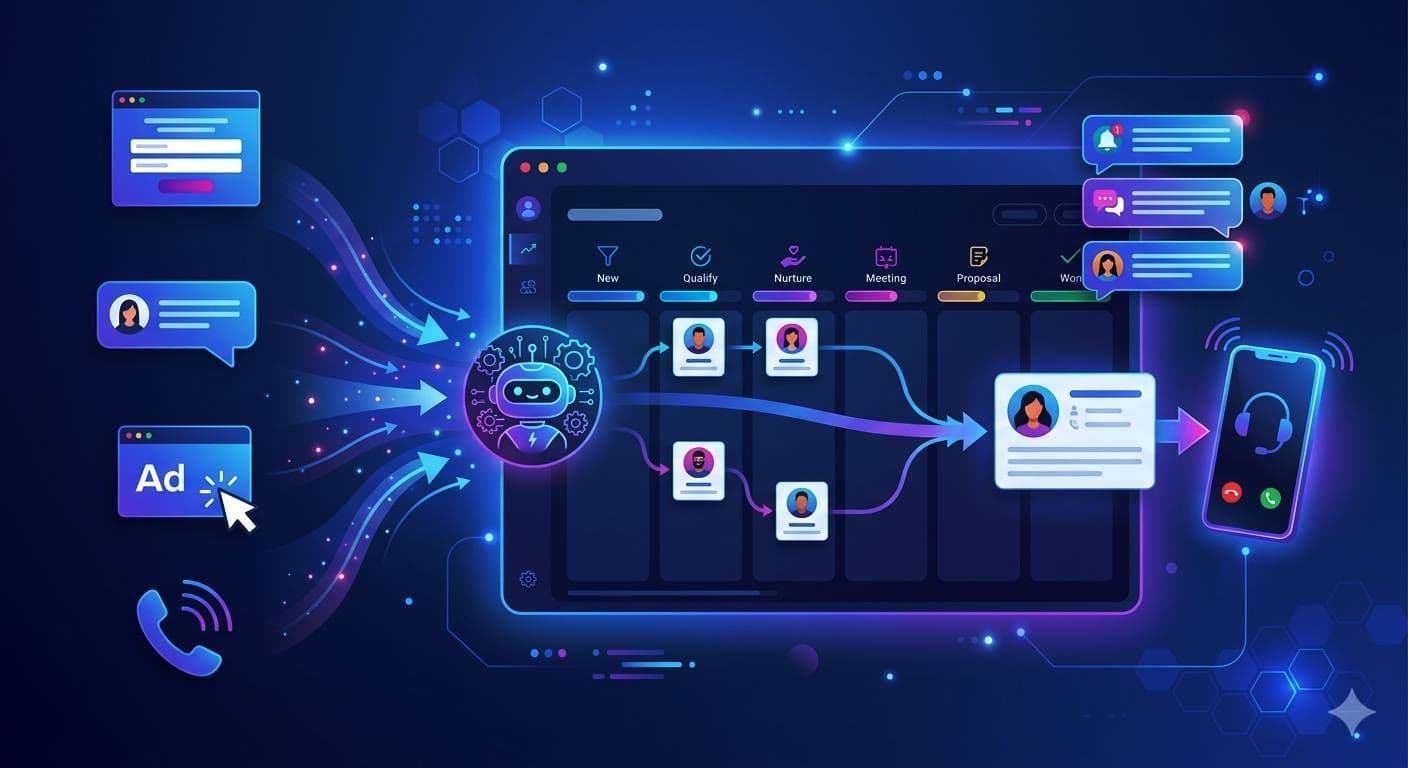
AI-powered lead response systems can engage a prospect the moment they convert. Not later when a rep is free. Not after manual routing. Right away.
That can look like:
- an instant SMS acknowledging the inquiry
- an automated call seconds after form submission
- AI-driven qualification questions
- real-time appointment booking
- follow-up workflows that continue if the first contact is missed
The value is not just speed for speed’s sake.
It is that the system responds while the buyer is still mentally in the conversation.
That is a major difference.
Human sales reps are still critical. But humans are not always available at the exact second a lead raises a hand. Automation closes that gap. It protects the most valuable part of the inbound journey: the initial burst of intent.
For companies that generate leads outside office hours, across multiple channels, or in uneven volume spikes, this becomes especially important.
Key takeaways
- Inbound leads are valuable because they reflect live buyer intent
- That intent is strongest at the moment of form submission or inquiry
- Delayed response reduces conversion because urgency, context, and emotional momentum fade quickly
- Fast response is really about capturing context before it disappears
- Many “low-quality” leads are actually poorly timed follow-ups
- Automation and AI help businesses respond inside the intent window, not after it closes
The simplest expert takeaway is this: the first minute after an inbound inquiry is not an admin step. It is part of the sale.
Conclusion
The clearest explanation for Why Inbound Leads Require Fast Response is that inbound intent is temporary.
A prospect who reaches out is not just interested in general. They are interested right now.
That “right now” is what makes the lead valuable.
If your business waits too long, you are not merely delaying outreach. You are responding to a different version of the buyer, one with less urgency, less context, and less momentum.
That is why teams that win more inbound business design around intent, not just staffing.
And that is also why instant, automated engagement is becoming a competitive advantage. It lets you respond while the lead still cares most.
FAQ
1. Why do inbound leads need faster response than outbound prospects?
Inbound leads have already taken action during a moment of active interest. That means there is a short window where motivation and attention are high. Outbound prospects usually have not entered that same urgent decision state yet.
2. Do inbound leads really lose interest that quickly?
Yes. The underlying need may remain, but the urgency to engage often drops fast once the prospect leaves the website, returns to work, or shifts attention. Fast response works because it meets them before that momentum fades.
3. What is the best way to respond to inbound leads quickly?
The best approach is an immediate, multi-channel response that acknowledges the inquiry, starts qualification, and offers booking right away. For most teams, that requires automation or AI to ensure every lead gets engaged while intent is still fresh.
Next step
Want to fix slow lead response?
See how FusionSync responds in seconds, qualifies inbound leads, and moves them toward a booked next step automatically.
Where it works
View all use cases