
Why Inbound Marketing Requires Faster Lead Response
Learn why inbound marketing leads require fast follow-up.
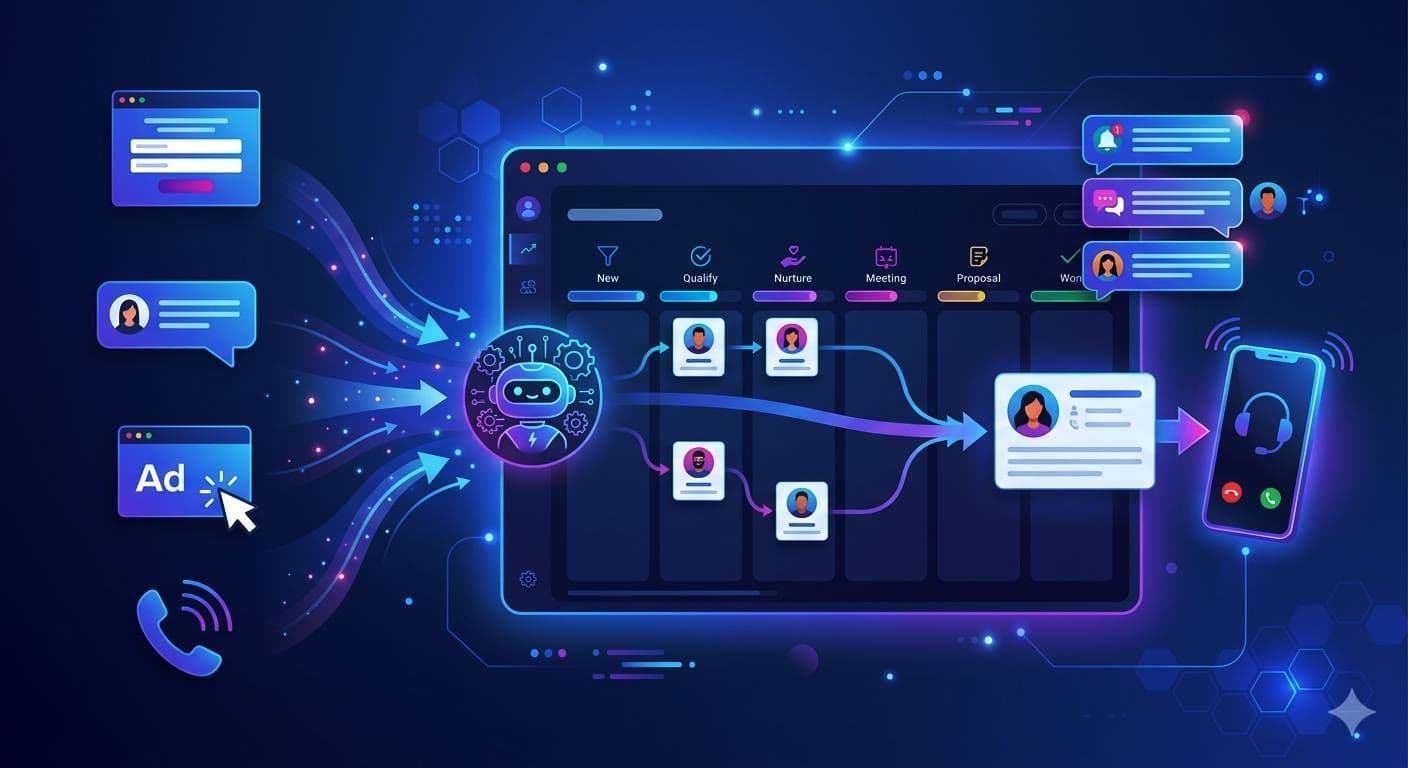
A prospect lands on a SaaS company’s pricing page at 9:12 PM.
They read the feature comparison.
They check integrations.
They open the FAQ.
Then they submit a demo request with a very specific note:
“Need a solution in place before next month’s sales kickoff.”
This is not a casual browser.
This is someone with active intent, a live problem, and a timeline.
By 9:20 PM, that same prospect is back in their inbox, reviewing internal messages, comparing vendors, and second-guessing what they actually need. By the next morning, the urgency that pushed them to fill out the form is weaker. The buying window is still open, but it is no longer at full intensity.
That is the real reason Why Inbound Marketing Requires Faster Lead Response.
Inbound leads are different from cold prospects because they arrive in a peak-intent moment. They have already done the research that outbound teams usually have to create through multiple touches. They are raising their hand at the exact moment curiosity, urgency, and buying motivation are aligned. If you do not respond while that intent is active, you are not just following up late. You are missing the narrowest and most valuable part of the decision window.
A useful way to think about it is this: speed is not just about efficiency. Speed is about catching intent before it decays.
Why Inbound Marketing Requires Faster Lead Response
Inbound marketing creates leads from people who are already in motion.
They clicked the ad because they were interested now.
They downloaded the guide because they were evaluating now.
They requested the demo because they wanted answers now.
That “now” is what makes inbound so valuable.
Unlike cold outreach, inbound does not start with indifference. It starts with momentum. The buyer has already moved themselves from awareness into consideration, and sometimes very close to decision. The moment they convert on your site, they are often at their highest level of responsiveness.
This is why the response window is shorter than many teams assume.
The lead is not sitting in a neutral state waiting patiently for your calendar to open up. They are mentally active. They are researching, comparing, asking coworkers, checking budgets, and trying to reduce uncertainty. The form fill is simply the visible signal of that internal activity.
If your team responds hours later, you are entering the conversation after the peak moment has already passed.
That is the core issue.
Inbound leads do not go cold because time passes in the abstract. They go cold because buyer intent is strongest at the moment of conversion, and weaker with every delay that follows.
The real mechanism: inbound intent has a half-life
Most sales teams treat inbound lead response like a queue problem.
It is more accurate to treat it like a timing problem.
When someone converts through inbound marketing, they are acting on a burst of motivation. That motivation usually comes from a trigger:
- a frustrating workflow
- a request from leadership
- a missed revenue target
- an urgent operational gap
- a fresh buying conversation inside the company
That trigger creates temporary energy.
For a short window, the buyer wants to solve the problem. They are open to a call. They are willing to answer questions. They are mentally ready to move.
Then normal work resumes.
Slack messages pile up.
Meetings start.
Other priorities intrude.
Internal urgency softens.
The pain is still there, but the emotional drive to act is lower.
This is why fast lead response matters so much for inbound. You are not only trying to reach the person. You are trying to meet the motivation that caused the inquiry in the first place.
A good framing is this: inbound intent has a half-life.
Not because the lead stops needing a solution, but because the sharpness of their buying attention fades quickly after they submit the form.
This is also closely tied to the psychology of fast lead response. The buyer’s willingness to engage is highest when the problem feels immediate. Once that feeling cools, even a qualified lead becomes harder to convert.
High-intent behavior creates a narrow conversation window
The mistake many companies make is assuming a high-intent lead will remain high intent for the rest of the day.
Usually, they will not.
Consider what inbound behavior actually signals:
- They searched for a solution
- They consumed bottom-of-funnel content
- They evaluated your offer
- They decided it was worth submitting a form
That sequence means the lead has already invested attention.
And attention is perishable.
A person who fills out a contact form after reading your case studies is not simply requesting information. They are inviting a conversation while they are mentally immersed in the problem.
If you respond inside that window, the conversation feels natural.
If you respond later, the buyer has to context-switch back into the issue. That makes every next step harder. Your email gets skimmed instead of opened carefully. Your call feels interruptive instead of timely. Your qualification questions feel like work instead of progress.
This is one reason readers exploring lead response time for inbound marketing leads often underestimate the role of buyer momentum. The lead did not just ask to be contacted. They asked while they were psychologically closest to action.
That is the moment worth protecting.
What this costs the business
When teams respond too slowly to inbound leads, the damage is not limited to missed first touches.
The bigger loss is conversion quality.
A delayed response often means:
- fewer live conversations
- lower demo attendance
- longer sales cycles
- weaker qualification calls
- more follow-up required to get the same engagement
This creates a hidden tax on marketing performance.
Your campaigns may still be generating strong leads. Your content may still be attracting the right buyers. Your landing pages may still be converting.
But if response happens after intent fades, the business experiences those leads as lower quality than they really are.
That is the trap.
Many companies think they have a lead quality problem when they actually have an intent-timing problem.
That is the contrarian truth: a surprising number of “bad leads” were good leads contacted too late.
This is also why understanding how speed to lead impacts marketing ROI matters so much. The value of inbound marketing is not only in generating responses. It is in engaging buyers while their motivation is still active.
Why this shows up so often in inbound-heavy businesses
Inbound marketing is designed to attract people who are already solution-aware.
That sounds like a reason response can wait.
It is actually the reason it cannot.
The more effective your marketing is, the more it pulls in buyers who are close to action. These leads are not early-stage names to nurture for months. Many are actively looking for answers, vendors, pricing, timelines, and implementation details.
So the better your inbound engine performs, the more dangerous delay becomes.
A high-intent inbound funnel produces leads with compressed decision windows.
That is especially true for:
- demo requests
- pricing inquiries
- quote requests
- “talk to sales” forms
- comparison-page conversions
These are not soft conversions. They are buying signals.
If the business treats them like ordinary form submissions, it wastes the very thing inbound marketing worked hard to create: live commercial intent.
How to respond in a way that matches buyer intent
If the problem is fading intent, then the solution is not just “respond faster” in a generic sense.
The solution is to design response around the psychology of the inbound moment.
That means a few practical shifts.
1. Treat form fills as active buying moments
The first mindset shift is simple: stop viewing inbound leads as records entering a CRM.
They are conversations beginning in real time.
That changes response standards. A demo request should not be handled like an email to process later. It should trigger immediate engagement while the buyer is still mentally present.
2. Use response messaging that acknowledges current intent
Fast response works best when it feels connected to the action the buyer just took.
For example:
- “Saw your demo request and wanted to reach out right away.”
- “You were just looking at pricing, happy to answer questions now.”
- “Got your request. If timing matters, we can help you evaluate quickly.”
This works because it matches the lead’s current context instead of forcing them to reorient hours later.
3. Prioritize channels that fit an immediate decision state
When intent is fresh, synchronous channels perform better.
A quick call, SMS, or immediate booking prompt often works better than a delayed email because it captures the lead while they are still engaged. If your team wants to improve this, studying multi-channel lead response strategies can help align outreach with how buyers actually behave in the moment.
4. Optimize for minutes, not business days
Inbound intent fades on a human timescale, not an operational one.
The relevant question is not whether your team replied the same day.
The relevant question is whether you replied before the buyer’s urgency cooled.
How automation solves this exact inbound problem
This is where automation becomes more than an efficiency tool.
It becomes a way to preserve intent.
If inbound marketing creates value by surfacing buyers at the moment they are ready, then automation protects that value by ensuring immediate engagement.
An AI-powered response system can:
- respond the second a form is submitted
- send an immediate confirmation text
- call the lead while the visit is still fresh
- ask qualifying questions right away
- route the lead based on urgency or fit
- book a meeting before attention drifts
Notice what all of these actions have in common.
They are not just faster operations. They are mechanisms for meeting the buyer inside the peak-intent window.
That is why automation is so effective in inbound sales. It does not manufacture interest. It captures the interest your marketing already created.
FusionSync’s category of instant response systems is compelling for exactly this reason. It allows businesses to turn inbound intent into live conversations before that intent weakens.
If you want to understand more about why inbound leads go cold, the core pattern is the same: the problem is not lead generation alone. It is failing to engage people while they are most ready to talk.
Key takeaways
- Inbound leads have unusually high short-term intent
- The value of inbound marketing comes from catching buyers in an active decision moment
- That moment fades quickly after the form submission
- Delayed response lowers conversation quality, not just contact rates
- Many “low-quality” inbound leads were actually high-intent leads contacted after momentum faded
- Automation and AI help by preserving buyer intent in real time
The sharp takeaway is this: inbound speed is not about being impressive. It is about being relevant at the exact moment relevance is highest.
Conclusion
Why Inbound Marketing Requires Faster Lead Response comes down to one core truth: inbound leads act when motivation peaks, not when your team becomes available.
That is what makes them valuable, and that is what makes delay so expensive.
When someone finds your site, evaluates your offer, and submits a form, they are giving you a brief opening into an active buying moment. Responding quickly is how you meet that moment while it is still alive.
So if your inbound performance looks weaker than expected, do not assume the issue is traffic quality or campaign targeting first. Look at whether your business is built to engage high-intent behavior in real time.
Because the real job is not just generating inbound leads.
It is catching them before intent cools.
FAQ
1. Why do inbound marketing leads need faster response than other leads?
Because inbound leads usually come from people who are already researching, comparing, or trying to solve a problem right now. Their intent is active at the moment they convert, which makes the first few minutes especially valuable.
2. What makes an inbound lead high intent?
High-intent inbound behavior includes actions like requesting a demo, asking for pricing, submitting a quote form, or converting after viewing product and comparison pages. These actions show the buyer is closer to a decision than a typical top-of-funnel visitor.
3. How does AI help with inbound lead response?
AI helps by responding immediately when a lead submits a form. It can send texts, place calls, ask qualification questions, and book meetings while the buyer is still engaged. That is valuable because it protects the short window when inbound intent is strongest.
Next step
Need a better follow-up system?
FusionSync keeps inbound leads moving with instant first response, qualification, and automated follow-up when the lead does not answer right away.
Where it works
View all use cases