
How to Increase Inbound Lead Conversion Rates
Learn practical ways to improve inbound lead conversions.
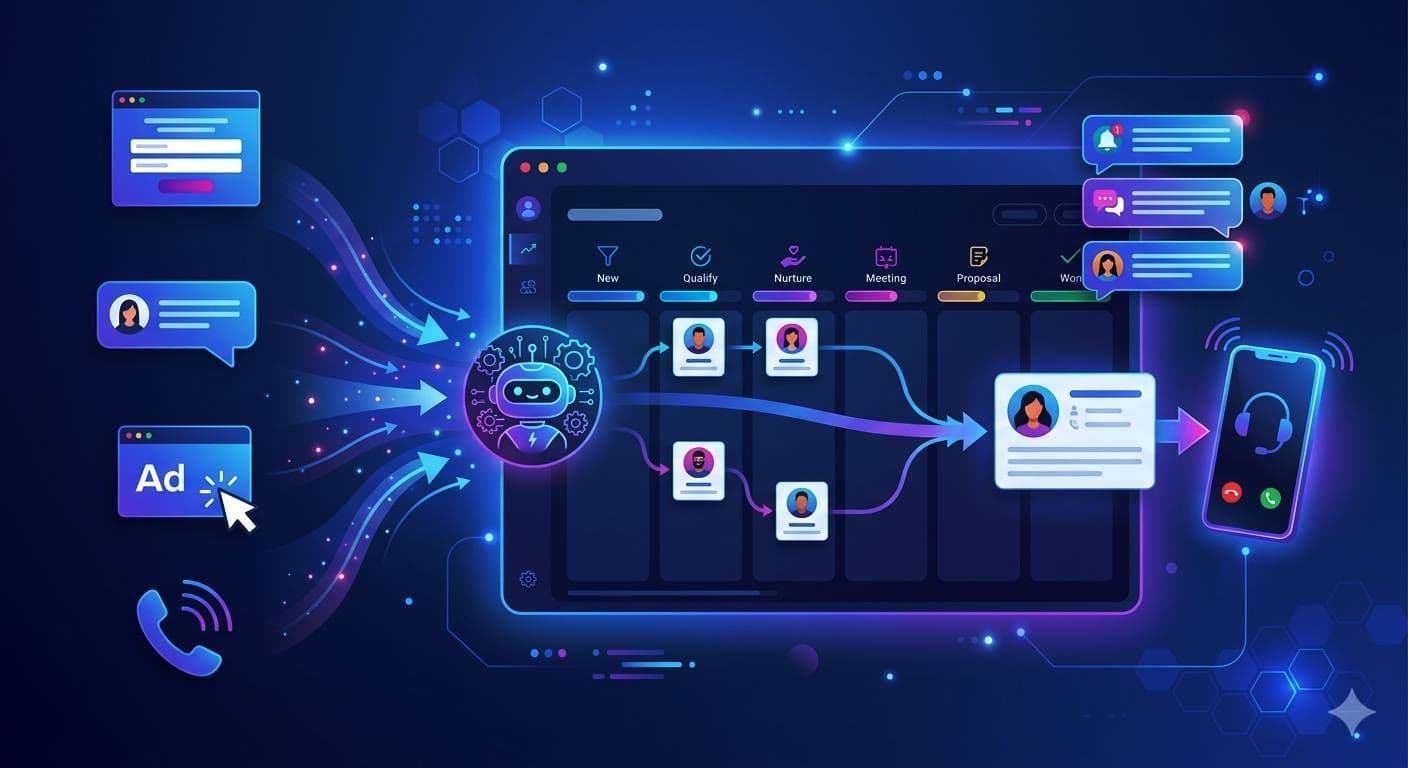
A private dental group was spending aggressively on Google Ads for high-value implant cases.
The marketing was working.
Every week, new patients filled out consultation forms worth thousands in potential treatment value.
But the front desk was busy. Insurance calls piled up. Existing patients needed scheduling changes. New implant inquiries landed in a shared inbox and waited.
Not for days.
Sometimes just 18 minutes. Sometimes 42. Sometimes until after lunch.
On paper, that does not sound catastrophic.
In reality, it was enough to crush conversion.
By the time someone finally called back, the prospect was already driving, back at work, or mentally out of buying mode. Some stopped answering. Some asked for a callback later and disappeared. Some booked with another clinic. The ad spend looked expensive, but the bigger issue was not lead cost.
It was response time.
If you want to understand How to Increase Inbound Lead Conversion Rates, this is the lever to start with. Not messaging tweaks. Not another landing page test. Not a new CRM field. In many inbound funnels, the biggest lift comes from how fast your business replies the moment intent is highest.
That is the uncomfortable truth: conversion often drops before your sales process even begins.
How to Increase Inbound Lead Conversion Rates by Fixing Response Time
Most companies treat inbound conversion like a persuasion problem.
Often, it is a timing problem.
When someone fills out a form, requests pricing, asks for a demo, or wants a callback, they are not just raising a hand. They are entering a short decision window. That window is when curiosity, urgency, and availability overlap.
Response time determines whether you meet them inside that window or after it has already closed.
This is why fast response does more than improve efficiency. It changes your position in the buying moment.
Here is the sharpest way to think about it:
Speed is not an admin metric. It is market timing.
That framing matters because many teams still view response speed as an operational detail. It is not. It directly affects whether your business gets a live conversation while intent is active.
And once that moment passes, the same lead becomes harder to reach, harder to qualify, and less likely to book.
If you are trying to improve conversion, you need to start where conversion begins: first contact.
The Real Problem Is the Delay Between Intent and Contact
Inbound leads go cold in the gap.
Not necessarily because the lead was unqualified.
Not because the offer was weak.
Not because your team lacks sales skill.
The drop happens in the space between the form submission and the first real response.
That delay creates friction in three specific ways.
First, the lead’s attention moves.
A prospect who just completed a form is focused for a brief period. They remember why they reached out. They can still explain what they need. They are mentally prepared for a conversation. But attention is fragile. Once they return to work, start another task, or switch devices, your chance to connect drops sharply.
Second, the context disappears.
A fresh inbound lead has situational clarity. They know what page they were on, what problem triggered the form fill, and what kind of solution they were comparing. Thirty minutes later, that context weakens. Hours later, the inquiry feels abstract. Your outreach no longer arrives in the same psychological moment.
Third, urgency decays.
People often submit forms when a problem feels immediate. Fast contact lets you engage while that urgency is still real. Slow contact turns a present problem into a postponed one.
This is the mechanism behind low inbound conversion.
The lead did not suddenly become bad.
The buying moment expired.
For a deeper look at
https://www.fusionsync.ai/posts/lead-response-time-5-minute-rule
the pattern is remarkably consistent across industries.
Why Response Time Has Such an Outsized Effect on Conversions
Response time matters so much because inbound intent is perishable.
That is the key concept.
Businesses usually think of leads as records in a system. Buyers experience them as moments.
A lead in your CRM can sit there all afternoon and still look active.
A buyer does not work that way.
The moment they submit a request, several things are true at once:
- they are paying attention
- they are evaluating options
- they are available to engage
- they are motivated enough to act
Those conditions rarely stay stable for long.
This is why speed affects conversion more than teams expect. A fast reply does not just check a box. It captures a temporary state that cannot be recreated later with the same ease.
Think about a B2B software buyer who submits a demo request between meetings. If your team responds in two minutes, you may catch them while they are still at their desk reviewing vendors. If you respond in two hours, they may be deep into other priorities. The lead record is the same. The conversion environment is not.
That difference is what many teams miss.
Fast response improves conversion because it aligns with buyer momentum.
Slow response forces your team to restart momentum that already existed for free.
What Slow Response Actually Costs the Business
The obvious cost is missed conversations.
The less obvious cost is what happens downstream.
When response time slips, your funnel becomes weaker at every stage.
Contact rates decline first. Reps make more attempts to reach the same number of leads. Qualification rates drop because fewer real conversations happen while intent is fresh. Appointment volume softens. Pipeline coverage gets less predictable. Marketing starts looking less efficient, even when lead volume is fine.
This creates a dangerous misread.
Leadership sees low conversion and assumes the business needs better traffic, better targeting, or more leads.
Sometimes it just needs faster contact.
That is what makes response time such a high-leverage lever. It improves the return on demand you are already generating.
A team that cuts first-response time from 45 minutes to 2 minutes can outperform a team that doubles lead volume but still responds slowly.
That is another useful reframing:
More leads do not fix delayed contact. They usually magnify the waste.
If your response process is slow, adding budget on top of it does not solve the problem. It pours more leads into the same leak.
This is especially true for paid channels, where intent is expensive and short-lived. Fast follow-up protects acquisition spend. Slow follow-up quietly taxes it.
The Pattern Most Teams Miss: Delay Compounds Quickly
Many businesses think in rough categories.
Same hour feels acceptable.
Same day feels decent.
Next day feels late.
But inbound conversion does not decline in neat calendar blocks. It falls much faster than that.
A delay of 10 minutes is not just twice as bad as a delay of 5 minutes.
It can be meaningfully worse because the odds of catching the lead in the original intent window keep dropping. Every additional minute increases the chance that the buyer has shifted attention, lost context, or become unavailable.
This is why the teams with the best conversion performance are often obsessed with minutes, not hours.
The relevant benchmark is not “Did we respond today?”
It is “Did we respond while the lead still expected a response?”
If your team is reviewing benchmarks, these pieces on
http://fusionsync.ai/posts/good-lead-response-time
and
http://fusionsync.ai/posts/lead-response-time-conversion-rate
add useful context.
Why Human-Only Workflows Struggle to Protect Conversion
This is not usually a motivation issue.
It is a systems issue.
Most teams do care about responding quickly.
But inbound leads arrive unpredictably. They come in during meetings, lunch breaks, after hours, during handoffs, and while reps are already on calls. Even a disciplined team struggles to maintain near-instant response manually.
That matters because conversion depends on consistency, not occasional heroics.
One rep who happens to call back fast is not a process.
A process means every inbound lead gets immediate attention, regardless of when it arrives.
Manual workflows break down because they include multiple small delays:
- the form gets submitted
- a notification is sent
- someone notices it
- someone decides who owns it
- the assigned person becomes available
- the first outreach happens
Each step may only add a few minutes.
Together, they often push the business outside the highest-converting window.
And once that happens, the team is no longer working a fresh inbound lead. They are chasing a cooling one.
Practical Ways to Increase Inbound Lead Conversion Through Faster Response
If the goal is conversion, the fix is not abstract.
You need to compress the time between inquiry and first live engagement.
That means redesigning the front end of the funnel around speed.
1. Treat Every Inbound Form as a Now Event
A form submission should trigger immediate action, not a queued task.
If your current process treats inbound inquiries like items to review later, conversion will suffer.
The right model is simple: the moment a lead submits, the response sequence starts.
2. Prioritize Contact Over Internal Perfection
Many teams lose time trying to sort, score, or review leads before outreach happens.
That is backwards.
For inbound conversion, the first priority is contact.
You can gather more information after engagement starts. A fast initial touch preserves the opportunity. A perfectly categorized lead contacted too late does not.
3. Use Immediate Multi-Channel Outreach
A fast response does not have to rely on one channel.
In many cases, the best approach is a coordinated first-touch sequence that includes an instant text, a call attempt, and an email confirmation. That creates multiple opportunities to catch the lead while attention is still high.
4. Measure Minutes, Not Just Outcomes
If you only review close rates, you will miss the operational cause.
Track median first-response time, percentage of leads contacted within five minutes, and time-to-first-call by source. These metrics reveal whether conversion loss is happening before qualification even begins.
For teams working on the process side, this guide on
http://fusionsync.ai/posts/reduce-lead-response-time
is a strong next step.
How Automation and AI Solve the Exact Conversion Gap
This is where automation becomes less of a convenience and more of a conversion tool.
The core problem is that buyer intent peaks immediately, while human availability does not.
Automation closes that mismatch.
An AI-powered lead response system can react the second a form is submitted. It can send a confirmation, place a call, ask qualifying questions, and offer available booking times before a rep even opens the CRM.
That matters because it protects the highest-value part of the funnel: the first few minutes.
Instead of hoping a salesperson is free at exactly the right time, the business creates a system that is always available.
This does not replace the sales team.
It protects the handoff to the sales team.
The practical impact is straightforward:
- every lead gets acknowledged instantly
- first contact happens while intent is fresh
- qualification starts sooner
- appointments get booked before momentum fades
- human reps spend more time on real conversations instead of delayed catch-up
That is why instant response systems often improve conversion without changing traffic volume at all.
They do not manufacture demand.
They stop demand from slipping through the first gap.
Key Takeaways
If inbound conversion is weaker than it should be, start by looking at response time.
Not as a side metric.
As the main lever.
The most important points are simple:
- inbound intent is strongest right after submission
- conversion drops in the delay between inquiry and first contact
- even short response delays can materially reduce engagement
- manual workflows rarely deliver consistent speed
- automation and AI help capture leads while intent is still active
The clearest answer to How to Increase Inbound Lead Conversion Rates is often to respond before the moment passes.
That is the real game.
Not better follow-up tomorrow.
Better contact now.
FAQ
1. What is the fastest way to increase inbound lead conversion rates?
The fastest way is to reduce first-response time. If leads hear from you within minutes instead of hours, contact rates and booking rates usually improve quickly because you are reaching prospects while intent is still high.
2. Why does response time matter so much for inbound leads?
Because inbound leads are time-sensitive. The person is most engaged right after submitting a form or request. As minutes pass, attention shifts, urgency fades, and the chance of a live conversation drops.
3. Can AI really improve inbound lead conversion rates?
Yes, especially at the top of the funnel. AI can respond instantly, initiate outreach, qualify leads, and book meetings at the exact moment interest is highest. That reduces the delay that causes many inbound opportunities to cool off.
Next step
Want to see where FusionSync fits?
Use the links below to explore where the system works, try a live demo, or talk with us about your current lead flow.
Where it works
View all use cases