
Instant Callback Systems Explained
Learn how instant callback systems work.
A roofing company in Phoenix is paying aggressively for Google Ads after a summer hailstorm.
At 2:14 PM, a homeowner lands on the site, fills out a quote form, and enters a mobile number.
They are not browsing casually.
They likely have water coming through a ceiling, a dented roof, or an insurance deadline hanging over them.
They want to talk to someone now, while the problem feels immediate and while they still have their phone in hand.
But instead of getting a call, they get silence.
Maybe an email confirmation arrives.
Maybe a sales rep sees the lead 20 minutes later.
Maybe someone calls back after finishing another estimate.
By then, the moment is gone.
That is why this article on Instant Callback Systems Explained matters. The difference between a live conversation and a lost opportunity often comes down to one mechanism: whether your system can place a call immediately after a lead converts.
This is the part many teams miss. They think they have a lead response process because a form is connected to a CRM. But a CRM record is not a conversation. And for high-intent inbound leads, delay at the call-back stage is often where conversion momentum dies.
Here is the sharper way to think about it:
Leads do not wait for follow-up. They wait for continuity.
If a buyer just raised their hand, the best next step is not to log the lead. It is to continue the interaction with an immediate callback while their attention is still focused on you.
Instant Callback Systems Explained
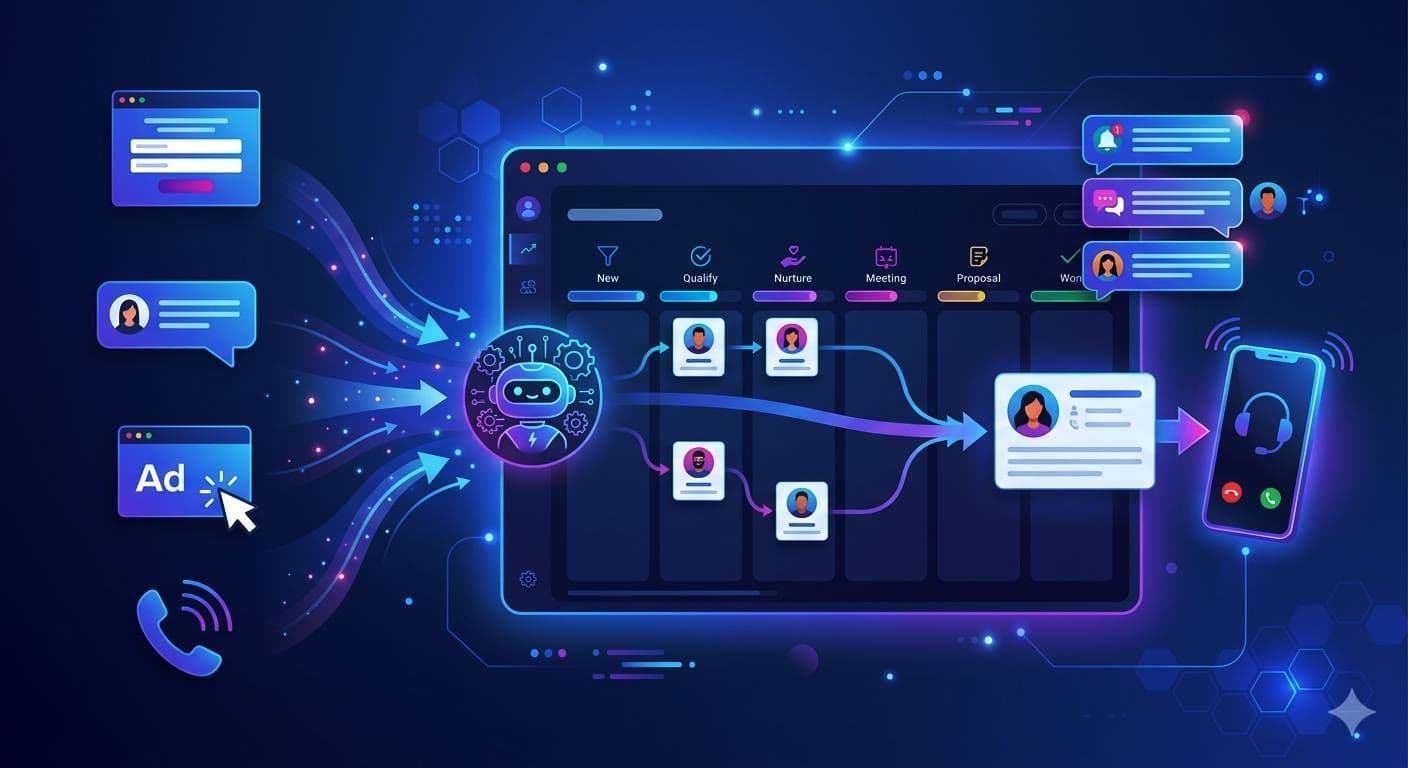
An instant callback system is a workflow that automatically triggers a phone call within seconds after a lead submits a form, requests a demo, or takes another high-intent action.
The key idea is simple: the form submission does not end the interaction. It starts the call.
A typical instant callback system works like this:
- A lead fills out a website form or landing page
- The system captures the lead data immediately
- A call is triggered automatically
- The lead receives a phone call within seconds, or is connected to an available rep
- If no rep is available, an AI voice agent or automated call flow handles the first conversation
- The system qualifies the lead, routes it, and books the next step
This is different from a standard notification-based process.
In a standard process, the form goes into the CRM, alerts get sent, and someone eventually responds.
In an instant callback process, the response is the workflow.
That distinction matters because the biggest drop-off often happens in the gap between lead capture and first call attempt. If the business cannot convert form intent into a live conversation immediately, the lead's attention starts to fragment.
For teams trying to improve speed to lead, this mechanism is one of the most direct fixes available.
The real problem is not form submissions. It is broken call continuity.
Many businesses assume the form itself is the conversion event.
It is not.
The form is only a signal that the buyer is ready for a conversation. If that conversation does not happen quickly, the signal weakens almost immediately.
This is especially true for service businesses, SaaS demo requests, legal inquiries, home services, and any category where urgency or comparison shopping is high.
The issue is not abstract "slow response." The issue is much more specific: there is no immediate callback mechanism bridging intent to conversation.
Without that bridge, the buyer has to re-engage later.
And that is where friction appears.
Later, they may be driving.
Later, they may be in another meeting.
Later, they may not answer unknown numbers.
Later, they may have already spoken to two other vendors.
An inbound lead is most available in the few seconds after conversion, not just most interested.
That is the operational truth instant callback systems are built around.
Why immediate call-back mechanisms work so well
When someone submits a form, they are already in decision mode.
They have context loaded in their mind.
They remember why they reached out.
They are expecting a response.
Their phone is nearby.
They are mentally prepared to answer questions.
An instant callback system takes advantage of that tiny window.
It works because it removes the need for the lead to switch contexts.
That is the deeper mechanism here.
Most lead response discussions focus on time as a metric. But callback systems are really about preserving cognitive continuity.
A lead who submits a request and gets called right away stays in the same mental thread. A lead who waits even 15 or 20 minutes has to reconstruct the thread later.
That reconstruction is where contact rates fall.
This is why immediate callback systems often outperform teams that technically respond "fast enough" but still rely on manual outbound activity. Even a short delay can break the buyer's momentum.
If you want a broader view of how timing shapes outcomes, this article on how lead response time impacts conversion rates adds useful context. But the practical takeaway is narrower: phone contact works best when the call is part of the original conversion moment.
What happens when there is no instant callback system
When immediate callback infrastructure is missing, several predictable problems show up.
First, contact rates drop.
Not because the lead became bad, but because the moment for a live connection passed.
Second, qualification gets delayed.
Without a real-time call, the business does not know whether the lead is urgent, high-value, local, ready to buy, or a poor fit. That uncertainty slows everything downstream.
Third, booking rates suffer.
Appointments are easiest to secure when intent is fresh. The longer the gap before the first call, the more energy is required to get the lead back into a decision-making posture.
Fourth, paid acquisition becomes less efficient.
If you spend heavily to generate form fills but do not have a callback mechanism attached to those forms, you are effectively paying for interest without capturing conversation.
That is a dangerous gap.
In many companies, the biggest leak in the funnel is not top-of-funnel traffic quality. It is the absence of an automatic first call.
The business impact of delayed callbacks
A delayed callback does more damage than most dashboards show.
On paper, the lead still exists.
The CRM still has the contact.
The rep may even attempt outreach later.
But commercially, the lead has already decayed.
This shows up in ways teams often misdiagnose:
- lower answer rates on outbound calls
- fewer booked meetings from form fills
- more "unresponsive" leads in the pipeline
- lower return on paid campaigns
- sales reps saying lead quality is weak when timing is the real issue
That last point matters.
Businesses often blame lead quality when the actual problem is callback design.
A weak callback process can make strong leads look mediocre.
That is the contrarian insight worth remembering:
Sometimes what looks like a lead quality problem is actually a call timing problem.
Before spending more on traffic, it is worth examining whether the first phone touch is happening fast enough to preserve buying intent.
Where instant callback systems fit into a modern inbound workflow
Instant callback systems are not separate from lead management. They are the front door of it.
The best setups usually sit between lead capture and full sales handoff.
That means the callback mechanism should do more than just dial a number. It should also:
- confirm the inquiry is real
- ask one or two qualifying questions
- route the lead correctly
- book an appointment if appropriate
- trigger follow-up if the call is missed
This is where callback systems become much more powerful than basic autoresponders.
An email saying "thanks, someone will reach out soon" does not move the deal forward.
A call that starts qualification immediately does.
Teams that combine instant callbacks with automatic lead assignment create a much cleaner handoff to sales. The first touch happens right away, and the right rep gets involved with context already captured.
How AI improves immediate callback mechanisms
AI makes instant callback systems practical at scale.
Without automation, a business needs humans available at all times to respond in seconds. That is rarely realistic.
With AI, the callback can happen instantly whether the lead arrives at 10 AM, 6 PM, or on a weekend.
An AI-powered callback flow can:
- call the lead immediately after form submission
- introduce the business naturally
- reference the inquiry source
- ask qualification questions
- determine urgency
- collect missing details
- transfer to a human if available
- book an appointment automatically
- launch follow-up if the lead does not answer
This is not about replacing sales teams.
It is about protecting the first 60 seconds after inquiry, which is often the most valuable part of the whole funnel.
That is why systems like this are increasingly central to AI for inbound lead response. They convert form activity into real-time engagement instead of letting leads sit idle until a rep is free.
Practical ways to implement an instant callback system
If you are evaluating how to set this up, focus on the mechanism, not just the software label.
A strong instant callback system should include these elements.
Trigger the call from high-intent forms only
Start with demo requests, quote requests, consultation forms, and other bottom-funnel conversions.
Not every form needs a callback. But high-intent actions almost always benefit from one.
Keep the first call fast and simple
The goal of the immediate callback is not to run a full sales process.
It is to create contact, confirm intent, and move the lead into the right next step.
Use local presence and clear caller identification
People answer calls more often when the call feels relevant and expected.
A callback arriving seconds after form submission is already context-rich. Clean caller presentation improves that effect.
Build missed-call recovery into the workflow
If the first call is not answered, the system should not stop.
It should trigger SMS, schedule another call attempt, or route the lead into an automated follow-up sequence tied to the original inquiry.
Connect the callback to scheduling
If a qualified lead is ready, the system should be able to book immediately.
The value of instant contact drops if scheduling still requires manual back-and-forth.
Key takeaways
Instant callback systems matter because they preserve the exact moment a lead is ready to talk.
That is the mechanism.
Not generic responsiveness.
Not better CRM hygiene.
Not a nicer confirmation email.
A real callback system turns a form fill into a phone conversation while the buyer is still engaged.
If that bridge does not exist, lead intent often fades before sales ever gets a chance to work it.
For businesses that want to understand the bigger picture of why inbound leads go cold, callback speed is one of the clearest places to look first.
And that is the practical lesson behind Instant Callback Systems Explained: the fastest way to improve inbound conversion is often to stop treating the form as the finish line and start treating it as the trigger for an immediate call.
FAQ
What is an instant callback system?
An instant callback system automatically places a phone call to a new lead within seconds of a form submission or other high-intent action. Its purpose is to connect with the lead while attention and buying intent are still high.
Why are immediate callbacks better than manual follow-up?
Immediate callbacks work better because they preserve continuity. The lead has just taken action, is mentally engaged, and is more likely to answer. Manual follow-up usually introduces a delay that weakens that moment.
Can AI handle instant callbacks effectively?
Yes. AI can trigger calls instantly, ask basic qualifying questions, route leads, and book appointments. It is especially useful when human reps are unavailable, because it ensures no high-intent lead waits for first contact.
Next step
Let's Fix Your Lead Response in 30 Minutes
We'll walk through your current lead flow, identify where leads are slowing down or getting missed, and show you exactly what can be automated to increase speed, conversations, and bookings.
Where it works
View all use cases