
Why Instant Lead Response Is the Future of Inbound Sales
Learn why instant response is shaping inbound sales.
At 8:14 p.m., a homeowner requests a quote for a high-ticket kitchen remodel.
They are sitting on the couch, laptop open, comparing contractors after finally deciding they are ready to move forward. They upload photos, describe the project, and hit submit.
Then they wait.
Not for days. Not even for hours, at least in their mind.
They wait for what now feels like a normal digital experience: a near-immediate reply, a text, a call, a scheduling option, some sign that the business is present.
Instead, nothing happens until the next morning.
By then, the homeowner has mentally moved on. Not because the project disappeared, and not because the lead was poor quality. The real shift is more important than that. The buyer expected instant engagement and the business operated on delayed engagement.
That gap is exactly why Instant Lead Response Is the Future of Inbound Sales.
This is the long-term change many teams still underestimate. Inbound sales used to reward decent follow-up. Now it increasingly rewards immediate presence. The companies winning inbound demand are not just faster operationally. They are aligned with how modern buyers expect to engage.
A useful reframing is this: speed is no longer a sales tactic. It is part of the product experience.
The real problem is the expectation gap
When most teams talk about response time, they frame it as an efficiency problem. A rep was busy. The lead came in after hours. Someone forgot to check the CRM.
Those things matter, but they are not the deepest issue.
The deeper issue is that buyer expectations have permanently shifted toward instant engagement.
People now live inside systems that respond immediately:
- rideshare apps confirm in seconds
- e-commerce brands send updates instantly
- restaurants acknowledge orders right away
- banks, insurers, and retailers trigger real-time notifications
So when a prospect submits a form to a business, they bring that same expectation with them.
They do not think, “A salesperson will probably get back to me tomorrow.”
They think, “I just raised my hand. Someone should respond now.”
That is why a delayed first touch feels bigger than a delay. It feels like a mismatch.
This is also the core of why inbound leads go cold. The lead is not simply waiting in a neutral state. Their expectation of an immediate interaction is either met or broken.
Why Instant Lead Response Is the Future of Inbound Sales
The future of inbound sales belongs to businesses that can engage buyers in the same moment intent appears.
That matters because inbound interest is no longer just about demand generation. It is about demand capture in real time.
A form fill used to be treated like a message in a queue. Today it behaves more like the start of a live conversation.
That change affects everything:
- how buyers judge professionalism
- how quickly trust forms
- whether a lead takes the next step
- whether sales gets a real conversation or a dead record in the CRM
In other words, instant response is becoming the default interface for inbound sales.
This is not a short-term trend tied to one industry or one channel. It is a broader behavioral shift. As buyers get used to immediate digital interactions everywhere else, they bring that expectation into B2B and service-based buying too.
That is why teams that still rely on delayed human follow-up are not just slower. They are increasingly out of sync with the market.
How the expectation shift actually causes leads to disengage
The mechanism is simple, but powerful.
When someone submits an inbound form, they are in an active decision window. They are not just collecting information. They are emotionally and mentally open to engaging.
Instant engagement works because it matches that open window.
Delayed engagement fails because it asks the buyer to reopen it later.
That is a much harder task.
By the time the sales team reaches out, the prospect may still need the service. But the moment for easy engagement has passed. They are back in work, distracted by family, or no longer in comparison mode. Your outreach is now interrupting their day instead of fitting naturally into it.
This is why the problem should not be framed only as slow response. The more precise issue is broken continuity.
Inbound leads convert best when action and response happen in the same session, or as close to it as possible.
Once that continuity breaks, conversion friction rises fast.
For teams trying to improve this, it helps to understand what a good lead response time actually looks like in practice. The benchmark matters because buyer expectations are being set by real-time experiences everywhere.
The business impact of missing the instant engagement window
When companies miss this window, the damage is bigger than one lost reply.
First, contact rates drop.
Not because leads are fake, but because the timing no longer fits the buyer's mindset.
Second, appointment rates suffer.
A prospect who would have happily booked a meeting right after submitting a form is much less likely to do it after the context has faded.
Third, pipeline quality gets distorted.
Sales leaders may think lead quality is declining, when the real issue is that the buying moment is being missed.
This creates a dangerous reporting problem. Marketing keeps generating demand. Sales sees weaker outcomes. Leadership assumes the top of funnel needs fixing.
But often the funnel is fine. The handoff model is outdated.
That is the hidden cost of this shift. Businesses misdiagnose an engagement problem as a lead quality problem.
And once that happens, they start optimizing the wrong thing.
Modern buyers interpret responsiveness as capability
There is another reason this trend matters long term: buyers use speed as a signal.
A business that responds instantly feels organized, available, and current.
A business that responds much later can feel fragmented, overloaded, or difficult to work with.
That perception forms before a sales conversation even begins.
This is especially true in categories where buyers expect a guided process, such as home services, legal intake, healthcare, real estate, agencies, or SaaS demos. In those moments, the first response is not just administrative. It becomes the first proof of what working with your company will feel like.
That is why instant lead response improves more than just speed metrics. It shapes trust.
FusionSync's broader content on how fast lead response builds trust supports this idea well. Quick engagement signals competence before a rep ever starts selling.
Here is the contrarian takeaway: the first response is not follow-up. It is onboarding.
Once you see it that way, delayed outreach stops looking harmless.
Why manual inbound sales models are becoming structurally outdated
Many sales teams still operate as if leads arrive into a backlog.
A notification goes out. A rep checks it when free. Someone makes a call later. If no one answers, they try again when they remember.
That model was acceptable when buyer expectations were lower and digital experiences were slower across the board.
It is increasingly outdated now because the market has moved to real-time engagement.
This is why so many teams struggle even when they know speed matters. The issue is not a lack of awareness. It is that the process itself was built for an earlier era.
Manual systems create a timing gap by design.
And in a market shaped by instant engagement, any system built around waiting creates avoidable conversion loss.
This is also why many organizations are rethinking the future of lead response automation. Automation is no longer just about efficiency. It is about meeting the market where the market already is.
What practical adaptation looks like
If instant engagement is the new standard, the solution is not telling reps to move faster.
The solution is redesigning the first-touch experience.
That usually includes a few specific changes.
1. Treat every form submission like a live hand raise
A contact form should trigger immediate action, not enter a passive queue.
That means the lead should receive acknowledgment in seconds, not as a batch task later.
2. Offer an immediate next step
Do not make the prospect wait to find out what happens next.
Give them a live-feeling path forward right away, whether that is an instant call, SMS conversation, qualification flow, or direct booking option.
3. Keep the interaction inside the original decision moment
The goal is not merely speed for reporting purposes.
The goal is to continue the conversation while intent is still active.
4. Build for after-hours engagement
A huge share of high-intent inquiries happen outside standard sales coverage. If your system only works when reps are online, you are structurally mismatched with buyer behavior.
How automation and AI solve this exact problem
This is where AI-powered instant response becomes so valuable.
Not because it replaces sales teams, but because it closes the expectation gap at the exact moment it appears.
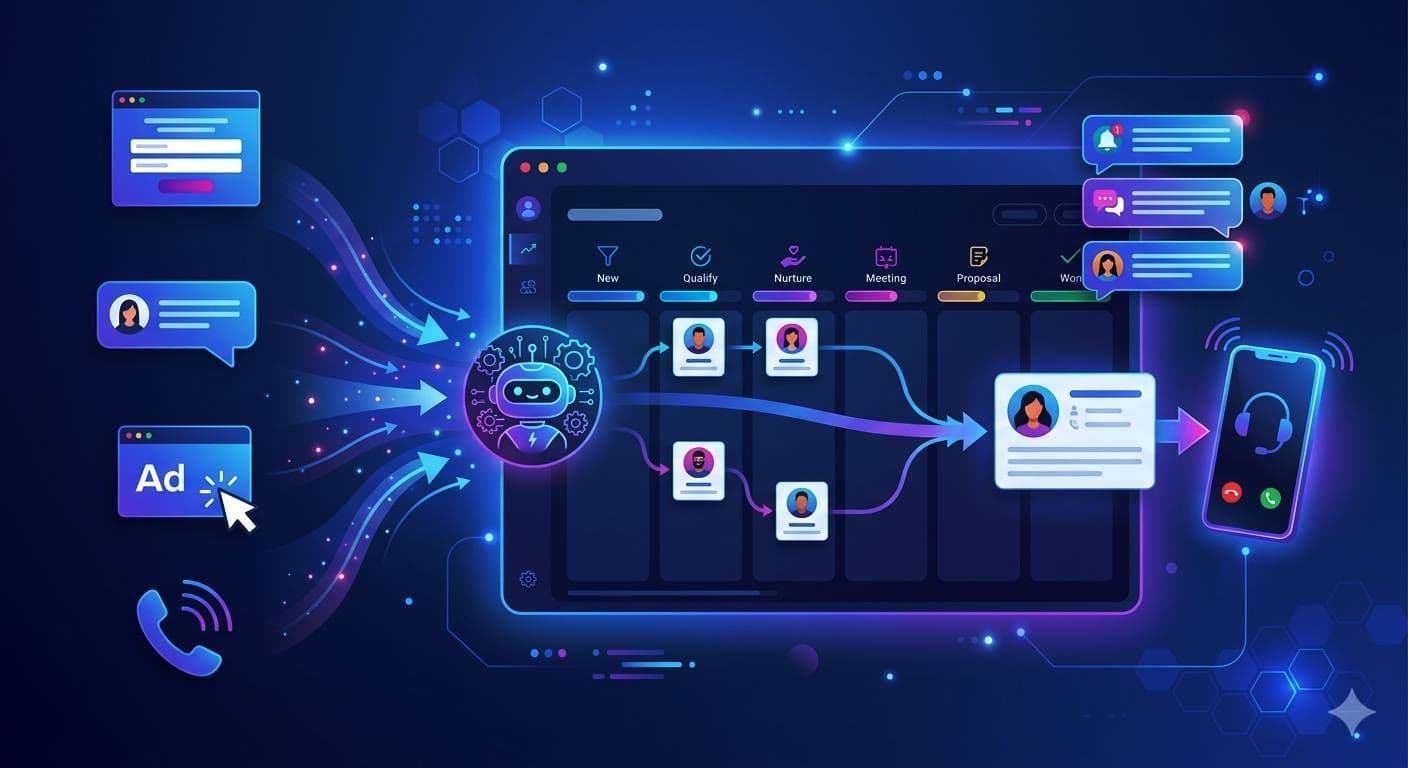
When a lead comes in, an automated system can:
- respond immediately by text or call
- acknowledge the request in a natural way
- ask a few qualifying questions
- route context into the CRM
- offer scheduling while interest is still high
- trigger follow-up automatically if the first touch is missed
That matters because it preserves continuity.
Instead of asking the buyer to re-engage later, the system keeps the interaction alive in the same moment they raised their hand.
This is the real advantage of AI in inbound sales. It is not only labor reduction. It is temporal alignment.
It gives the business a way to operate at the speed modern buyers already expect.
For companies using paid traffic, demo forms, or service quote requests, that shift can be transformative. It protects intent before it fades into routine.
Key takeaways
The long-term story is bigger than response time alone.
It is about a permanent shift in buyer expectations.
Modern inbound leads increasingly expect businesses to engage immediately, not eventually. When that expectation is met, the sales process feels natural. When it is broken, the lead does not always disappear, but the easy path to conversion does.
The teams that win over the next few years will not just have better reps or more lead volume. They will have systems designed for instant engagement.
That is the real answer to Why Instant Lead Response Is the Future of Inbound Sales.
Because the future belongs to businesses that can show up in the exact moment buying intent appears.
FAQ
1. Why are buyer expectations shifting toward instant engagement?
Because nearly every digital experience now trains people to expect immediate confirmation and next steps. That expectation carries into inbound sales, whether someone is requesting a SaaS demo or a local service quote.
2. Is instant lead response only important for high-volume sales teams?
No. In many cases, it matters even more for smaller teams and high-ticket businesses because each inbound lead carries more revenue potential. Instant engagement helps preserve that value before the moment passes.
3. Can AI really improve inbound sales without hurting the customer experience?
Yes, when used correctly. AI works best as the first layer of engagement: immediate acknowledgment, qualification, routing, and booking. It creates responsiveness without forcing prospects to wait for human availability.
Next step
Want to fix slow lead response?
See how FusionSync responds in seconds, qualifies inbound leads, and moves them toward a booked next step automatically.
Where it works
View all use cases