
Lead Response Time vs Conversion Rate
Understand the relationship between response speed and conversion.
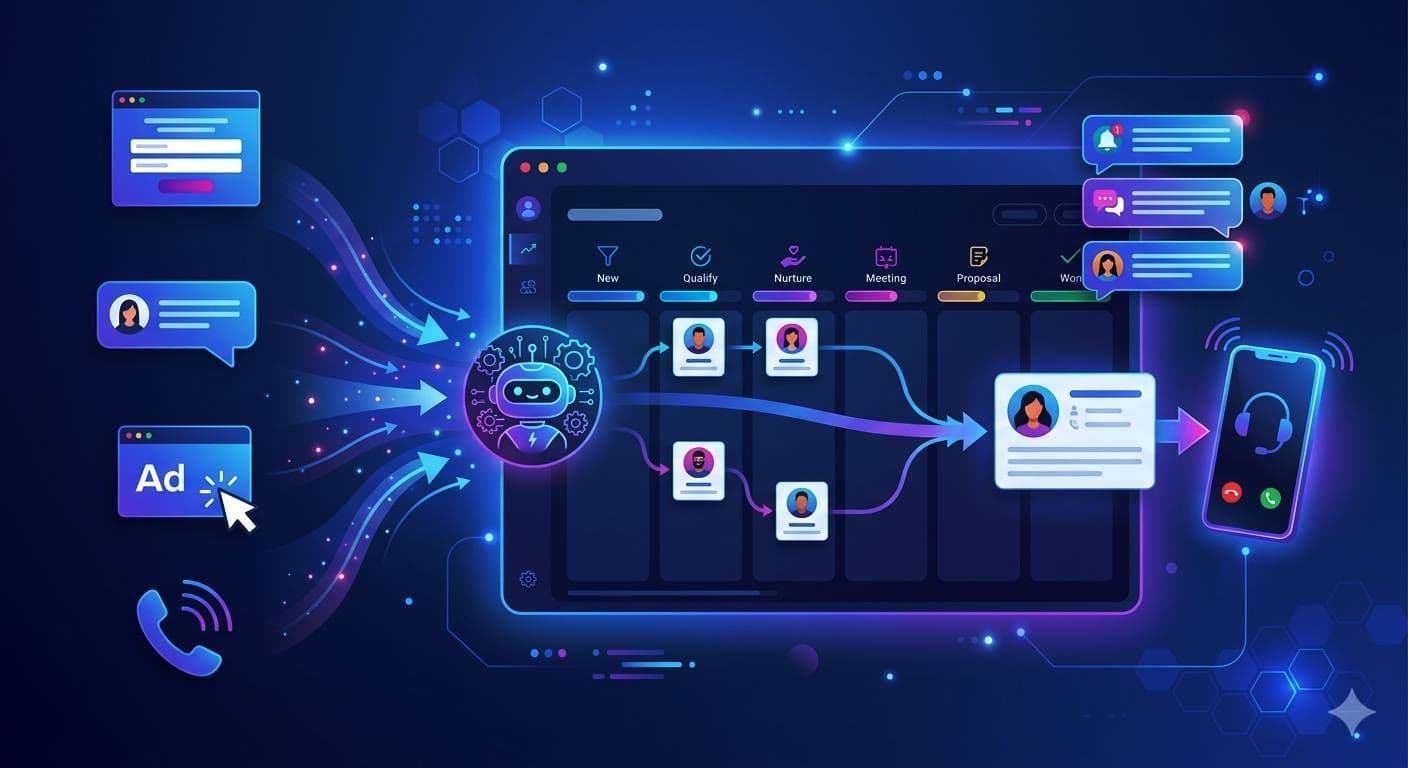
A SaaS buyer lands on your pricing page at 8:43 PM.
They have probably already looked at three competitors. They are not casually browsing. They click into integrations, scan your case studies, and submit a demo request with a specific note:
“Need a solution in place before next quarter.”
By 8:44 PM, their intent is at its highest point.
By 9:15 PM, that intent is already decaying.
By the next morning, the same lead may still be interested in solving the problem, but not necessarily interested in solving it with you.
That is the heart of Lead Response Time vs Conversion Rate. It is not just a debate about operational speed. It is about how fast buyer intent fades, and how directly that timing affects outcomes.
A lot of sales teams treat response time like an efficiency metric. In reality, it behaves more like a conversion multiplier. When response happens close to the moment of interest, conversion rates rise. When response is delayed, conversion rates fall, often sharply.
Here is the reframing most teams miss:
Response speed does not merely support conversion. It preserves the conditions required for conversion to happen at all.
The problem: timing changes the value of the same lead
Most teams evaluate leads as if quality is fixed.
A demo request from a qualified buyer looks valuable whether sales responds in 2 minutes or 12 hours.
But in practice, the lead is not static. Its value changes with time.
This is why the relationship between lead response time and conversion rate is so important. The same person, from the same company, with the same budget and the same problem, can convert at a very different rate depending on when the first response happens.
That means timing is not a secondary variable. It is part of the lead itself.
If you wait too long, you are not following up with the same opportunity marketing generated. You are following up with a degraded version of it.
This is also the real explanation behind why inbound leads go cold. They do not usually become bad leads overnight. Their buying momentum simply weakens as time passes.
Lead Response Time vs Conversion Rate: what the relationship actually looks like
The relationship is rarely linear.
It is not as simple as saying every extra minute causes a small, steady drop.
Instead, response timing usually follows a steep early decline curve.
In the first few minutes after a form fill, the lead is mentally available. They remember what they were comparing. They can explain their use case clearly. They are still in decision mode.
After that, conversion probability starts to slip.
Not because the lead suddenly became unqualified.
Because the psychological conditions that support action begin to disappear.
A useful way to think about it:
- In the first few minutes, intent is active
- Shortly after, intent becomes passive
- Later, intent becomes recoverable only with more effort
- Eventually, intent becomes replaced by other priorities
This is why fast response often produces disproportionately better results. It catches demand while it is still alive.
That dynamic is closely related to the patterns covered in the 5-minute rule for inbound leads. The key takeaway is simple: the highest-converting version of a lead exists near the moment they reach out.
Why timing has such a strong effect on results
The mechanism is attention decay.
When a buyer submits a form, they are in a narrow window of concentration. They have a problem in mind, a shortlist in front of them, and some level of urgency pushing them forward.
That state does not last long.
This matters because conversion is not only about fit. It is also about immediacy.
When your team responds quickly, the buyer does not need to reconstruct context. They are still connected to the problem that made them raise their hand in the first place.
When your team responds late, a few things happen that hurt conversion rates:
The buyer’s mental context fades
A delayed response forces the lead to switch back into evaluation mode later.
That sounds small, but it adds friction.
At the moment of form submission, the lead has emotional clarity. A few hours later, they may need to re-open tabs, revisit internal notes, or remember why your offer stood out.
Every extra step reduces the chance of moving forward.
The urgency gets diluted
Urgency is time-sensitive.
The issue that felt pressing at 8:43 PM may feel less immediate after a meeting, a busy workday, or a change in priorities. The problem still exists, but the motivation to act weakens.
Conversion rates drop when urgency cools faster than your follow-up process moves.
The next step feels less natural
Immediate response feels like continuity.
Delayed response feels like interruption.
That difference changes behavior. If the first touchpoint happens while the prospect is still engaged, a call or booking request feels relevant. If it happens much later, it feels like another item competing for attention.
This is one reason how lead response time impacts conversion rates is such a critical topic for revenue teams. The first response is not just outreach. It is the bridge between interest and action.
The business impact: lower conversion without lower lead volume
One of the most frustrating parts of this issue is that it can hide in plain sight.
Your marketing dashboard may look healthy.
Traffic is coming in.
Form fills are steady.
Cost per lead is acceptable.
But pipeline underperforms.
When that happens, teams often assume they need more leads.
In many cases, they actually need faster engagement.
This is the dangerous part of the Lead Response Time vs Conversion Rate relationship: it reduces output without changing input.
You can keep spending on ads, content, and landing pages while quietly converting less of the demand you already created.
The consequences show up everywhere:
- fewer conversations started
- fewer qualified opportunities created
- lower demo booking rates
- weaker sales efficiency
- lower return on marketing spend
The lead count may stay flat while revenue opportunity declines.
That makes slow response especially expensive because it often gets misdiagnosed.
A real-world pattern in high-intent SaaS leads
High-intent SaaS leads are a good example because their behavior is often compressed into short research bursts.
A buyer may spend 25 minutes comparing platforms, submit two demo requests, then move on.
If your team replies the next day, you are no longer entering that research session. You are trying to restart it.
That is a much harder job.
This is why response time has an outsized effect on demo conversion. Buyers asking for demos are not asking for generic nurturing. They are signaling present-tense interest.
If the response matches that moment, conversion rates rise.
If the response misses that moment, the funnel gets longer, colder, and less efficient.
An important insight here is this:
The real loss is not speed. The real loss is synchronicity.
The best-performing teams do not just respond faster. They respond while the buyer is still psychologically present.
Why teams underestimate the drop in conversion rate
Most companies measure response time in averages.
That can be misleading.
An average response time of two hours may sound reasonable on paper, but averages hide the real problem. Some leads are answered in minutes. Others sit untouched during lunch, after hours, weekends, or busy sales periods.
Those delayed leads often experience the biggest conversion loss.
This is why leaders should look beyond averages and study timing bands instead:
- under 5 minutes
- 5 to 15 minutes
- 15 to 60 minutes
- 1 hour+
Once you break it out that way, the relationship between timing and results becomes much clearer.
If you want a broader frame for evaluating performance, this article on lead response time benchmarks for B2B companies is a useful companion. Benchmarks matter because they show how far your team is from the window where conversion is highest.
How to improve conversion by fixing timing, not just messaging
When conversion rates are soft, many teams immediately tweak copy, forms, or sales scripts.
Those things matter, but they often come after the bigger lever.
If your timing is off, better messaging helps less than you think.
Here are the most practical ways to improve results by improving timing.
1. Treat the first five minutes as a separate conversion stage
Do not think of the first response as a generic follow-up.
Treat it as its own stage with its own SLA, ownership, and reporting. The goal is to protect the lead’s highest-intent window before it fades.
2. Design outreach for immediacy
The first touch should be simple and action-oriented.
For example:
- immediate confirmation
- a quick call attempt
- an SMS asking to confirm interest
- a booking link delivered instantly
This works because it aligns with the buyer’s current attention level instead of assuming they will still be equally available later.
3. Measure conversion by response-time bucket
Do not just ask, “What is our overall conversion rate?”
Ask:
- What is conversion under 5 minutes?
- What is conversion after 30 minutes?
- What happens after 1 hour?
Once you see the spread, the economics become obvious.
4. Build for off-hours intent
A meaningful share of high-intent inquiries happen outside standard rep availability.
If your process only works when a human is online, your conversion rate will always depend on office hours rather than buyer behavior.
How automation and AI solve this exact timing problem
This is where automation becomes more than convenience.
It becomes timing control.
The core problem in Lead Response Time vs Conversion Rate is that human teams cannot consistently match buyer intent in real time. Reps are in meetings, on calls, commuting, or offline.
AI-powered response systems close that gap.
A well-designed system can:
- respond within seconds of form submission
- send an immediate text or email acknowledgement
- place an instant callback
- ask qualifying questions
- route qualified leads correctly
- offer booking options while intent is still active
That does not replace the sales team.
It protects the lead until the sales team takes over.
This is the subtle but important advantage of AI in inbound sales. It preserves timing when human availability cannot.
For companies handling demo requests, contact forms, or paid lead traffic, that can mean more conversations from the same lead volume and better conversion without increasing acquisition spend.
Key takeaways
- Lead value changes over time, even when lead quality stays the same.
- The relationship between timing and results is steepest in the first few minutes after inquiry.
- Delayed response lowers conversion because intent, attention, and urgency decay quickly.
- Most teams underestimate the issue because averages hide the true delays.
- Faster response improves conversion not just by being efficient, but by matching the buyer’s moment of action.
- Automation and AI help by preserving that moment consistently, including after hours.
Conclusion
The real lesson in Lead Response Time vs Conversion Rate is that conversion is time-sensitive.
A lead does not stay equally convertible from one hour to the next. The opportunity is strongest right after the hand raise, when attention is high and the next step feels easy.
That is why timing and results are so tightly linked.
If your team wants better conversion rates, do not just improve messaging or generate more leads. Start by protecting the moment of intent. Because the biggest drop in performance often happens before a sales conversation even begins.
FAQ
1. What is the connection between lead response time and conversion rate?
The faster you respond, the more likely you are to engage the lead while their intent is still active. As response time increases, attention and urgency decline, which lowers the chance of booking meetings or creating opportunities.
2. Why does conversion rate drop so quickly after a lead submits a form?
Because the lead’s decision-making context fades fast. Right after submission, they are focused and ready to act. Later, they are distracted, less urgent, and harder to re-engage.
3. How can companies improve Lead Response Time vs Conversion Rate without hiring more reps?
The most effective approach is to automate the first response layer. Instant acknowledgement, automated qualification, immediate outreach, and smart routing help preserve buyer intent before a rep steps in.
Next step
Want to fix slow lead response?
See how FusionSync responds in seconds, qualifies inbound leads, and moves them toward a booked next step automatically.
Where it works
View all use cases