
Lead Response Time for Local Businesses
Learn response speed benchmarks for local businesses.
At 12:17 p.m., a homeowner in Austin notices water spreading under the kitchen sink.
By 12:19, they are on their phone searching "emergency plumber near me."
By 12:21, they have opened three local company websites.
By 12:22, they have submitted two quote requests.
By 12:24, they are ready to book whoever can help today.
This is the real context behind Lead Response Time for Local Businesses.
Local leads are not browsing in the abstract. They are usually acting inside a narrow window of need, geography, and convenience. They want someone nearby, available, and responsive right now. Not this afternoon. Not tomorrow morning. Right now, while the problem is still urgent and while they are still standing in the kitchen looking at the leak.
That is what makes local lead response different from broader B2B or long-cycle sales. In local markets, speed is not just a sales advantage. It is a proxy for proximity, availability, and trust.
Here is the sharper insight: speed is not operational for local businesses. It is positional.
If you respond first, the buyer assumes you are the easiest nearby option to work with. If you respond late, they do not just think you are slow. They assume you are unavailable, too far away, or too busy to help.
That is why local leads go cold so fast.
The real problem behind Lead Response Time for Local Businesses
For local businesses, a lead often arrives at the exact moment the customer wants to solve something nearby.
That could be:
- a dental patient looking for a same-week appointment
- a parent searching for an urgent pediatric visit
- a driver needing towing
- a homeowner requesting a roofing estimate after a storm
- a restaurant prospect asking about a private event this weekend
In each case, the lead is driven by local intent.
Local intent means the buyer is not simply researching. They are trying to make a decision tied to place and timing. They are looking for the closest credible option that can act fast enough to fit the moment.
This is why the usual framing of response time is incomplete for local businesses. The issue is not only that interest fades. The issue is that local intent collapses quickly when the buyer does not get an immediate signal that your business is nearby, attentive, and ready.
When there is a delay, the customer re-runs the search.
They tap the next listing.
They call the next number.
They choose the business that feels easiest to reach.
The lead did not disappear.
The buying moment moved a few miles down the road.
If you want a broader explanation of why inbound leads go cold, the local version is even more compressed because urgency and geography are happening at the same time.
Why local intent creates such a short decision window
A local lead is usually making a proximity-based decision under mild or high urgency.
That combination changes buyer behavior.
When someone searches for a local service, they are not evaluating ten vendors in a spreadsheet. They are filtering fast. Their mental checklist is simple:
- Can this business serve my area?
- Can they respond today?
- Can I reach a real person quickly?
- Can they tell me the next step now?
Your response time answers all four questions at once.
A fast callback or text does more than start a conversation. It confirms logistical fit. It tells the buyer, "Yes, we serve your area. Yes, we are active. Yes, we can move now."
A delay sends the opposite signal.
Even if your service is great, a slow first response makes the business feel operationally distant. In local buying, perceived distance matters almost as much as actual distance.
That is the mechanism many businesses miss.
A local lead is not comparing brands first. They are comparing friction.
The business that reduces friction fastest often wins. That is why speed to lead creates such a strong advantage in local markets. The first useful response often becomes the default local choice.
Why proximity-based decisions punish delay so aggressively
In local sales, urgency and geography amplify each other.
If someone needs a landscaper for an overgrown property before a showing, or a med spa appointment before the weekend, their decision is anchored to a specific timeline and a specific location.
That means waiting is not neutral.
Every passing minute increases the odds that the buyer will choose based on convenience instead of preference.
This is especially true on mobile. Local buyers are often searching from their phones while in motion, between tasks, or on-site where the need exists. They are not settling in for a long nurture journey. They are trying to complete a task.
That creates a very different type of lead behavior:
- shorter patience
- fewer comparison steps
- stronger preference for immediate contact
- higher likelihood of booking the first workable option
For local businesses, the hidden danger is not just a slow workflow. It is being interpreted as geographically irrelevant.
If your business does not answer quickly, the customer starts to feel like you are not truly accessible, even if your office is five minutes away.
What this costs local businesses
The cost is bigger than one missed inquiry.
When local intent is high, each delayed lead can affect:
- booked appointments
- dispatch utilization
- daily revenue
- ad efficiency
- local reputation
- repeat referral opportunities
Imagine a home services company paying for Google Ads in a tight metro area. The buyer clicks, lands on the site, fills out a quote form, and waits. Ten minutes later, they have already booked someone else.
Marketing did its job.
Search intent was there.
The service area matched.
The buyer was ready.
But the opportunity vanished because the response did not meet the urgency of the local moment.
This is one reason businesses often think they have a lead quality problem when they really have a timing-in-context problem. The leads looked bad only because the business entered the conversation after the location-based decision had already been made.
That is also why improving response speed can lift conversions without changing traffic, budget, or offer. For local businesses, the fastest win is often not better marketing. It is faster confirmation of local availability.
The behavioral pattern most local businesses underestimate
Local prospects often submit forms as a backup to calling.
That matters.
A form fill on a local website is frequently not a patient, deliberate buying action. It is a convenience action. The buyer may submit the form, keep browsing, and book with the first business that responds in a way that feels immediate.
In other words, the form is not the decision.
The response is the decision trigger.
This is why local businesses should think beyond inbox speed. The real question is whether the lead feels contacted while the local need is still emotionally active.
That is where many companies lose ground. A reply 45 minutes later might seem fast internally. But for a customer trying to solve a local need on their lunch break, it is functionally late.
This aligns with broader findings around the 5-minute rule for inbound leads, but local businesses often feel the drop-off even more sharply because the buyer can switch options instantly.
How local businesses should respond differently
If the lead source is local, the response strategy should reflect local urgency.
That means your first response should do three things immediately:
1. Confirm service area
The buyer wants reassurance that you actually cover their location.
A fast text or call that references their area reduces uncertainty fast.
Example:
"Thanks for reaching out. Yes, we service North Scottsdale and can help today."
That single sentence does more than acknowledge the lead. It answers the proximity question.
2. Offer a next step tied to time
Local buyers want movement, not just acknowledgment.
Instead of "We received your message," the better move is:
- "We can call you now"
- "We have a 3 p.m. slot available"
- "Our team can provide an estimate this afternoon"
Time-specific responses fit the urgency behind local intent.
3. Use the channel that matches mobile behavior
For local leads, phone and SMS often outperform slower channels because they reduce effort.
A customer dealing with a roof leak or trying to find a same-day cleaning service is much more likely to engage with a text or immediate call than a delayed email.
That is why many businesses improve conversions when they use multi-channel lead response strategies built around fast contact, not just form notifications.
How automation solves this exact local-intent problem
This is where automation becomes more than a productivity tool.
For local businesses, automation protects the buyer's decision window.
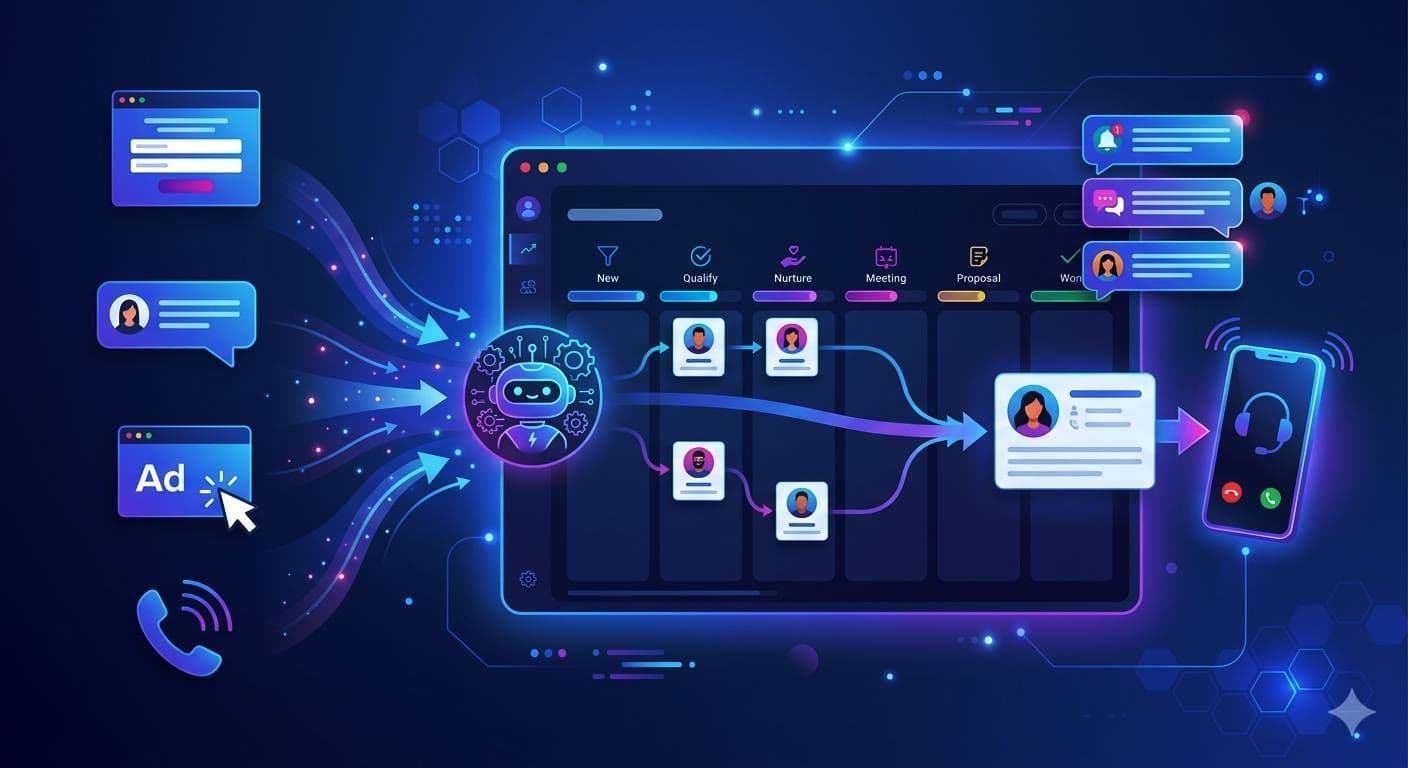
An AI-powered lead response system can:
- respond within seconds after a form submission
- send a text confirming the service area
- place an instant call to the lead
- ask qualifying questions about location and urgency
- offer available appointment times
- route the opportunity based on territory or schedule
That matters because local intent is perishable.
If someone submits a request for HVAC repair at 6:42 p.m., the value of that lead is highest at 6:42 p.m., not the next morning when the office opens.
Automation preserves that value.
More importantly, it helps your business show up like a truly local operator. Fast outreach makes the company feel accessible, organized, and nearby. It closes the psychological distance between inquiry and service.
This is where AI is especially effective. It can qualify and engage the lead in the first minute, while human staff handle the actual appointment or job. The result is not replacing the team. It is making sure the team enters the conversation before the local buying moment disappears.
Key takeaways
- Local leads go cold faster because urgency and geography happen together.
- In local markets, response speed signals availability and proximity.
- A delayed response does not just feel slow. It makes your business feel less accessible.
- The buyer is usually choosing the easiest nearby option, not conducting a long evaluation.
- For local businesses, the first response should confirm area coverage and offer a time-based next step.
- Automation and AI are effective because they protect the narrow window where local intent is strongest.
The central lesson is simple: Lead Response Time for Local Businesses is not just about being efficient. It is about matching the way local buyers actually make decisions.
FAQ
Why is lead response time more important for local businesses?
Because local buyers are usually making immediate, proximity-based decisions. They want a nearby provider who can help now, not later. A fast response reassures them that your business is available and relevant to their location.
What is a good lead response time for a local business?
As fast as possible, ideally within five minutes and often within seconds for high-intent leads. In local markets, even short delays can push the buyer to another nearby option.
How can a local business improve lead response time without hiring more staff?
By using automation to respond instantly through SMS, phone, or AI-assisted qualification. That allows every new lead to get immediate contact, even outside business hours or when staff are busy.
Next step
Want to fix slow lead response?
See how FusionSync responds in seconds, qualifies inbound leads, and moves them toward a booked next step automatically.
Where it works
View all use cases