
The Psychology of Fast Lead Response
Learn how response speed influences buyer psychology.
A CFO at a mid-sized manufacturing company fills out a demo form at 9:12 p.m.
She is not casually browsing.
She just got out of a budget review meeting, realized her team is leaking inbound opportunities, and wants to see a solution before tomorrow’s leadership check-in.
At 9:13, she is still focused.
At 9:18, she is already back in email.
At 9:40, her urgency has been absorbed by the rest of her work.
The next morning, your sales rep reaches out with a perfectly reasonable email.
But the moment is gone.
That is the real subject behind The Psychology of Fast Lead Response. Response speed does more than improve operations. It shapes how a buyer interprets your company, how seriously they rank your solution, and whether they stay in a decision-making mode long enough to move forward.
Most teams think of fast response as a process metric.
Buyers experience it as a signal.
That distinction matters.
Speed changes perception before the conversation even starts
When a lead reaches out, they are making a small decision under uncertainty.
They do not fully know your product.
They do not fully know your team.
They do not fully know what buying from you will feel like.
So they look for clues.
Response speed is one of the first clues they get.
A fast reply communicates:
- this company is attentive
- this company is organized
- this company is available
- this company likely handles customers well
A slow reply communicates the opposite, even if that judgment is unfair.
This is the key psychological mechanism: people use speed as a proxy for competence.
They are not just asking, “Did someone answer?”
They are asking, consciously or not, “What does this response tell me about what it will be like to work with this business?”
That is why fast lead response has an outsized effect on conversion. It is not only about catching the lead before they disappear. It is about shaping the buyer’s interpretation while their impression is still forming.
One sharp way to put it:
Speed is not operational. It is interpretive.
Buyers read meaning into response time.
The Psychology of Fast Lead Response starts with momentum
When someone submits a form, they are in motion.
They have moved from passive interest to active evaluation.
That shift is important because decision-making is easier when momentum is intact.
Fast response preserves that momentum.
It lets the buyer continue the same mental session they were already in.
Slow response breaks it.
Once the interruption is long enough, the buyer has to reconstruct context:
- Why was I looking at this?
- What problem was I trying to solve?
- Was this urgent or just interesting?
- Do I still want to spend time on this today?
That reconstruction effort is where conversions die.
Not because the lead hates your offer.
Not because they selected a competitor five seconds later.
But because humans rarely resume a partially formed buying decision with the same intensity they had in the original moment.
This is especially true for inbound leads from high-intent pages like demos, pricing, and contact forms. The buyer is acting in a narrow window of motivation. If you want a broader look at the benchmarks around that window, this breakdown of what counts as a strong sales response time is useful context.
Why fast response makes buyers feel safer
Every purchase involves perceived risk.
In B2B sales, that risk is not just financial. It is professional.
The buyer may be wondering:
- Will this vendor be reliable?
- Will implementation be painful?
- Will support disappear after the contract?
- Will I look bad internally if this goes wrong?
Because those questions are hard to answer early, buyers use immediate experience to fill the gap.
This is where response speed affects trust.
A fast reply lowers uncertainty.
It gives the buyer emotional evidence that your business is present, responsive, and capable.
A delayed reply increases uncertainty.
Even if the product is excellent, the first lived experience of your company feels sluggish.
And that feeling quietly influences later decisions.
In other words, the buyer is not separating your response speed from your brand.
They are blending them together.
That is why quick follow-up can make a company feel more premium, even before a sales call happens.
Slow response weakens decision energy
There is another psychological effect that sales teams often miss.
A lead does not only have intent.
They also have decision energy.
Decision energy is the mental readiness to engage, compare, answer questions, and schedule next steps.
It is finite.
It gets consumed by meetings, messages, deadlines, and the dozens of small choices people make every day.
When someone reaches out, they are temporarily willing to spend that energy on solving a problem.
A fast response captures it.
A slow one asks them to save it for later.
Most people do not.
That is why a one-hour delay can feel much larger than one hour. Psychologically, it may move the conversation from “I’m ready to deal with this now” to “I’ll come back to this another time.”
And “another time” often means never.
This is also part of why inbound leads go cold. The loss is not always dramatic. Often it is quiet. The buyer simply exits the decision state you needed them to stay in.
Perception affects conversion long before pricing does
Companies often assume conversion rises or falls based mostly on offer quality, pricing, or sales skill.
Those matter.
But before any of those can do their job, the buyer has to remain psychologically engaged.
Response speed influences that earlier stage.
A fast first touch can create:
- higher reply rates
- better call connection rates
- more complete qualification answers
- more willingness to book a meeting
Why?
Because once the buyer perceives your company as engaged and easy to work with, friction drops.
This is the hidden business value of speed.
It does not just get you in front of more leads.
It changes the quality of the interaction you get from them.
A responsive company receives more honest answers.
More attention.
More scheduling compliance.
More momentum through the funnel.
That is why teams that improve first-response speed often see gains that seem larger than the operational change itself.
The speed changed buyer behavior.
The real cost is not delay. It is downgraded significance
Here is the contrarian insight:
Leads rarely go cold because they waited. They go cold because the delay changed what your company meant to them.
That is a different diagnosis.
If a buyer fills out a form and hears back instantly, your business feels relevant now.
If they hear back much later, your business can feel optional, secondary, or administrative.
The offer may be identical.
The buyer’s perception is not.
And once significance drops, every next step becomes harder:
- emails are easier to ignore
- calls feel more interruptive
- booking a meeting feels less urgent
- internal follow-through slows down
This is why response speed is closely tied to conversion outcomes. If you want the broader performance view, see how response time influences conversion rates across the funnel.
What this looks like in real buying behavior
You can see this psychology play out in a few predictable ways.
1. Fast response gets fuller engagement
When buyers hear from you quickly, they answer while context is fresh.
They remember what they were looking at.
They can explain their use case clearly.
They are more willing to continue the conversation.
2. Delayed response creates shallow replies
The later the reply, the more generic the interaction becomes.
Instead of a focused conversation, you get vague responses like:
- just looking around
- send me some info
- not a priority right now
Usually that is not because the lead was low quality from the start.
It is because the original intent has lost emotional clarity.
3. Speed makes your process feel easier
Buyers associate responsiveness with lower future friction.
If the first interaction is smooth, they assume onboarding, support, and communication may also be smooth.
That expectation can meaningfully increase willingness to take the next step.
How to improve speed in a way buyers actually feel
If the goal is to influence perception and decision-making, then “responding faster” is not enough in the abstract.
The response has to preserve psychological momentum.
That means focusing on the buyer’s lived experience.
Acknowledge immediately
The first few moments after form submission matter most.
An instant confirmation by SMS, email, or call tells the buyer their action landed.
That alone reduces uncertainty.
Continue the same conversation they just started
Do not force context switching.
Reference the page, offer, or request they just submitted.
Make the interaction feel connected to their original action.
Ask simple next-step questions
Early response should not create work.
Ask easy qualification questions that keep momentum moving rather than demanding a long explanation.
Offer a clear action
Give the buyer one obvious next step:
- book a demo
- answer a few questions
- take an instant callback
- confirm the best time to talk
Psychologically, clarity matters as much as speed.
Why automation works so well for this specific problem
This is where automation becomes more than an efficiency tool.
It becomes a perception tool.
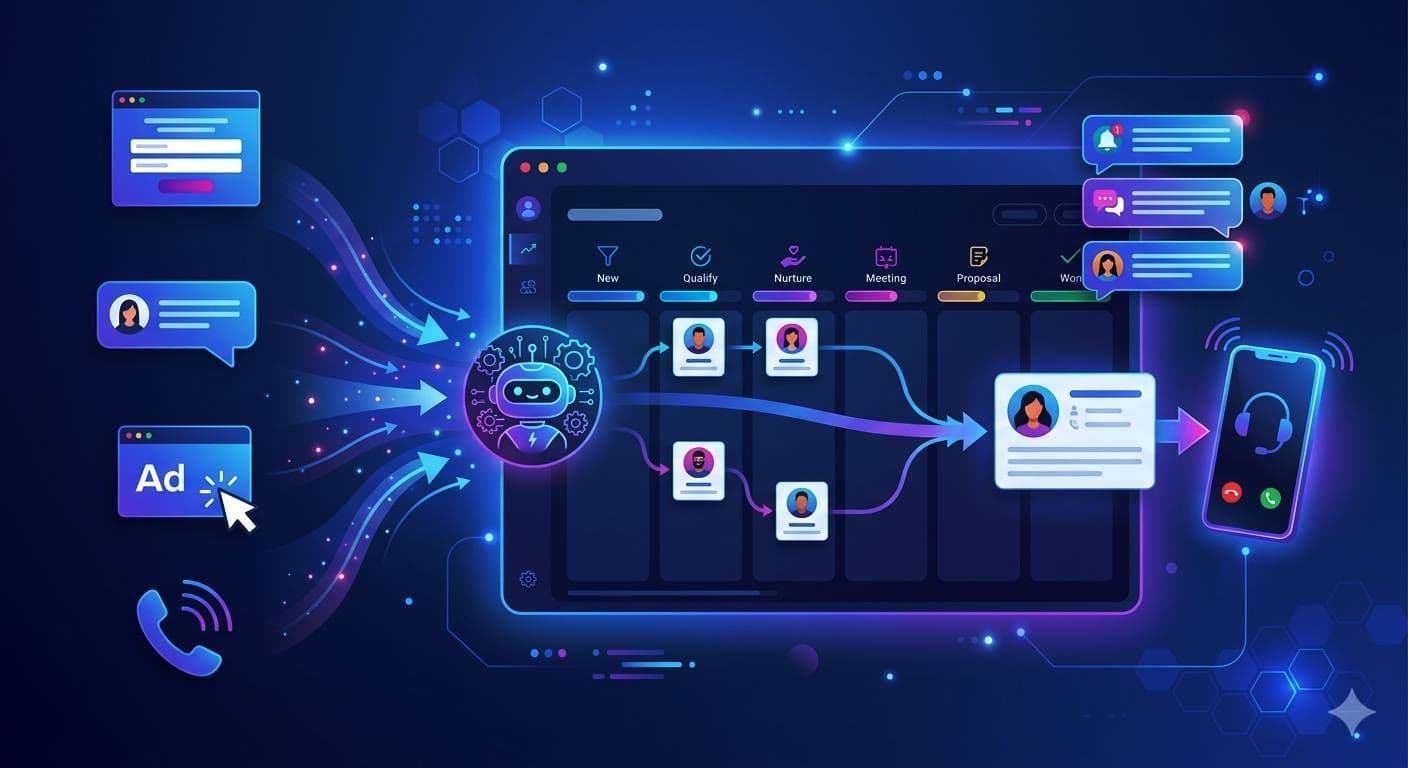
AI-powered lead response systems solve the exact issue at the center of this article: they operate inside the buyer’s decision window.
Instead of waiting for a rep to notice a form submission, an automated system can:
- respond in seconds
- send an immediate text
- place an instant call
- ask qualifying questions
- route the lead correctly
- book the meeting while intent is still active
That speed changes how the buyer experiences your business.
It makes the company feel present.
It makes the process feel easy.
It protects the momentum that manual teams often lose between notification and action.
This is why AI is increasingly effective in inbound sales. It does not just remove lag. It preserves buyer psychology at the moment it matters most. For a deeper look, this article on how AI can respond to leads instantly connects the operational side to the conversion outcome.
Key takeaways
- Buyers use response speed as a signal of competence and reliability.
- Fast response preserves momentum from the exact moment the lead decides to engage.
- Delayed response forces the buyer to rebuild context and decision energy later.
- The biggest loss is not time by itself. It is the drop in perceived relevance and urgency.
- Instant response systems help because they act inside the buyer’s active decision window, not after it.
That is the core lesson of The Psychology of Fast Lead Response.
The businesses that win more inbound opportunities are not only the ones with better reps or better offers.
They are often the ones that understand a simpler truth:
The first response shapes the buyer’s interpretation of everything that follows.
FAQ
Why does fast lead response matter psychologically?
Because buyers interpret speed as a sign of attentiveness, competence, and reliability. A quick reply lowers uncertainty and keeps them in an active decision-making state.
Does fast response help even if the buyer is not ready to purchase immediately?
Yes. Fast response still improves perception. Even if the lead is early in the process, a quick and relevant follow-up makes your company feel easier to work with and more credible.
How can businesses respond fast without asking reps to be available 24/7?
The most practical approach is automation. AI-powered response systems can engage leads instantly, qualify them, and book meetings before human follow-up takes over.
Next step
Want to fix slow lead response?
See how FusionSync responds in seconds, qualifies inbound leads, and moves them toward a booked next step automatically.
Where it works
View all use cases