
How Fast SaaS Companies Respond to Leads
Learn response speed benchmarks for SaaS companies.
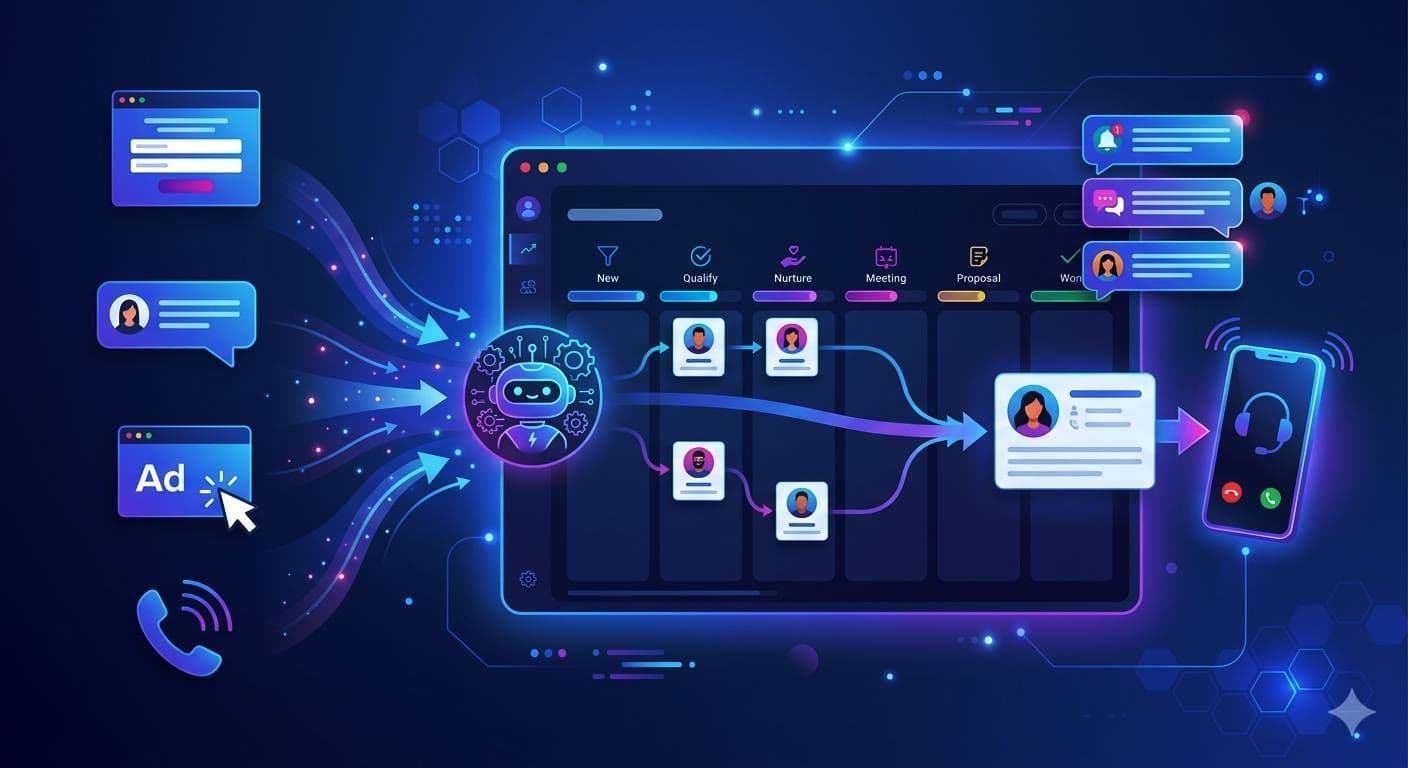
A buyer lands on a SaaS pricing page at 9:12 p.m.
They have already compared three tools, watched two product videos, and finally submit a demo request with a real work email.
This is not a casual visitor. This is someone in active evaluation mode.
What happens next is where a surprising gap appears.
Some SaaS companies reply in seconds with a confirmation, a text, or even an instant call. Others wait until the next morning. Some wait until the next business day. A few never follow up in any meaningful way at all.
That gap is what this article is really about.
When people ask How Fast SaaS Companies Respond to Leads, they are usually asking a deeper question: are SaaS companies operating at the speed modern buyers expect, or are they still using response systems built for a slower market?
In SaaS, that comparison matters more than many teams realize. Buyers do not judge your response time against your internal process. They judge it against the fastest, smoothest experience they had anywhere else that week.
That is the real benchmark.
The problem is not just response speed. It is the expectation gap.
Most lead response discussions focus on whether a team is fast or slow.
But for SaaS, the more useful comparison is this:
How fast do SaaS companies respond to leads relative to what buyers expect from a software company?
That framing changes everything.
Software buyers expect immediacy because SaaS products are marketed as frictionless, automated, always-on solutions. The website is polished. The trial may be instant. The chatbot appears immediately. The product promises efficiency.
So when a prospect requests a demo and hears nothing for six hours, the delay feels bigger than the clock suggests.
It feels inconsistent.
That inconsistency creates doubt before the first conversation even starts.
A slow reply from a contractor might be tolerated. A slow reply from a software company that sells automation feels like a contradiction.
This is why the performance gap matters so much in SaaS. The response is not evaluated in isolation. It is evaluated against the brand promise, the category standard, and the buyer’s expectation of digital speed.
How Fast SaaS Companies Respond to Leads compared to buyer expectations
In many SaaS teams, lead response performance is better than traditional industries but still worse than buyers assume.
That is the hidden issue.
A SaaS company may look at its numbers and think, “We respond within two hours on average. That is solid.”
Operationally, maybe it is.
Commercially, it often is not.
For high-intent demo requests, pricing inquiries, and inbound hand-raisers, buyers increasingly expect:
- instant confirmation
- near-immediate outreach
- a simple path to book time
- follow-up that continues if they do not reply right away
Many SaaS companies deliver only the first item.
They send an automated email saying, “Thanks, someone from our team will reach out shortly.” Then nothing happens until a rep becomes available, checks the CRM, reviews the lead, and decides to make contact.
That process may still count as a response internally.
The buyer experiences it as waiting.
Here is the sharper insight: In SaaS, speed is not just operational. It is positional.
Response time signals what kind of company you are. Fast follow-up positions you as modern, attentive, and credible. Delayed follow-up positions you as overloaded, disorganized, or less serious than your competitors.
Why this expectation gap happens in SaaS specifically
The gap exists because SaaS companies often mistake digital polish for sales responsiveness.
The front end of the buyer journey is fast.
The back end often is not.
A prospect can:
- find your site through search or paid ads
- read feature pages instantly
- watch a product demo on demand
- compare plans in minutes
- submit a form in seconds
Then the handoff moves into a human workflow that is much slower than the experience that came before it.
That creates a jarring transition.
The mechanism is simple. Marketing creates a high-speed buying experience, but lead handling often depends on calendar availability, queue reviews, territory logic, and rep follow-up habits. The buyer has been conditioned for instant access, then gets placed into a delayed sales process.
In SaaS, that mismatch is more visible because the category itself teaches users to expect immediacy.
Think about the products buyers use every day: Slack, Zoom, Notion, HubSpot, Stripe. Everything is fast, accessible, and self-serve. That changes expectation across the whole category.
So even if a SaaS company responds faster than an old-school B2B firm, it can still feel slow in context.
That is why understanding what counts as a strong response window for sales teams matters. The benchmark is not just industry average. It is buyer expectation at the moment of intent.
What this gap does to conversion and pipeline
When SaaS companies respond slower than buyers expect, the damage starts before a rep ever makes contact.
First, urgency fades.
SaaS buyers often research in concentrated bursts. They open tabs, compare vendors, send a few inquiries, and try to narrow options quickly. If your response arrives after that evaluation window has cooled, your message lands in a different emotional moment.
Second, perceived quality drops.
Buyers unconsciously use responsiveness as a proxy for operational maturity. If onboarding will matter, implementation will matter, and support will matter, they read your first response as an early signal of what working with you may feel like.
Third, meeting rates suffer.
A delayed outreach does not just reduce contact odds. It lowers booking momentum. The prospect may still be interested, but no longer ready to commit to a live conversation.
Fourth, pipeline quality gets distorted.
Sales leaders may think lead quality is weak because demo requests are not converting. In reality, the issue may be timing. The lead was qualified when it came in. It became harder to engage because the company responded below category expectations.
This is closely tied to how lead response time impacts conversion rates. Inbound intent has a short half-life, especially when buyers are actively comparing software options.
The most common SaaS response mistake: mistaking acknowledgment for engagement
Many SaaS companies believe they are fast because they send an immediate auto-response email.
But buyers do not confuse acknowledgment with engagement.
A confirmation email proves the form worked.
It does not satisfy the buyer’s actual need, which is to continue the buying process while interest is still high.
This is where SaaS teams often overestimate their responsiveness. They count “first touch” from the system, but the buyer is still waiting for a useful interaction.
A more honest standard is this:
How long does it take until the prospect can actually move forward?
That could mean:
- talking to someone
- answering qualification questions
- booking a meeting
- receiving a relevant next step
If that takes hours, the experience is still slow, no matter how quickly the confirmation email was sent.
This is one of the biggest reasons teams underestimate why inbound leads go cold. They track receipt of the inquiry, not momentum after the inquiry.
What high-performing SaaS companies do differently
The best SaaS teams design for the expectation gap instead of arguing with it.
They accept that buyers want speed, and they build systems that meet that expectation consistently.
That usually means three things.
1. They separate instant response from rep availability
Top teams do not make the buyer wait for a human to become free before the process begins.
They create immediate next steps the moment the form is submitted.
That may include:
- instant SMS confirmation
- an automatic call attempt
- live qualification
- direct calendar booking
- intelligent routing based on fit or territory
The key idea is simple: buyer momentum should not depend entirely on rep timing.
2. They optimize for high-intent inbound moments
Not every lead deserves the same workflow.
A newsletter signup is different from a pricing request. A content download is different from a demo request.
High-performing SaaS teams prioritize hand-raisers and treat those moments as time-sensitive buying events, not just CRM entries.
3. They measure the experience the buyer feels
Instead of looking only at average first response time, they ask:
- how fast did the lead get a real interaction?
- how fast could they book?
- how many inbound leads were contacted inside the target window?
- where are delays happening after the form submission?
That is a much more useful way to compare SaaS response performance against buyer expectations.
Why AI is becoming the practical fix for SaaS response performance
SaaS companies do not usually fail because they do not care about speed.
They fail because buyer expectations are now closer to “always available” than “we will get back to you tomorrow.” Human teams alone struggle to match that consistently.
This is where automation and AI fit naturally.
AI does not solve the problem by replacing the sales team. It solves the expectation gap by making immediate engagement possible at the exact moment interest peaks.
An AI-powered response system can:
- respond the second a lead submits a form
- call the lead automatically
- ask qualification questions
- route based on answers
- book a meeting instantly
- trigger follow-up if the first attempt fails
That matters in SaaS because it aligns the sales response with the rest of the digital buying experience.
The website feels instant. The form submission feels instant. The next step feels instant too.
That continuity builds confidence.
It also helps teams create the kind of performance described in guides on achieving sub-five-minute lead response. In competitive SaaS markets, that is becoming less of a nice-to-have and more of a baseline expectation.
Practical ways SaaS teams can close the gap
If your team wants to improve, start with comparison, not excuses.
Ask these questions:
- What does our fastest competitor likely do after a demo request?
- What does a buyer expect from a modern software company at 2 p.m.? What about 10 p.m.?
- How long until a prospect can take a meaningful next step with us?
- Where does our process stop being instant and start becoming manual?
Then make targeted changes.
Tighten the definition of response
Do not count automated receipt as success.
Count the first meaningful interaction.
Create an instant path for high-intent leads
Demo requests, contact sales forms, and pricing inquiries should trigger immediate outreach or booking options.
Use routing that happens in the background
The buyer should never feel your internal complexity.
Add persistent follow-up within the same day
Buyer intent often remains recoverable if follow-up continues quickly and intelligently.
Benchmark against expectation, not just average performance
Being faster than a weak industry average does not matter if the buyer expected near-instant action.
Key takeaways
- SaaS lead response should be judged against buyer expectations, not just internal averages.
- The real issue is often an expectation gap between a fast digital buying experience and a slower sales handoff.
- In SaaS, responsiveness shapes perceived product quality and operational trust.
- Auto-response emails are not enough if the buyer cannot actually move forward.
- AI and automation help SaaS teams match the speed buyers already expect from software companies.
FAQ
How fast should SaaS companies respond to leads?
For high-intent inbound leads, SaaS companies should aim for immediate acknowledgment and a meaningful next step within minutes, not hours. That next step could be a live call, qualification, or instant meeting booking.
Why do buyers expect SaaS companies to respond faster than other businesses?
Because SaaS brands sell speed, automation, and convenience. Buyers expect the sales experience to match the product experience. When it does not, trust drops early.
Is an automated email enough as a first response?
Usually not. It confirms receipt, but it does not move the buying process forward. For most demo or contact requests, buyers expect a real path to engage right away.
Conclusion
The real lesson in How Fast SaaS Companies Respond to Leads is not that every company should chase a prettier KPI.
It is that SaaS buyers already have a built-in expectation of speed, and many teams are still responding below that line.
That gap affects trust, meeting rates, and pipeline quality long before anyone labels it a sales problem.
The winners in SaaS will not just be the companies with better products. They will be the ones whose response experience feels as modern as the software they sell.
Because in SaaS, a delayed reply is not just slow.
It feels outdated.
Next step
Want to fix slow lead response?
See how FusionSync responds in seconds, qualifies inbound leads, and moves them toward a booked next step automatically.
Where it works
View all use cases