
Why Sales Teams Miss New Leads
Discover why many sales teams fail to contact leads quickly.
At 4:37 p.m. on a Thursday, a property management company gets a high-intent website lead.
The prospect fills out a quote form for a multi-location service contract. They are not browsing casually. They need help now because their current vendor is missing response deadlines.
The lead enters the CRM.
An email notification is sent to a shared inbox.
A Slack alert posts in a busy channel.
A sales rep is on a call.
Another rep sees the alert, assumes someone else owns it, and moves on.
By 6:15 p.m., nobody has reached out.
The next morning, the rep finally sends a follow-up email.
No reply.
This is one of the clearest answers to Why Sales Teams Miss New Leads. It is not usually because the team does not care. It is because notifications get missed, ownership stays unclear, and follow-up happens too slowly to match the buyer’s moment of intent.
Here is the uncomfortable truth: most leads are not lost in strategy. They are lost in handoff.
Why Sales Teams Miss New Leads: missed notifications create silent delays
When companies talk about lead response problems, they often describe the outcome instead of the mechanism.
The outcome is slow follow-up.
The mechanism is much more specific.
A lead comes in, but the notification does not trigger the right action at the right moment.
Sometimes the alert goes to the wrong place. Sometimes it goes to too many places. Sometimes it lands in an inbox nobody is actively watching. Sometimes it arrives while a rep is busy and disappears under newer messages 10 minutes later.
The lead is technically captured, but operationally invisible.
That distinction matters.
A missed lead is not always a lead that never entered the system. Often, it entered perfectly. The problem is that the human process after the notification is too fragile.
This is why businesses can invest heavily in lead generation and still watch inbound opportunities sit untouched. The form works. The CRM works. The alert works. But the response chain breaks.
If you want a broader view of why inbound leads go cold, this is one of the most common operational patterns behind it.
The real problem is not lead capture. It is alert dependency
Many sales workflows are built on an assumption that sounds reasonable but fails in real life.
That assumption is this: if a rep gets notified, they will respond quickly.
In practice, that rarely holds up consistently.
Reps are in demos, on calls, driving between appointments, reviewing proposals, or simply focused on another task. Notifications compete with everything else in the day. The lead alert becomes one more signal in a crowded environment.
And crowded systems create hesitation.
If multiple reps receive the same alert, each person may assume someone else is handling it. If only one rep receives it and they are unavailable, the lead waits. If the rep plans to respond later, the lead drops into the same mental bucket as dozens of other follow-up tasks.
This is where missed notifications turn into slow follow-up processes.
The problem is not just that the alert was unseen. The problem is that there is no immediate, enforced next step attached to the alert.
That is the deeper mechanism.
Notification-based sales response is reactive. It depends on someone noticing, prioritizing, acting, and then remembering to continue the conversation if the lead does not reply.
That is a lot to ask from a busy team for every inbound inquiry.
Slow follow-up processes make a missed alert worse
A missed notification is rarely a one-time error. It usually starts a chain reaction.
First, the initial alert is missed or ignored.
Then the lead sits unworked for 20 minutes, an hour, or overnight.
Then a rep finally responds with a manual email.
If the lead does not answer, there is often no structured second step.
Maybe the rep intends to call later.
Maybe they set a reminder.
Maybe they forget.
This is why the real damage comes from the combination of missed notifications and weak follow-up systems.
A single delayed alert would be recoverable if the process after it were strong. But in many companies, the follow-up process is just as manual as the first response.
No automatic text.
No callback.
No timed second attempt.
No qualification workflow.
No appointment booking option.
The lead does not die because of one late moment. It dies because the business has no reliable recovery mechanism.
That is an important reframing: missed leads are often process failures disguised as rep performance problems.
What this looks like inside a real sales team
Consider a home services company running paid search campaigns after business hours.
A homeowner fills out a request form at 7:42 p.m. after discovering a costly issue. They are serious enough to submit their phone number and preferred appointment time.
The lead notification goes to email.
The office manager will not see it until the next morning.
At 8:10 a.m., the lead is manually assigned.
At 9:25 a.m., a rep leaves a voicemail.
At 1:40 p.m., they send an email.
At 4:30 p.m., they move on to other tasks.
Nothing about that process feels outrageous in isolation. But from the lead’s point of view, it feels like silence.
The business thinks, “We followed up the next day.”
The buyer experiences, “Nobody got back to me when I needed help.”
That gap is where conversion loss happens.
This is also why teams benefit from tighter routing and assignment logic. If your current process still relies on manual triage, it is worth understanding what lead routing in CRM systems means and where delays usually enter.
The business impact is bigger than one missed conversation
When sales teams miss new leads this way, the cost is not limited to an unanswered form.
It affects pipeline quality, marketing efficiency, and forecast accuracy.
First, ad performance gets distorted.
Marketing may keep sending budget into campaigns that appear to generate weak leads. But the issue may not be lead quality at all. The issue may be that high-intent prospects are waiting too long for contact.
Second, sales reporting becomes misleading.
If a lead never gets a timely first touch and then receives weak manual follow-up, it may be marked unresponsive. That makes the lead look bad when the process was bad.
Third, teams develop false confidence.
Leaders see lead volume in the CRM and assume coverage exists. But captured demand is not the same as worked demand.
This is the sharp takeaway many companies miss: a lead in your CRM is not a lead being pursued.
That is why missed notifications are so dangerous. They create invisible leakage. Nothing appears broken at first glance, but revenue slips away between the alert and the first real action.
For companies trying to diagnose this issue, tracking lead response time metrics every sales leader should track can expose where these gaps actually occur.
Buyer behavior makes this problem worse than it used to be
Modern buyers do not separate your internal process from your level of professionalism.
If they submit a form and hear nothing, they do not think, “Their rep must have missed the notification.”
They think, “This company is hard to reach.”
And when the eventual follow-up arrives much later, it feels disconnected from the moment that triggered the inquiry.
Intent is time-sensitive.
A person who wants to talk now is not just looking for information. They are looking for momentum. A delayed reply breaks that momentum.
Even worse, delayed manual follow-up often arrives in the weakest possible format: a generic email with no immediate next step.
That forces the lead to restart effort.
They have to reopen context.
They have to decide whether to reply.
They have to schedule around your timing instead of their own.
This is why slow follow-up processes do more than delay contact. They increase friction exactly when the buyer was ready to move.
The fix is not “tell reps to be faster”
Many companies respond to this problem with coaching.
Check notifications more often.
Reply faster.
Be more disciplined.
Those are reasonable expectations, but they do not solve the system flaw.
If your process depends on perfect human attentiveness to every lead alert, it will fail under normal working conditions.
The better fix is to remove as much dependence on memory and inbox monitoring as possible.
That means designing a response process where:
- new leads trigger immediate action, not just alerts
- ownership is assigned automatically
- first contact does not wait for a rep to become free
- follow-up continues even if the first attempt gets no response
- booking options are offered right away
In other words, the goal is not better reminders.
The goal is fewer moments where a reminder is required.
If your team is still relying on manual steps, it helps to study why manual lead follow-up is slow and how those delays compound.
How automation solves missed notifications and slow follow-up
Automation matters here because it changes the system from awareness-based to action-based.
That is the key difference.
In an awareness-based workflow, the lead waits for someone to notice the notification.
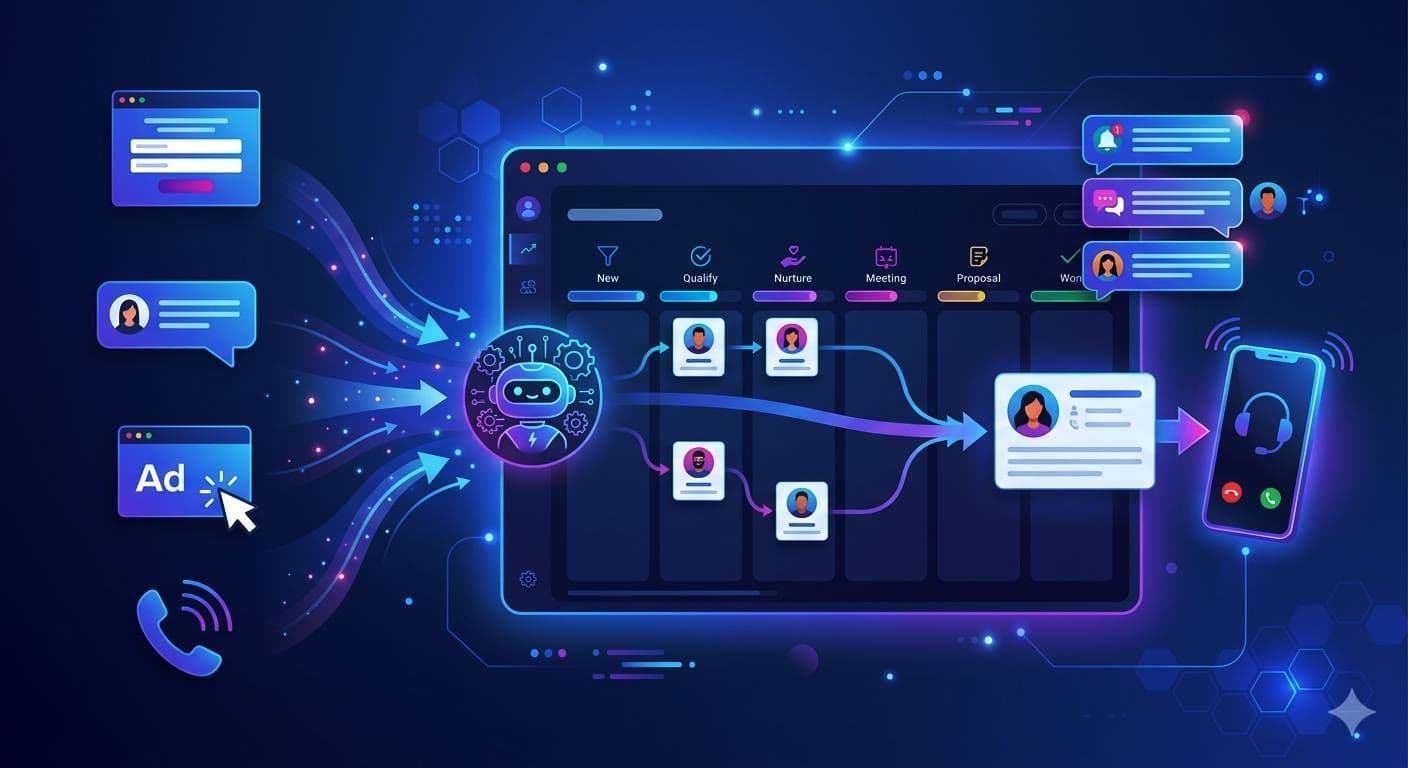
In an action-based workflow, the system responds immediately when the lead arrives.
That can include:
- an instant text confirming the request
- an automatic call within seconds
- AI-led qualification questions
- immediate routing based on territory or availability
- a booking link sent while intent is still high
- follow-up sequences if the first outreach is missed
This is where AI becomes especially useful.
An AI-powered lead response system does not get pulled into meetings, lose alerts in an inbox, or forget to make a second attempt. It can engage the prospect right away, capture buying context, and move the conversation toward an appointment before the sales team even opens the CRM.
That does not replace the rep. It protects the rep from losing the opportunity before they enter the conversation.
And that is the real advantage. Automation does not just make teams faster. It makes missed notifications far less relevant.
Key takeaways
The clearest answer to Why Sales Teams Miss New Leads is often painfully simple: the lead arrived, but the alert did not turn into immediate action.
Missed notifications create the first delay.
Slow follow-up processes turn that delay into a lost opportunity.
If your team depends on shared inboxes, Slack alerts, manual callbacks, and rep memory, good leads will continue to slip through even when demand is strong.
The fix is not more urgency speeches.
It is a response system that acts the moment a lead comes in and keeps following up until a real handoff happens.
Because the biggest threat to inbound conversion is not lack of interest.
It is operational silence.
FAQ
1. Why do sales teams miss new leads even when they have CRM notifications?
Because a notification is not the same as a response process. Alerts can be missed, ignored, buried, or seen too late. If there is no automatic action attached to the alert, the lead can sit untouched even though it entered the CRM correctly.
2. What is the difference between a missed notification and a slow follow-up process?
A missed notification is the initial failure to notice or act on a new lead alert. A slow follow-up process is what happens after that, when outreach depends on manual emails, delayed calls, or inconsistent reminders. Together, they create long gaps between inquiry and contact.
3. How can AI help prevent missed inbound leads?
AI can respond instantly when a form is submitted, call or text the lead right away, ask qualification questions, route the opportunity correctly, and continue follow-up automatically. That removes the dependence on someone seeing a notification and acting fast enough.
Next step
Let's Fix Your Lead Response in 30 Minutes
We'll walk through your current lead flow, identify where leads are slowing down or getting missed, and show you exactly what can be automated to increase speed, conversations, and bookings.
Where it works
View all use cases