
Building a Speed to Lead Infrastructure
Learn how companies build infrastructure for fast response.
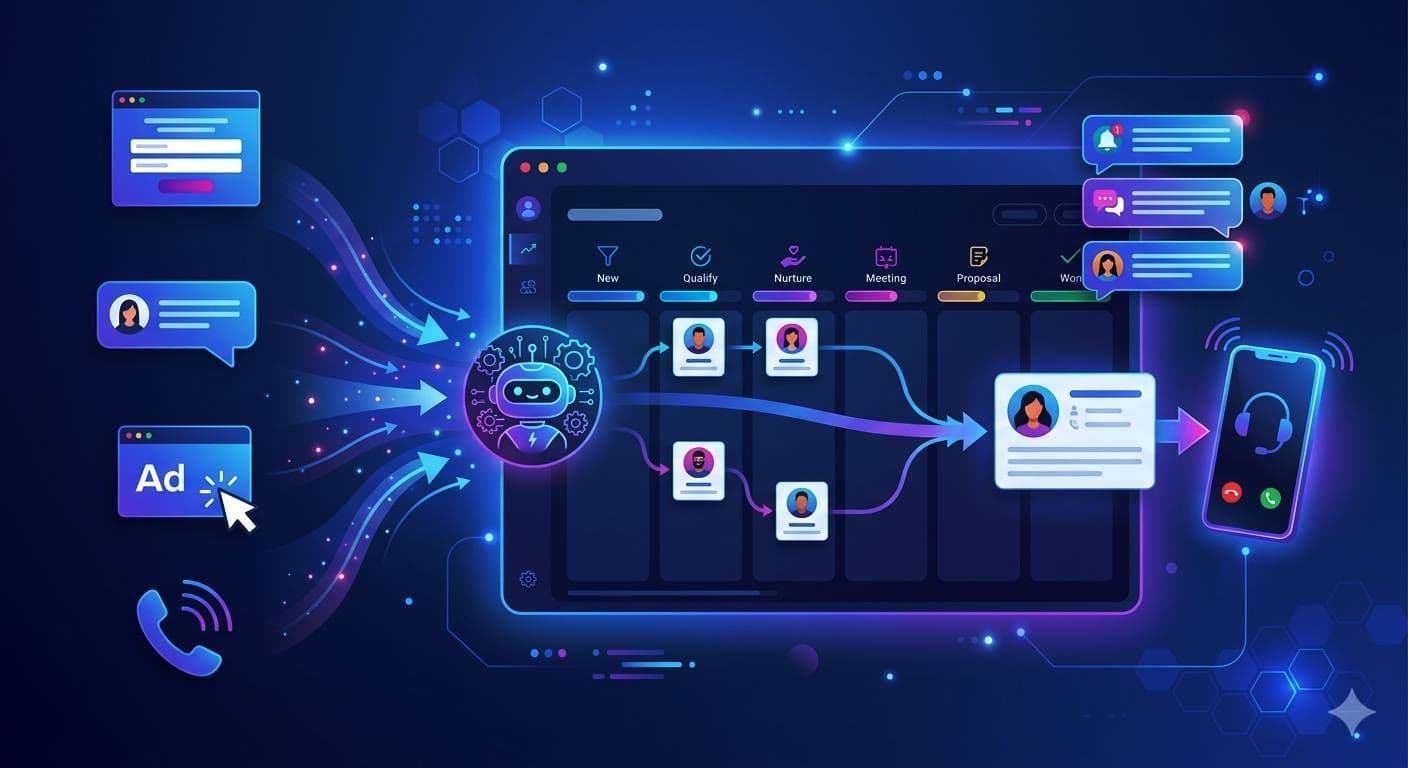
At 8:17 p.m., a multi-location home services company gets a high-intent lead from a paid landing page.
The prospect is not casually browsing. They have a plumbing issue, they want an estimate, and they fill out a form from their phone while standing in the kitchen.
The ad worked. The page worked. The offer worked.
But nothing happens next.
The form submits successfully. The CRM captures the record. An email notification is sent to a sales inbox nobody is watching after hours. The lead sits unassigned until the next morning. By then, the buyer has already moved on.
This is the real operational problem behind missed inbound revenue. It is not just that teams respond slowly. It is that most companies never built the system required to respond in real time.
That is what Building a Speed to Lead Infrastructure actually means. It means designing the handoff between intent and action so there is no dead air between the moment a lead raises their hand and the moment your business engages.
A lot of companies think speed is a rep performance issue. Usually, it is an infrastructure issue.
That is the reframing: speed is not a sales habit. It is a systems design outcome.
The problem is not effort. It is missing response infrastructure
When leaders look at poor follow-up, they often assume the team needs more urgency, more accountability, or more reminders.
Sometimes that helps.
But it does not fix the core issue if the operating system behind lead intake is broken.
Real-time response depends on a chain of events happening instantly and reliably:
- lead capture
- source tracking
- CRM sync
- routing logic
- first-touch channel selection
- qualification flow
- booking workflow
- follow-up triggers
If any link in that chain requires a person to notice, decide, assign, or manually act, the response clock starts leaking minutes.
And those minutes add up fast.
A company may think it has a fast sales team because reps answer leads quickly during business hours. But if leads arrive through five forms, three ad platforms, two calendars, and a shared inbox, speed becomes inconsistent by default.
The issue is not willingness.
The issue is that the business has demand capture, but not demand response architecture.
If you want a broader look at why inbound leads go cold, the pattern is clear: delay kills intent. But the reason delay keeps happening is often infrastructure, not awareness.
Building a Speed to Lead Infrastructure starts with event design
Most teams think about lead response as a rep task.
The better way to think about it is as an event system.
A lead submission is not just a new record in your CRM. It is a trigger event that should launch a predefined sequence immediately.
That sequence should answer five questions in seconds:
- Did the lead enter the system correctly?
- Who or what should respond first?
- Which channel should be used right now?
- What information needs to be collected immediately?
- What is the next scheduled action if the first touch fails?
Without those decisions being pre-built, each lead creates a mini operations problem.
Someone has to inspect the source. Someone has to determine ownership. Someone has to decide whether to call, text, or email. Someone has to remember the follow-up sequence.
That is exactly where speed breaks.
In practical terms, Building a Speed to Lead Infrastructure means creating a response path that does not depend on human coordination at the moment of lead arrival.
That includes:
- form and ad lead capture connected directly to your CRM
- instant enrichment or source tagging
- automatic assignment by territory, product line, or availability
- immediate outreach logic
- qualification scripting
- meeting booking integration
- retry workflows if contact fails
A lead should not enter a holding area.
It should enter motion.
Why real-time response fails inside normal sales operations
The biggest misconception is that CRMs automatically create speed.
They do not.
A CRM stores leads. Infrastructure moves them.
Many businesses have what looks like a functioning setup on paper:
- forms connected to the CRM
- reps assigned to inbound leads
- notifications turned on
- calendars available
But the actual workflow is still human-latency dependent.
For example, a demo request comes in. The CRM records it instantly, but the assigned rep is on a call. They see the alert 18 minutes later. Then they skim the record, decide to send an email, and plan to call after their meeting. The lead technically entered the system fast. But the response system itself was never immediate.
That is why infrastructure has to remove decision friction.
The system must decide in advance:
- what happens during business hours
- what happens after hours
- what happens when the owner is unavailable
- what happens when the lead does not answer
- what happens when qualification can begin before a rep joins
This is also where smart routing becomes essential. If your routing logic is weak, speed collapses at the assignment layer. We covered that in more detail in this guide to lead routing in CRM systems.
The mechanism is simple: every manual decision inserted between submission and first touch creates queue time.
And queue time is where hot leads cool off.
The business cost of weak infrastructure is bigger than missed calls
When companies think about response breakdowns, they usually picture a few lost leads.
The real cost is much larger.
Weak speed-to-lead infrastructure affects four revenue layers at once.
1. Paid acquisition efficiency drops
If you are buying traffic from Google Ads, Meta, or niche directories, delayed response devalues every click.
Marketing generated the opportunity, but operations failed to activate it.
This is one reason paid channels feel inconsistent. The issue is not always lead quality. Sometimes the response system is too slow to capture the buyer while intent is still active.
2. Sales capacity gets misused
When reps spend time sorting, prioritizing, and manually following up with fresh leads, they are doing operations work, not sales work.
A well-built infrastructure removes that administrative layer and lets reps enter the conversation at the right moment.
3. Booking rates suffer before pipeline even starts
A lead that is not contacted quickly is not just less likely to close. It is less likely to book in the first place.
That means the pipeline never gets created.
This is why speed-to-lead infrastructure has a direct connection to calendar conversion. If that is a current issue, this breakdown of how response time affects appointment booking is worth reading.
4. Forecasting becomes misleading
When response times vary wildly by source, time of day, or rep availability, conversion data becomes noisy.
Leaders start making bad decisions about channel quality, staffing, and budget because they are measuring leads in a system with inconsistent first-touch conditions.
Poor infrastructure does not just reduce conversion.
It distorts learning.
The pattern behind high-performing teams
Companies that consistently respond in under five minutes usually do not have more disciplined reps.
They have fewer points of failure.
That is the operational pattern worth noticing.
The best-performing teams simplify the path from inquiry to conversation. They standardize intake. They predefine routing rules. They automate first-touch actions. They connect qualification to booking.
In other words, they make the system fast so people do not have to compensate for slowness.
That is a more durable strategy than asking reps to be permanently on alert.
Another useful principle: the first response should be treated like infrastructure, not craftsmanship.
Craftsmanship matters later, when discovery, objection handling, and closing happen.
But first response needs reliability more than artistry. It should happen every time, in the right channel, with no waiting.
If you are trying to benchmark your current performance, this article on how companies measure lead response time can help you identify where the delays actually enter the system.
What a real-time response system actually needs
If you want to build for real-time response, the answer is not one tool. It is a connected stack with clear logic.
Here are the core system components.
Unified intake
All inbound lead sources should feed one operational workflow.
That includes:
- website forms
- landing pages
- paid lead ads
- chat flows
- demo requests
- inbound call callbacks
If every source has a different destination, response time becomes fragmented.
Instant routing logic
Leads should be assigned automatically based on a ruleset.
That may include:
- geography
- service type
- product interest
- rep availability
- round robin distribution
Routing should happen in seconds, not when someone opens the CRM.
Immediate first-touch execution
The system should launch contact right away through the right channel.
Depending on the use case, that may be:
- an instant call
- SMS acknowledgment
- automated email confirmation
- AI-driven outreach
The key is not just sending a receipt. The key is beginning the conversation.
Qualification layer
Real-time response is more powerful when it also gathers useful information.
A modern system can ask basic qualifying questions immediately, capture urgency, confirm need, and determine whether the lead is ready to book.
This shortens time-to-conversation for the sales team.
Booking integration
Once intent is confirmed, the lead should be able to schedule without friction.
If qualification happens quickly but booking still requires manual back-and-forth, the infrastructure remains incomplete.
Persistent follow-up logic
Not every lead will answer the first attempt.
That is why the system needs automatic retries across channels and time windows. The goal is not one fast action. The goal is a complete fast-response framework.
How automation and AI solve the infrastructure gap
This is where automation stops being a nice-to-have and becomes operationally necessary.
AI and automation solve the exact problem that breaks real-time response: they remove the waiting period between lead creation and lead engagement.
Instead of depending on a rep to notice and act, the system can:
- respond within seconds
- call the lead automatically
- send a text confirmation
- ask qualifying questions
- capture answers in the CRM
- offer available appointment times
- trigger follow-up if there is no answer
That does not replace the sales team.
It protects the sales team from infrastructure failure.
For businesses with meaningful inbound volume, this matters most outside perfect operating conditions:
- after hours
- during lunch gaps
- when reps are on live calls
- during traffic spikes from campaigns
- on weekends
Those are exactly the moments when manual systems break.
Automation creates continuity.
And continuity is what real speed-to-lead requires.
This is also why AI-powered response is becoming a competitive advantage. Not because it sounds innovative, but because it closes the system gap between buyer intent and company action.
Key takeaways
- Fast response is usually a system outcome, not a motivation problem.
- The biggest barrier to real-time engagement is missing infrastructure between lead capture and first touch.
- CRMs store leads, but they do not guarantee immediate response.
- Every manual step introduces queue time.
- High-performing teams reduce points of failure with routing, automation, qualification, and booking logic.
- AI is most useful when it handles the first seconds after lead submission, when human teams are least consistent.
- Building a Speed to Lead Infrastructure is how companies turn lead generation into actual pipeline creation.
Conclusion
Most companies do not have a lead problem.
They have a response architecture problem.
They generate demand, collect form fills, and create records in the CRM, but they fail to build the system that turns inbound intent into immediate action.
That is why Building a Speed to Lead Infrastructure matters so much. It is the difference between storing leads and engaging them. It is the difference between having notifications and having a real-time response engine. And in a market where buyers expect near-instant engagement, that difference shows up quickly in booking rates, pipeline quality, and revenue efficiency.
The companies that win are not always the ones with the most leads.
They are often the ones with the best infrastructure for acting on them.
FAQ
What does Building a Speed to Lead Infrastructure mean?
It means creating the systems, workflows, and automation required to respond to inbound leads in real time. That includes intake, CRM sync, routing, first-touch outreach, qualification, booking, and follow-up logic.
Why is infrastructure the main blocker to fast lead response?
Because most delays happen between steps, not inside the CRM itself. If response depends on a person checking notifications, assigning ownership, or deciding what to do next, the process slows down immediately.
What should a company automate first?
Start with the handoff from form submission to first contact. That usually means unified lead capture, instant routing, and immediate outreach through call, SMS, or AI-assisted response. Once that is working, add qualification and booking automation.
Next step
Want to fix slow lead response?
See how FusionSync responds in seconds, qualifies inbound leads, and moves them toward a booked next step automatically.
Where it works
View all use cases