
How Speed to Lead Is Changing Sales Operations
Explore how speed to lead is changing sales operations.
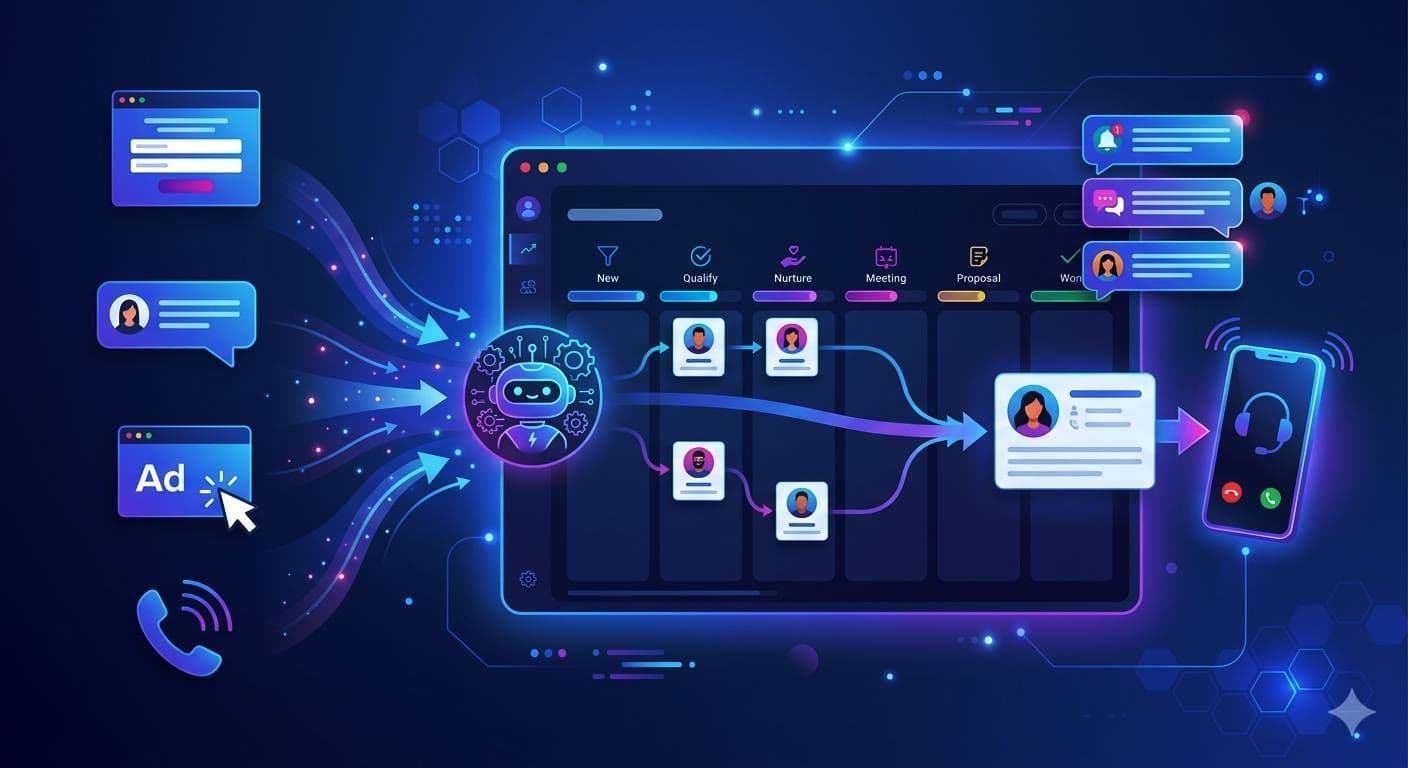
At 8:17 p.m., a multi-location home services company gets a high-intent quote request from a homeowner whose AC stopped working.
The ad worked.
The landing page worked.
The form converted.
But inside the company, the sales operation is still running on an old assumption: a rep will see the lead tomorrow morning, decide who owns it, and then start outreach.
Nothing is technically broken.
The CRM captured the lead.
The notification fired.
The pipeline report will count it.
And yet the opportunity is already slipping away.
This is the real story behind How Speed to Lead Is Changing Sales Operations. It is not just about responding faster. It is about redesigning the operating model behind inbound sales.
When a company moves from hour-based response to second-based response, the sales floor changes. Routing changes. staffing changes. qualification changes. calendar management changes. Even the definition of “working a lead” changes.
Here is the sharp insight most teams miss:
Speed is not a sales tactic. It is an operating system.
That is why companies that improve speed to lead do not just get better response times. They build a different kind of sales operation altogether.
The real problem is not effort. It is operational design.
Most sales teams do not lose inbound leads because reps do not care.
They lose them because the operation was built for queue management, not live demand capture.
That distinction matters.
In older sales models, inbound leads enter a queue. Someone reviews them. Someone assigns them. Someone follows up when bandwidth opens up. The system assumes that a lead can wait for the business to become available.
But high-intent inbound demand does not behave that way.
A person who submits a form is not starting a patient, scheduled workflow. They are raising their hand in a short-lived moment of buying intent. If your operating model treats that moment like a ticket to process later, the lead cools inside your own system.
This is one of the clearest explanations for why inbound leads go cold.
The issue is operational lag.
Not because people are lazy.
Not because marketing brought in bad leads.
Not even because the sales team lacks skill.
The issue is that many sales operations were designed around rep convenience, business hours, and manual review. Speed to lead forces companies to redesign around buyer timing instead.
How Speed to Lead Is Changing Sales Operations at the workflow level
The biggest shift is this: sales operations are moving from batch processing to real-time orchestration.
That sounds technical, but the practical meaning is simple.
Old model:
- lead comes in
- system stores it
- team gets notified
- rep checks details
- lead gets assigned
- outreach happens later
New model:
- lead comes in
- system identifies source, intent, and ownership instantly
- first contact happens immediately
- qualification starts in the first interaction
- booking or routing happens in the same flow
This is not a minor optimization. It changes what sales ops is responsible for.
In a slower environment, ops mainly tracks records, territories, SLAs, and rep activity.
In a speed-driven environment, ops must engineer immediacy.
That means building workflows that answer questions like:
- Who should own this lead right now?
- What contact method should fire first?
- What happens if the lead does not answer?
- How does qualification happen without delay?
- How is meeting availability surfaced in the first touch?
If those decisions still depend on a person checking Slack, refreshing the CRM, or manually triaging a queue, the operation is not built for speed.
This is why topics like lead routing in CRM systems become operationally central once speed to lead becomes a priority.
Why this shift happens: speed exposes hidden friction
Every sales operation has friction. Speed to lead simply makes it visible.
When teams try to respond within five minutes, they quickly discover that the real delays are not usually in one dramatic failure. They are in a stack of tiny operational pauses.
A lead waits 90 seconds for data sync.
Then 4 minutes for assignment.
Then 12 minutes because the assigned rep is on a call.
Then another 20 minutes because outreach depends on manual review.
Each delay seems harmless on its own.
Together, they reveal a system built around sequential human handoffs.
That is the mechanism behind the transformation.
Once leadership decides speed matters, the old workflow no longer looks acceptable. Suddenly, every handoff is questioned. Every approval step looks expensive. Every manual check becomes a conversion risk.
So the operation starts changing in specific ways:
1. Ownership gets decided automatically
Teams stop treating assignment as an admin task and start treating it as a conversion event.
2. First response becomes a system responsibility
Instead of hoping a rep is available, the business ensures an immediate acknowledgement or contact attempt happens by design.
3. Qualification moves earlier
Basic fit questions no longer wait for a later callback. They begin in the first interaction.
4. Scheduling becomes embedded
Instead of “we will get back to you,” the workflow aims to secure the next step while intent is still high.
That is operational transformation driven by speed in its clearest form.
What happens to the business when operations stay slow
When a company keeps a queue-based sales operation in a market that rewards immediacy, the damage shows up everywhere.
First, pipeline quality gets distorted.
Leads that were genuinely interested appear unresponsive, when in reality the system reached them too late. Sales leaders may misread this as a lead quality issue when it is actually an operations issue.
Second, marketing efficiency declines.
The company pays to generate demand, but the sales operation fails to capture that demand in its highest-intent window. This is one reason many teams think they have a top-of-funnel problem when they really have a speed infrastructure problem.
Third, rep productivity gets worse.
This sounds backward, but it is true.
Slow operations create more cleanup work. Reps spend time chasing aged leads, sorting context from stale records, and attempting recovery instead of having timely conversations with engaged buyers.
Fourth, forecasting becomes less reliable.
If inbound conversion depends heavily on whether a rep happened to be free at the right moment, performance becomes inconsistent. That makes pipeline generation less predictable and harder to scale.
A useful reframing is this:
Slow speed to lead does not only lower conversion. It makes the entire sales system noisier.
That noise shows up as missed contacts, misleading attribution, uneven rep performance, and unstable pipeline creation.
Buyer behavior is forcing the operating model to change
Modern buyers do not experience your company in departmental steps.
They do not think:
- marketing captured me
- now ops will route me
- then sales will review me
- later someone will follow up
They experience one thing: responsiveness.
To the buyer, your operation is the response.
That is why speed to lead is reshaping internal sales design. The buyer does not care that your CRM assignment rule runs every 15 minutes. They care that they asked for help and did not get it.
This is especially true for high-intent channels like demo requests, quote forms, service inquiries, and paid traffic.
A fast response does more than start a conversation. It preserves context.
The lead still remembers what they asked.
They still remember which page they were on.
They still remember the pain that triggered the inquiry.
That makes qualification cleaner and booking easier.
For that reason, many teams are rethinking not just response speed, but the full inbound lead management process around immediacy.
The operational playbook for speed-driven sales teams
If speed is changing sales operations, what actually needs to change inside the team?
Here are the most important moves.
Redesign around event response, not inbox response
An inbound form fill should trigger a live workflow, not create a task for later.
That means the lead event should immediately launch routing, outreach, qualification logic, and next-step options.
Remove human dependency from the first 60 seconds
Humans are valuable in sales. But the first minute after form submission is too important to depend entirely on rep availability.
This is where instant acknowledgment, automated SMS, AI calls, or immediate booking prompts become operational tools, not marketing gimmicks.
Treat routing as a revenue function
Routing is often seen as back-office configuration.
It should be viewed as part of conversion architecture.
If the right rep, territory, or team is not activated instantly, speed collapses before the first conversation starts.
Build follow-up logic before the lead arrives
Fast teams do not improvise their next steps after a missed call or unanswered text.
They predefine the sequence.
That includes:
- what happens after no answer
- when SMS should fire
- when a second call should happen
- when calendar links are sent
- when the lead is escalated or reassigned
This is where automated lead follow-up systems stop being optional and start becoming foundational.
How automation and AI solve this exact operational problem
Automation matters here because the issue is structural.
If speed to lead is changing sales operations, then the solution cannot be “ask reps to check notifications faster.”
That is not a system.
That is hope.
Automation solves the problem by compressing the gap between lead creation and operational action.
An AI-powered lead response system can:
- respond the moment a form is submitted
- call the lead instantly
- ask qualification questions
- capture urgency, budget, location, or service need
- book an appointment
- trigger multi-step follow-up if the lead does not answer
- log everything back into the CRM
Notice what this does to operations.
It removes waiting from the earliest stage of the funnel.
Instead of the lead entering a queue, the lead enters an active workflow.
That changes the role of the human sales team in a positive way. Reps spend less time acting as dispatchers and more time joining conversations that already have context, urgency, and next-step structure.
This is where AI becomes a practical operational upgrade, not a futuristic add-on. It gives the business a way to be available at the moment demand appears.
For companies like FusionSync, that is the real value of instant lead response systems. They do not just make outreach faster. They help businesses run a sales operation designed for real-time intent.
Key takeaways
- Speed to lead is transforming sales operations because it exposes whether your system is built for queues or for live demand.
- The core issue is operational design, not rep effort.
- Faster response requires changes in routing, qualification, scheduling, and follow-up architecture.
- Slow operations create noisy pipeline data, lower marketing efficiency, and reduce rep productivity.
- Automation and AI solve the problem by turning lead capture into immediate action.
The most important takeaway is simple:
The companies that win inbound today are not just faster at replying. They are faster at operating.
Conclusion
The real lesson in How Speed to Lead Is Changing Sales Operations is that speed is no longer a nice-to-have metric sitting on a dashboard.
It is becoming the design principle behind modern inbound sales.
When businesses organize around speed, they stop treating new leads like records to process later. They build systems that respond, qualify, route, and book in the moment intent appears.
That is the operational transformation.
And as buyer expectations keep rising, the gap between companies with real-time sales infrastructure and companies with manual queue-based workflows will only get wider.
FAQ
1. How is speed to lead changing sales operations in practice?
It is pushing teams to replace manual, queue-based workflows with real-time systems for routing, first response, qualification, and booking. Sales ops is becoming less about record management and more about immediate execution.
2. Why is speed to lead an operational issue instead of just a rep performance issue?
Because most delays happen before meaningful outreach even begins. Assignment rules, CRM workflows, approval steps, and follow-up logic all affect response speed. If those systems are slow, even great reps will respond late.
3. What is the best way to improve speed without overloading reps?
Use automation to handle the first layer of response. Instant acknowledgements, AI calling, automated qualification, and structured follow-up let the business respond immediately while routing qualified conversations to the right human rep.
Next step
Want to fix slow lead response?
See how FusionSync responds in seconds, qualifies inbound leads, and moves them toward a booked next step automatically.
Where it works
View all use cases