
Production Teardowns
GoHighLevel Embedded Quote Builder: Technical Build Log

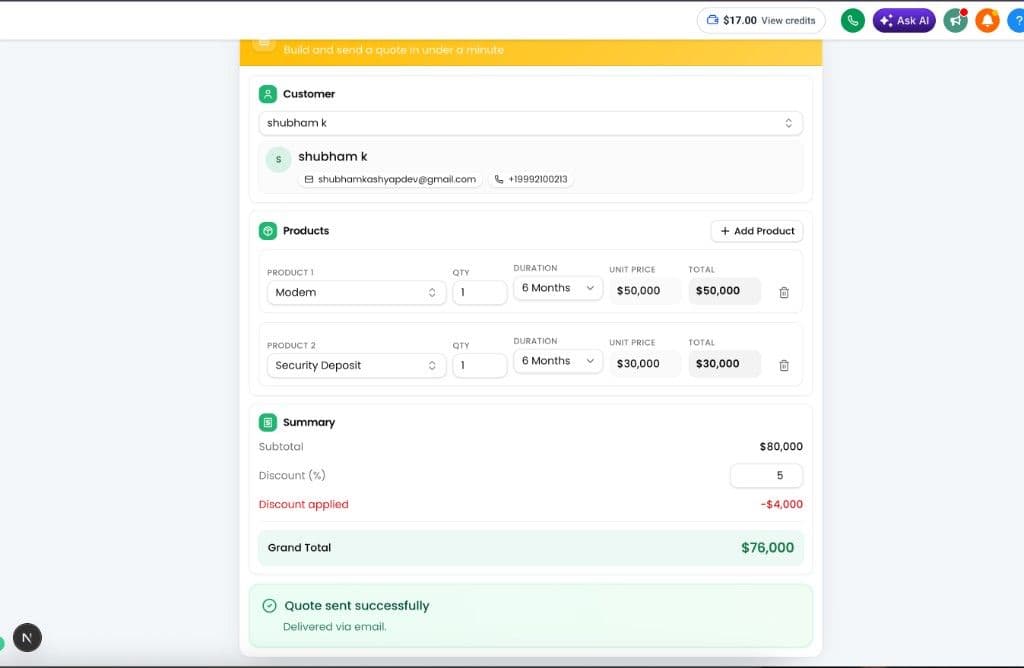
A Next.js app embedded in GoHighLevel: native products, branded HTML quotes, GHL email API, and automatic pipeline updates. No second SaaS tool.
The request was not "build a quoting platform"
A client came with a narrow operational problem:
"Our sales team lives inside GoHighLevel all day. We do not want another app just to generate and send quotes."
They did not need PandaDoc, Proposify, or a standalone quoting SaaS. They needed to remove a context switch from a workflow that already ran in GoHighLevel.
So I built a lightweight embedded Next.js application that runs inside GHL as a custom menu page. To the rep it feels like another native screen. To the business, GHL stays the system of record.
This post documents the architecture, API wiring, and the pattern I reuse for other embedded GHL tools.
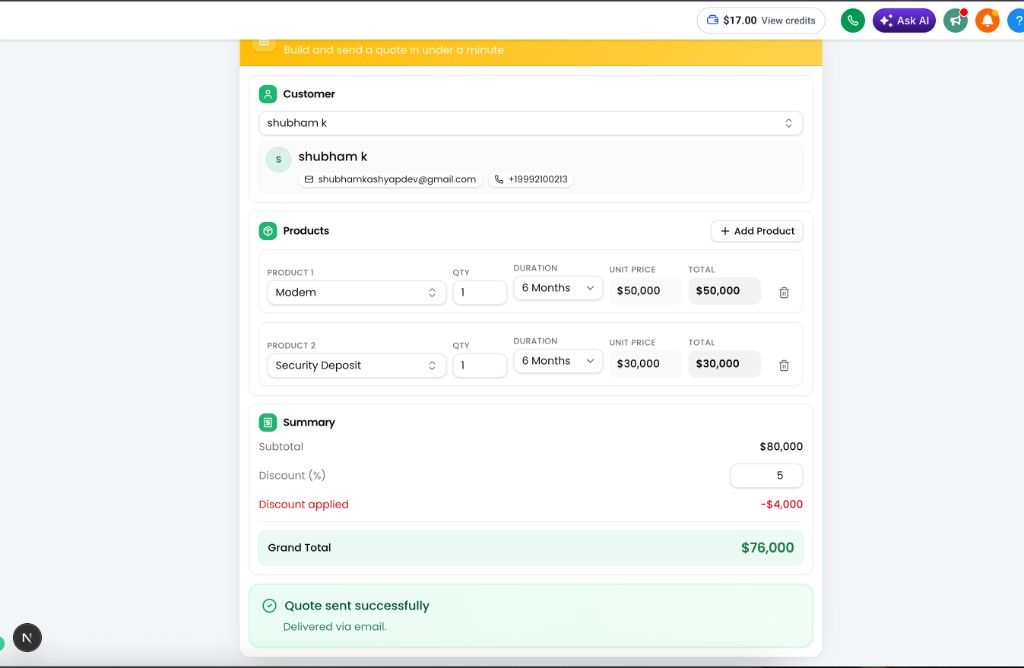
Finished workflow (rep view)
From the sales rep's perspective, the entire flow stays in GHL:
- Search and select a contact
- Add one or more products from the native GHL product catalog
- Set quantity and service duration per line
- Apply an optional percentage discount
- Click Send Quote
Behind the embedded app:
| Step | System action |
|---|---|
| Contact load | Query GHL Contacts API (or pre-fill from URL context) |
| Product load | Fetch from GHL Products API |
| Pricing | Real-time subtotal, discount, grand total in the browser |
| Delivery | Branded HTML email via GHL Email API |
| Pipeline | Create Opportunity with quote value, stage = **Quote Sent** |
The rep never opens a second tab. No PDF export step. No manual pipeline update after the send.
The problem with "just add another tool"
Most GHL agencies solve workflow gaps by stacking SaaS:
Technically it works. Operationally it fails in small ways that compound:
- Customer data gets re-entered
- Opportunities do not always get updated
- Reps skip steps when busy
- Email history splits across systems
The issue is not missing features. The workflow left the CRM to complete a task that should have stayed inside it.
Architecture
The app is intentionally thin. No second product database. No shadow CRM.
Everything reads and writes through GHL APIs. Pricing rules and line-item math live in the embedded app. Product definitions and contact records live in GHL only.
Same stack pattern we use on PolarBuild's dental acquisition system: GHL + n8n + custom fulfilment layer, with the vertical UI embedded where reps already work.
Product catalog: use native GHL products
I did not build a custom product table.
The Quote Builder fetches products through the GHL API. Benefits:
- Single source of truth for names, SKUs, and base prices
- Pricing updates happen once in GHL admin
- No sync jobs, no duplicate catalog, no drift between "CRM price" and "quote price"
The embedded app is a view and calculator on top of data GHL already owns.
Contact selection
Two entry modes:
Context mode: If a contactId (or equivalent) arrives in the page URL from a GHL workflow link or contact record, the builder loads that contact immediately. No search step.
Search mode: If no context is provided, the app shows a searchable contact picker that queries GHL directly. Same codebase works as a standalone internal tool and as a contact-scoped deep link later.
Quote model and pricing engine
Each line item carries:
| Field | Source |
|---|---|
| Product | GHL product record |
| Quantity | Rep input |
| Service duration | Rep input (e.g. 6 months) |
| Unit price | From catalog (editable if allowed) |
| Line total | `qty × unit price` |
Summary block calculates in real time:
- Subtotal across all lines
- Percentage discount (optional)
- Grand total
The data model leaves room for taxes, deposits, revision history, and approval workflows without restructuring the core schema.
Email: HTML, not PDF
Quotes go out as responsive HTML emails, not PDF attachments.
Why:
- Most buyers open quotes on mobile
- HTML renders inline; no download friction
- Send path uses GHL's Email API, so deliverability and sending domain stay on the client's existing GHL mail setup
- Email history remains inside GHL for the rep and for downstream automations
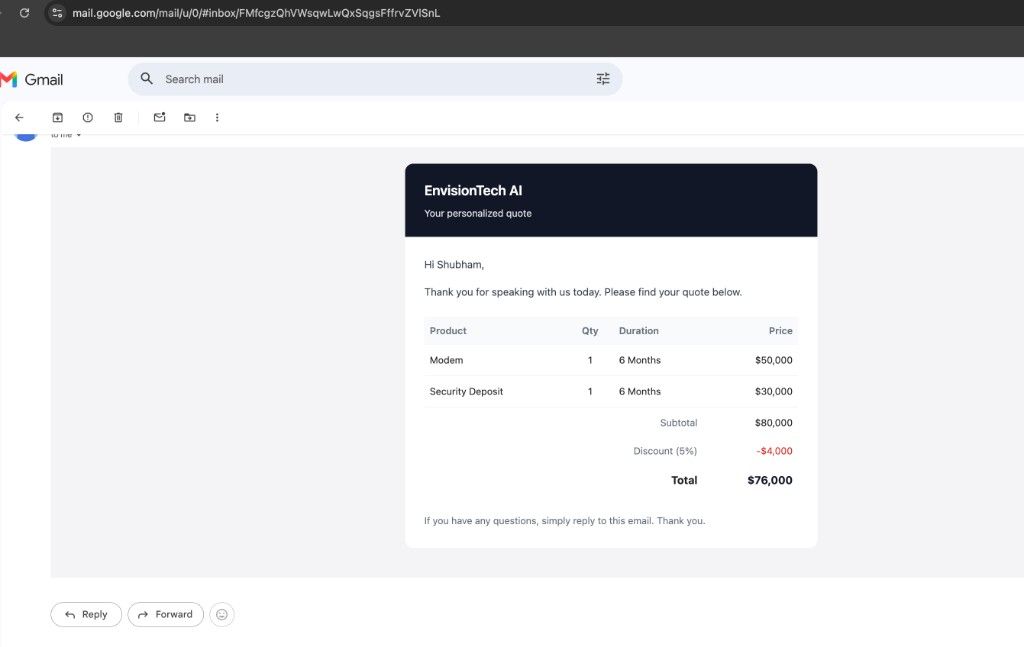
Template is HTML generated server-side from the same line-item payload used in the UI. Brand header, product table, subtotal/discount/total, reply-to-contact footer.
CRM automation after send
Sending a quote is not only an email event. The pipeline updates in the same request chain.
After a successful send:
- Create Opportunity named
Quote - {Contact Name} - Set value to the quote grand total (e.g. ₹76,000)
- Set pipeline to Product Sales (or client-configured pipeline)
- Set stage to Quote Sent
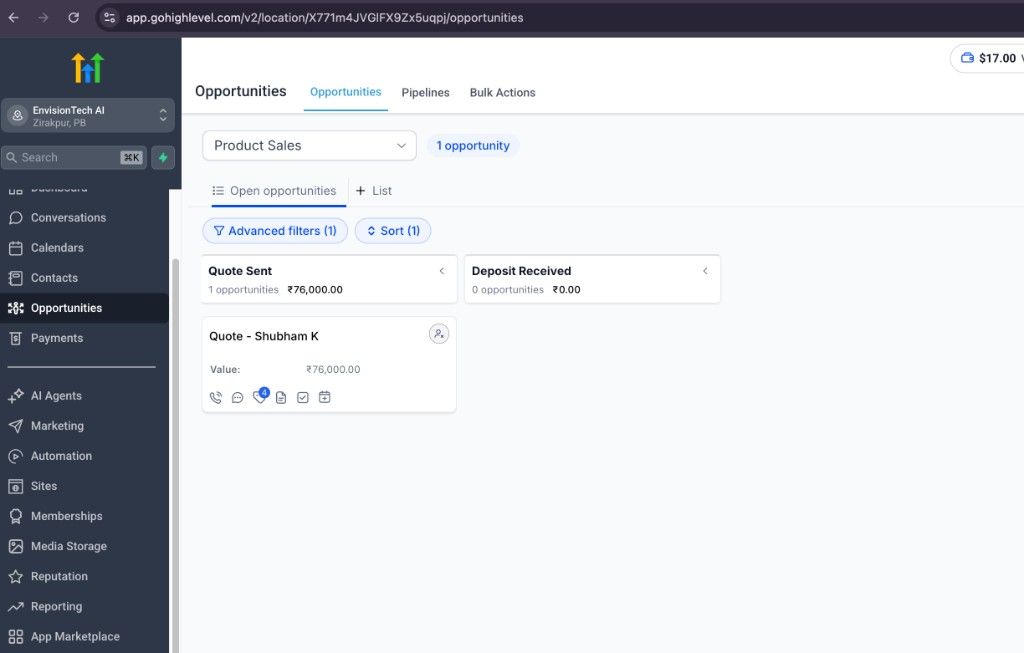
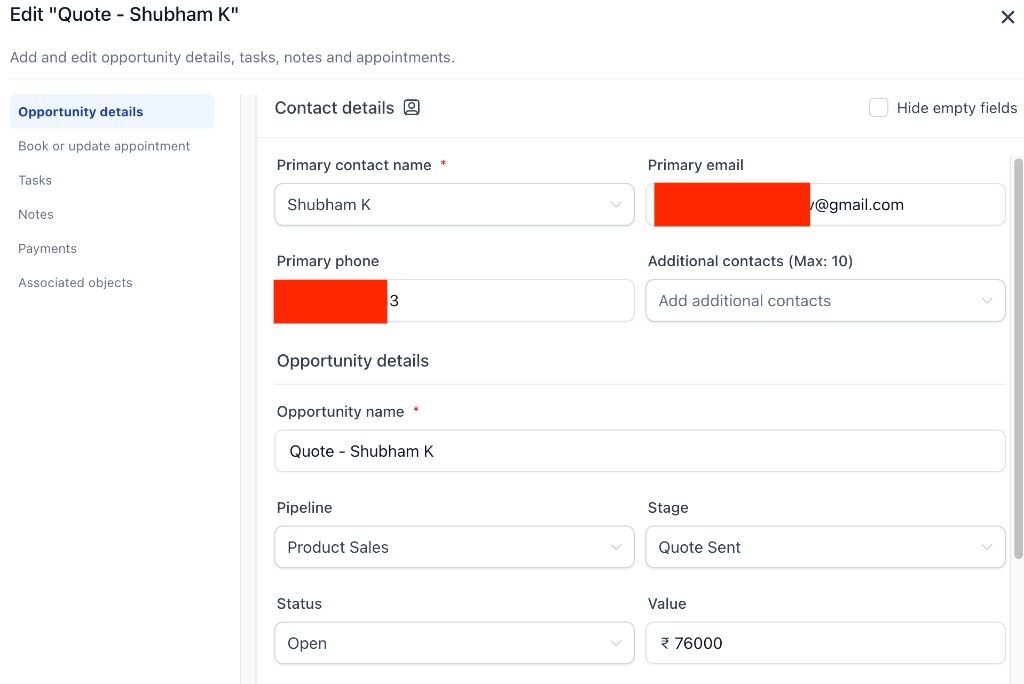
No forgotten pipeline changes. No "I'll update GHL later." The CRM state matches what the customer received.
API surface (conceptual)
Exact endpoint names vary by GHL API version and sub-account setup. The integration points are stable:
| Action | GHL API area |
|---|---|
| List / search contacts | Contacts |
| List products | Products |
| Send transactional email | Conversations / Email (location-scoped) |
| Create opportunity | Opportunities |
| Update opportunity stage | Opportunities |
Auth uses the location OAuth token or private integration key scoped to the sub-account. The embedded page is deployed on a domain allowlisted in GHL custom menu settings.
Why this pattern scales for agencies
The Quote Builder is not the interesting artifact. The embedded GHL app pattern is.
Once you can ship a Next.js page inside GHL with API access, you can build native-feeling tools without asking reps to leave the CRM:
| Tool | Same pattern |
|---|---|
| AI estimate builder | Pricing rules + GHL products + email send |
| Proposal / contract generator | Contact data + HTML/PDF + opportunity stage |
| Client onboarding workspace | Forms, file upload, task triggers via GHL workflows |
FusionSync white-labels this for agency partners: you keep the client relationship, we build and embed the fulfilment layer under your brand. Phase 1 on the homepage is often a free GHL + n8n POC; embedded apps like this are Phase 2 rollout when a client pays.
Related teardowns: n8n wired into our agent stack, self-hosted voice on Dograh + GHL.
What I would extend next
On the roadmap for this client build:
- Quote revision history (v1, v2, accepted version)
- Deposit line items and partial payment triggers
- Tax rules per region
- "Accept quote" link that moves opportunity to Deposit Received
- Workflow link from contact record straight into context mode
The architecture does not need to change for any of that. Only the payload schema and opportunity stage mapping grow.
The bottom line
- Problem: Sales reps leaving GHL to quote in another tool breaks pipeline hygiene.
- Fix: Embedded Next.js app on GHL native products, contacts, email, and opportunities.
- Outcome: Multi-product quotes, branded HTML email, automatic Quote Sent stage, zero context switch.
- Pattern: Reusable for estimates, proposals, onboarding, and other workflows agencies sell today.
When a team keeps opening a second app for the same recurring task, do not buy another subscription. Extend GoHighLevel with an embedded app that writes back to the APIs you already pay for.
Agency owners packaging GHL fulfilment for clients: message me on WhatsApp with your vertical and the workflow gap. We can map an embedded app rollout the same way we map n8n and CRMBridge installs.
AI-native business systems
Bring a niche, or bring a workflow.
If you run the business, we build the system around it. If you sell into a niche, we build the system behind your offer.
PolarBuild case study →You sell the niche. We build the system.
We never compete for your end clients. One partnership conversation. You fulfil the same system across the accounts in your niche.
Free POC before dedicated software
A three-day sales demo of the system for your vertical before any large software investment. Implementation starts only when someone in that niche pays.
Replicate the niche, not a one-off build
UK dental becomes US dental with a new local partner and new integration targets. Same system thesis, new market.